


Large Transferware Dish
A large transferware dish is a substantial ceramic vessel for the table, bringing bold blue and white printed imagery to daily serving.
Large Transferware Dish
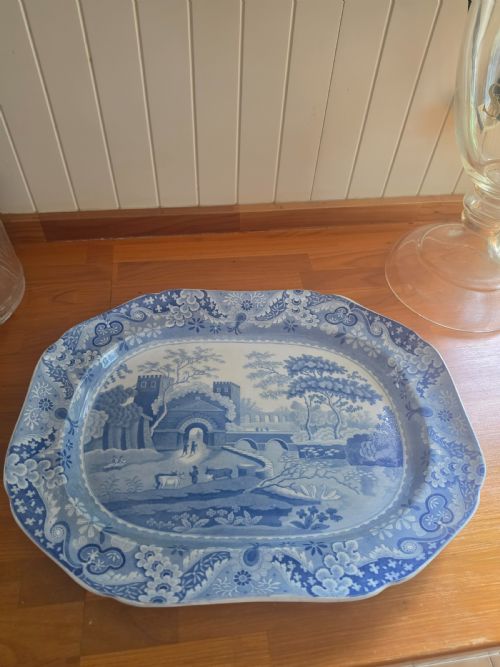
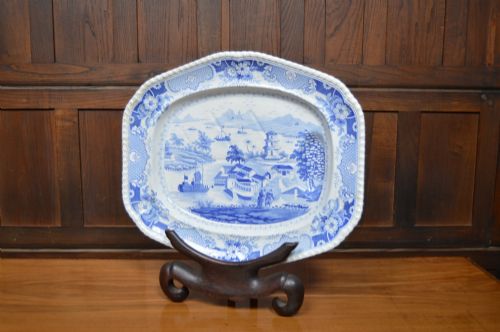
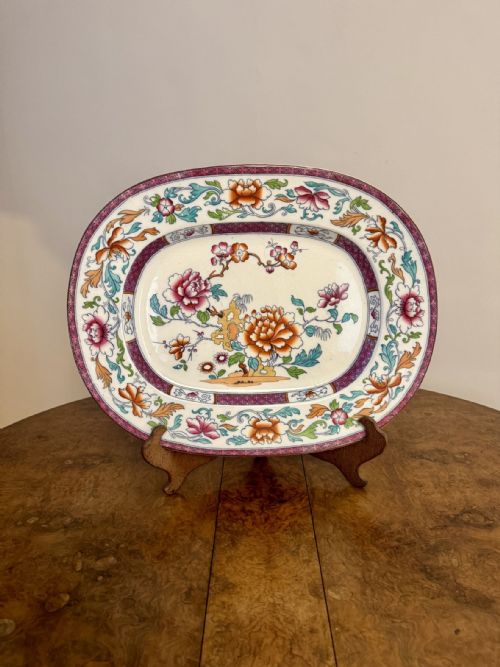
A large transferware dish serves as the centrepiece for historical dining, most commonly appearing as meat platters, serving plates, chargers, and fruit bowls. When exploring this selection, buyers encounter impressive platters and serving dishes spanning the Regency, Georgian, and Victorian eras.
The forms range from deep carving platters with reservoirs and tureen bases to expansive chargers and fruit bowls. These pieces originate across the nineteenth century, including specific dates from the eighteen-hundreds through to eighteen-ninety.
Makers such as Spode, Copeland and Garrett, Minton, Don Pottery, Elkin Knight and Bridgwood, and Mason's Ironstone produced these domestic serving items. The visual subjects transport the viewer to distant landscapes, classical scenes, and picturesque settings like the Bridge of Lucano or Byron Views.
Materials and transfer printing techniques
Potters shaped these large vessels from earthenware, pearlware, ironstone, ceramic, and porcelain, applying a glossy glaze to seal the body. Workers utilised copper plate printing to pull the intricate blue patterns onto tissue paper before pressing them onto the clay.
The printed ceramic then underwent firing to fuse the cobalt oxide pigment beneath or within the clear glaze. Ironstone and pearlware bodies provided the dense, durable foundation needed for heavy carving platters and deep serving plates.
Listings feature earthenware, pearlware, and ironstone bodies decorated with blue and white transfer printing across the nineteenth century.
Distinctions in craftsmanship and design
Quality rests in the crispness of the transfer print and the clarity of the blue pigment against the white ceramic ground. Superior examples display register alignment without smudging, even across expansive surfaces like chargers and meat platters.
The weight and substance of the ironstone or pearlware body signal the care taken at the bench, alongside specialised additions such as integrated drainage wells and armorial crests.
Spode·Copeland and Garrett·Minton·Don Pottery·Elkin Knight and Bridgwood·Mason's Ironstone
The Large Transferware Dish Glossary
- Transferware
- Pottery decorated by printing a design from an engraved copper plate onto paper, which is then transferred onto the unglazed or biscuit ceramic surface.
- Pearlware
- A refined earthenware developed in the late eighteenth century featuring a subtle bluish glaze that pooled in recesses to mimic Chinese porcelain.
- Ironstone
- A heavy, durable ceramic patented in the early nineteenth century that resisted chipping and suited large dining service pieces.
- Charger
- A large decorative or serving plate used historically as a base for other courses or to present communal joints of meat.
- Compote
- An elevated bowl used for serving fruit or sweet dishes at the centre of the dining table.
Large Transferware Dish: Frequently Asked Questions
What were large transferware dishes used for?
These large vessels served substantial joints of meat, roasted game, and communal courses at nineteenth-century dining tables. Platters with integrated reservoirs caught meat juices during carving at the table.
Larger chargers and fruit bowls acted as decorative centerpieces or held seasonal produce for guests.
How do I date a transferware dish?
Dating relies on ceramic body types, registration marks, maker names, and the stylistic cues of the printed pattern. Pearlware bodies and Regency forms typically point to the early nineteenth century.
Victorian pieces often incorporate heavier ironstone bodies and crisper, highly detailed topographical or Chinoiserie scenes.
Can I use antique transferware for serving food?
Most buyers choose to use these robust ironstone and earthenware platters for dry foods, cold meats, and fruit presentation. The hard glazed ceramic surfaces remain stable for modern dining use.
Hand washing preserves the historic glaze and prevents potential crazing from thermal shock in automatic dishwashers.
How do I display a large transferware dish?
Large platters and chargers mount securely on walls using coated wire display hangers designed for heavy ceramics. Alternatively, sturdy plate stands allow these pieces to anchor dresser shelves and sideboards.