
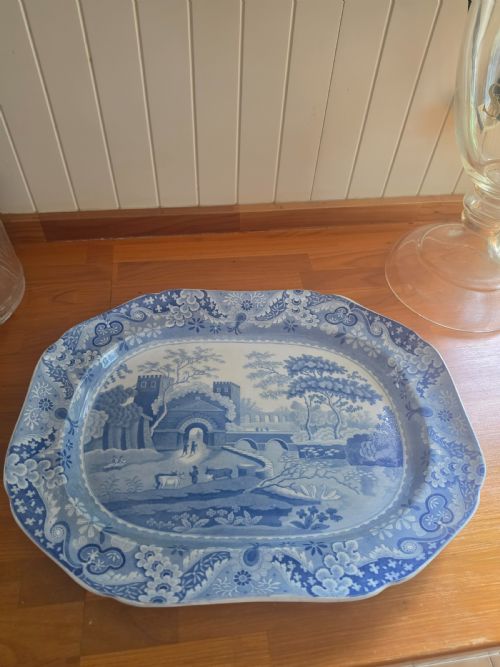
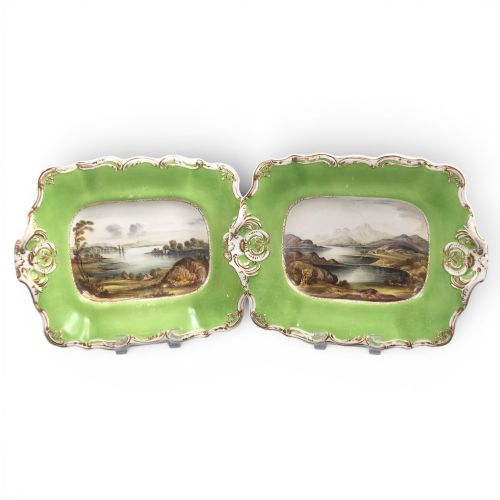


Antique Spode Platter
An antique spode platter brings monumental nineteenth-century table service to modern interiors through transfer-printed earthenware and painted porcelain.
Antique Spode Platter
When you search for an antique spode platter, you enter the domain of Georgian and Regency dining culture, where large serving dishes dominated the centre of the table. The pieces appearing here span large meat plates, sauce tureen stands, and generous serving dishes designed for formal meals.
The versions you meet most frequently on this page combine blue and white transfer printing with substantial earthenware bodies, alongside finer porcelain iterations from later nineteenth-century periods. Forms range from broad rectangular platters bearing topographical views to shaped dishes decorated with orientalist motifs.
Makers such as Spode and its successors Copeland and Garrett produced these serving platters across distinct eras, moving from pearlware bodies to felspar porcelain. Each antique spode platter captures the shifting ceramic tastes of the nineteenth century, balancing utilitarian strength with cabinet-level decoration.
How they were made
Potters shaped these serving vessels from earthenware, pearlware, or felspar porcelain, throwing or pressing the clay before firing it in kilns. Craftsmen then applied detailed cobalt blue transfer prints from engraved copper plates, or painted fine scenes by hand onto the biscuit body.
A glossy glaze sealed the decoration during a subsequent firing, occasionally enriched with enamel highlights, gold leaf, or gilt borders. Copeland and later manufacturers maintained these traditional techniques into the nineteenth century, ensuring a durable yet refined finish for heavy domestic use.
Materials span traditional earthenware and pearlware through to felspar porcelain, accompanied by gold leaf and enamel highlights.
What varies in quality
The clarity of the transfer print separates standard production from superior pieces, as worn copper plates produce blurred lines while sharp engravings preserve every architectural detail. Hand-painted cabinet plates demonstrate a higher tier of craftsmanship through precise brushwork and carefully applied enamel colours.
Body material also dictates the grade of the piece, with translucent felspar porcelain and early pearlware commanding greater regard than standard earthenware. The sophistication of the pattern, from complex topographical series to simple borders, marks the distinction between everyday kitchen wares and formal dining service.
Spode·Copeland and Garrett·Copeland Spode
The Antique Spode Platter Glossary
- Pearlware
- A refined earthenware body developed by Josiah Spode featuring a bluish glaze that pooled in recesses, designed to mimic Chinese porcelain.
- Transfer Print
- A decoration method where an engraved copper plate applied ink to tissue paper, which was then pressed onto the ceramic surface before glazing.
- Felspar Porcelain
- A pioneering ceramic composition patented by Josiah Spode II that incorporated feldspar to increase durability and whiteness.
- Sauce Tureen Stand
- A dedicated small platter or tray shaped to hold a gravy or sauce boat on the dining table.
- Chinoiserie
- A decorative European style reflecting Chinese artistic motifs, frequently seen on Regency blue and white ceramics.
Antique Spode Platter: Frequently Asked Questions
How do I date an antique spode platter?
Dating relies on body type, backstamps, and pattern names recorded in factory archives from the Georgian and Victorian eras. Pearlware bodies and specific blue and white transfer series typically point towards the early nineteenth century.
Later Copeland or Copeland and Garrett marks indicate production from the eighteen-thirties onwards. Comparing pattern numbers with known manufacturing dates provides further chronological precision.
Can I use these platters for serving food?
Most buyers choose to display these large serving dishes on walls or dresser plate racks rather than using them for daily dining. Glazes from the nineteenth century can contain materials unsuited for modern acidic foods and frequent dishwasher cycles.
Gentle hand washing in lukewarm water preserves the fragile enamel and gold leaf on painted porcelain platters. Preserving the historic glaze ensures the transfer-printed scenes remain crisp for future generations.
What is the difference between earthenware and porcelain platters?
Earthenware and pearlware bodies are heavier, opaque, and formed the backbone of large meat and serving platters during the Regency period. Felspar porcelain introduced a finer, harder, and more translucent surface favoured for decorative cabinet plates.
Porcelain versions often featured hand-painted polychrome scenes rather than monochromatic blue transfer prints. Both materials served distinct functions within grand nineteenth-century dining services.
What do pattern names on the back indicate?
Pattern names and numbers connect individual pieces to specific design series produced by the factory, such as topographical views or oriental scenes. The Bridge of Lucano and Tower patterns represent celebrated blue and white transfer series from the early eighteen-hundreds.
Identifying the pattern helps collectors determine the approximate production era and match pieces within a larger service. These titles were usually printed or impressed directly into the ceramic base.