


Red Tekke Carpet
A red tekke carpet brings the rich madder tones and precise geometric motifs of Central Asian weaving into an interior.
Red Tekke Carpet
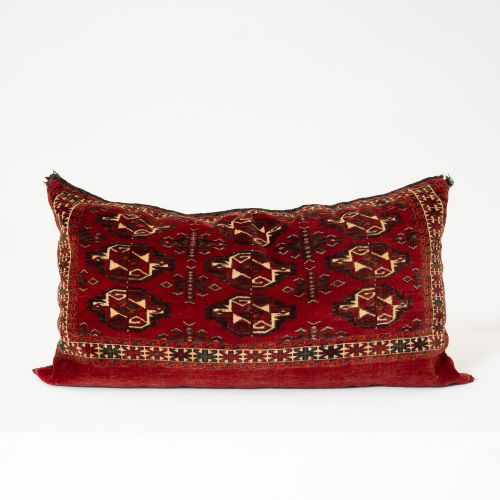
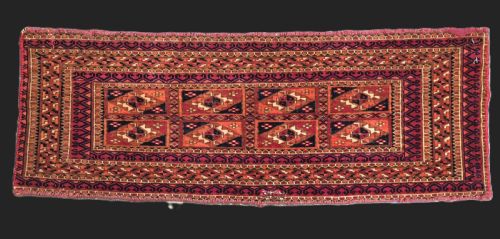
When you search for a red tekke carpet, you encounter tribal textiles originating from Central Asia, specifically attributed to the Tekke Turkmen tribes. These pieces span from the mid-nineteenth century into the early twentieth century, reflecting nomadic and village weaving traditions.
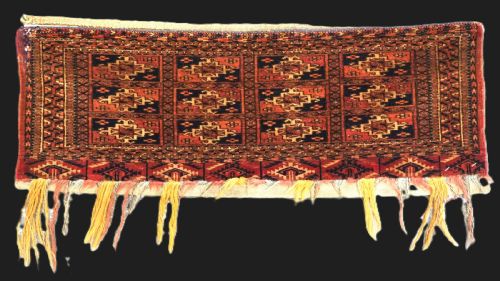
The designs are anchored by repeating primary guls, often arranged in disciplined rows across a distinct madder red ground. Secondary motifs and elem panels at the ends complete the typical compositional structure of these tribal works.
Materials and construction
Weavers utilised handspun wool for the pile and foundations, frequently incorporating cotton and sometimes silk for structural details or specific highlights. Natural dyes provided the characteristic red, madder, and ivory colour palette seen across the pieces.
The structures rely on dense knotting techniques executed on wool or cotton warps with wool wefts. Many examples demonstrate exceptionally fine weaves, particularly on bag faces and smaller dowry pieces intended for ceremonial use.
Red Tekke Carpet Retail Price Guide 2026
Typical asking prices for red tekke carpet among the pieces listed under this phrase on Sellingantiques today, from the lower quarter to the upper quarter. They describe what is for sale here now, not the wider market.
Nomadic weavers packed these vibrant bags with everything from bedding to butter.
Assessing quality and execution
Quality in these textiles rests upon the density of the weave and the precision of the drawing. Pieces with extremely fine knots and crisp, well-defined guls represent the upper echelon of tribal production.
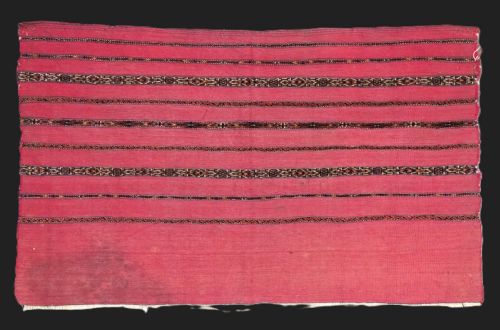
The vibrancy and depth of the natural dyes also dictate worth, as softer madder tones and secondary colours like ivory and dark brown retain greater visual harmony. Additionally, the presence of original plain weave backs or complete structures elevates individual examples above mere fragments.
The Red Tekke Carpet Glossary
- Gul
- The primary octagonal medallion repeated across Turkmen carpets. This motif acts as a tribal emblem and structures the field design.
- Torba
- A small storage bag produced by nomadic tribes. These pieces were hung inside tents and feature elaborate face designs.
- Chuval
- A large tent bag used for household storage. They frequently appear as cut faces in the antique market.
- Engsi
- A tribal door hanging placed at the entrance of a yurt. They typically display a cross-shaped division of the field.
- Madder
- A natural dye derived from the root of the rubia plant. It produces the durable red hues foundational to these textiles.
Red Tekke Carpet: Frequently Asked Questions
How were these rugs used?
Nomadic families utilised these textiles primarily for storage, tent decoration, and domestic partitioning within the yurt.
Larger formats served as floor coverings in living spaces, while smaller bags and dowry pieces formed part of a bride's traditional trousseau.
How do I identify a gul motif?
The gul is an octagonal or medallion-like repeated emblem that identifies the specific tribe and weaving group.
On these pieces, the guls appear in orderly rows across the field, sometimes accompanied by secondary motifs or turreted variations.
Can I use these carpets on the floor?
Many sturdy examples function well as floor coverings in areas with moderate foot traffic, provided appropriate underlays are used.
Fragile fragments, bag faces, and delicate dowry pieces are often displayed on walls to protect the historic wool pile from wear.