

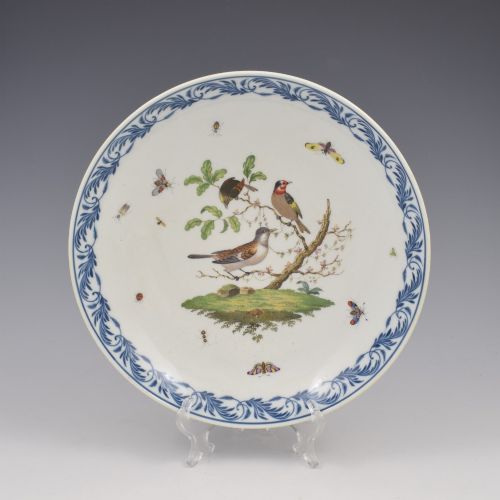

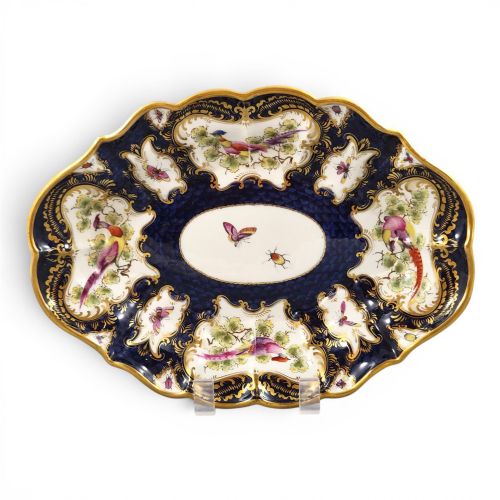


Porcelain Bird Plates
Porcelain bird plates bring together fine ceramic painting and natural history, offering charming studies of feathered subjects across centuries of craftsmanship.
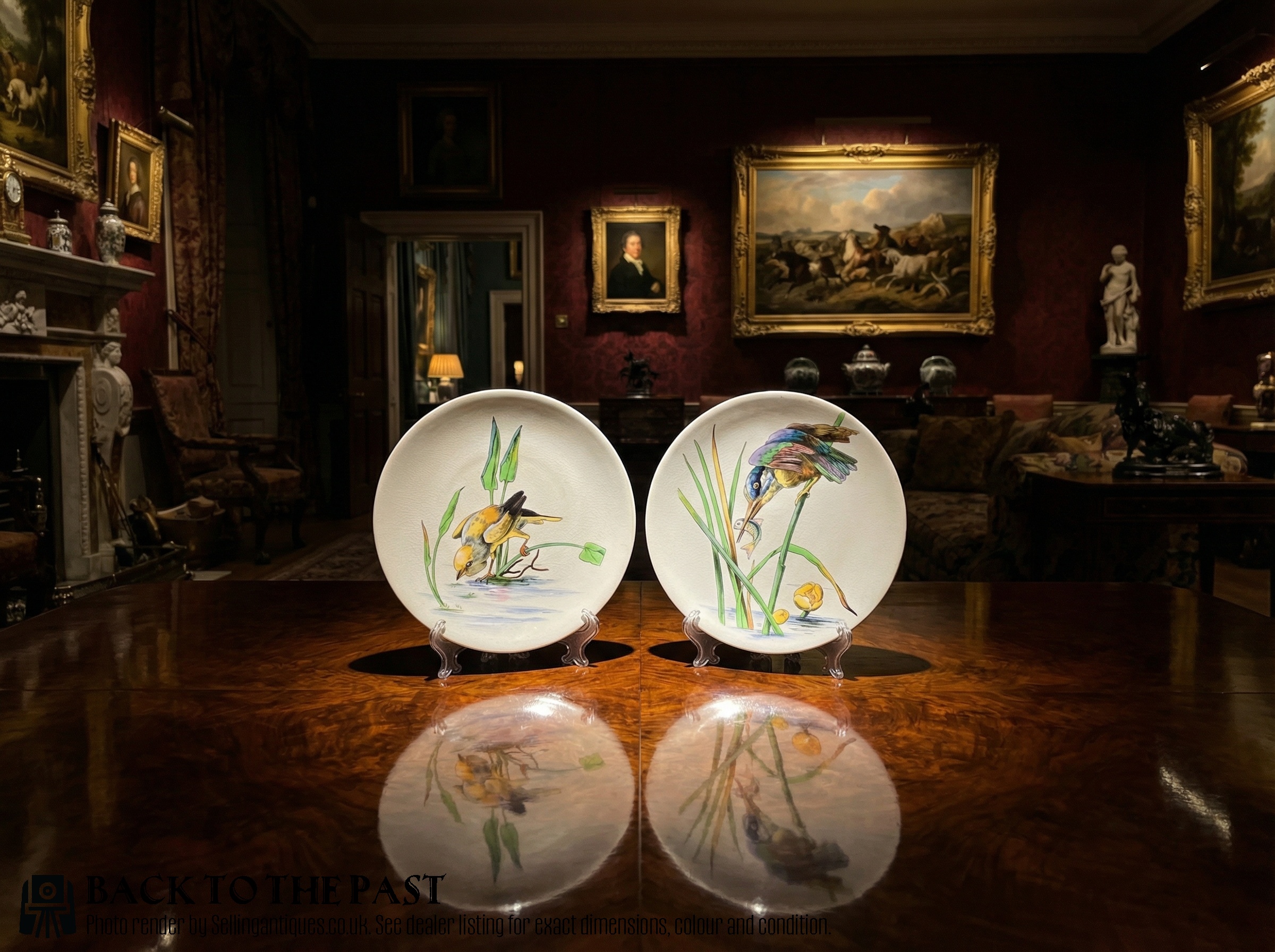
Porcelain Bird Plates
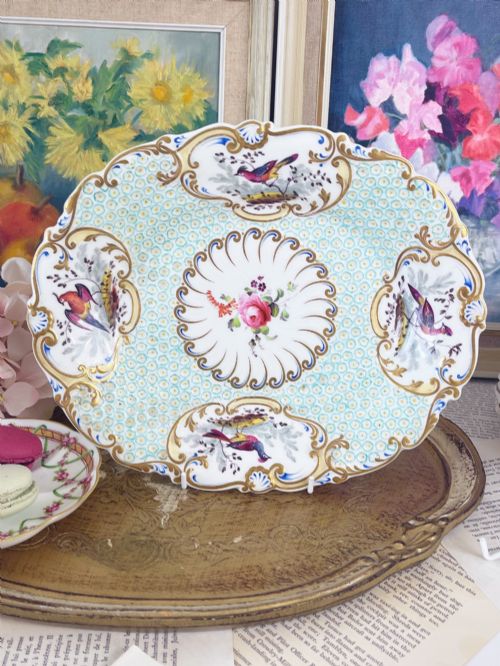
Porcelain bird plates span English factories from the eighteenth century onwards and Japanese export wares from the Meiji period, appearing as cabinet plates, dessert dishes, and large chargers.
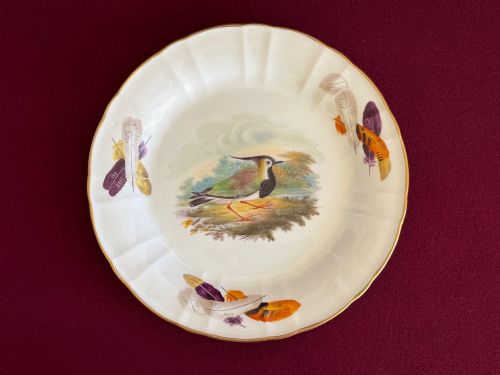
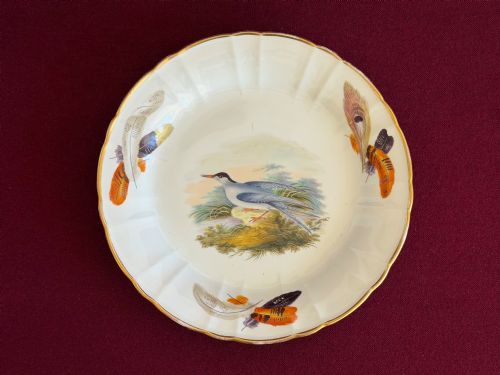
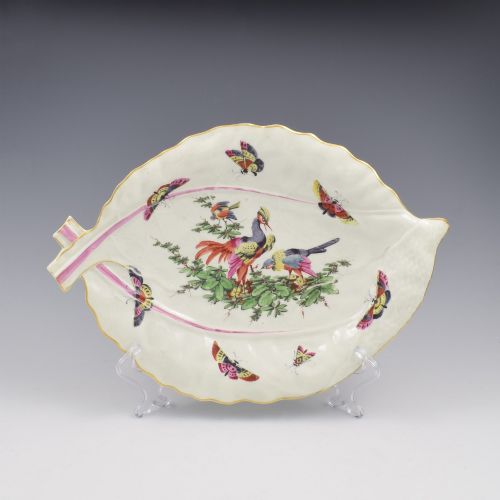
English examples range from First Period Worcester leaf dishes to Regency bone china plates and Victorian services, often depicting named species or fancy birds.
Japanese pieces from Arita and Kutani bring Imari palettes and cloisonne tree bark surfaces to avian motifs, alongside Chinese Qing dynasty famille rose productions.
Materials and technique
Makers utilised hard-paste and soft-paste porcelain bodies, finished with glossy glazes that provided a smooth ground for hand-painted enamel colours.
Gilding and gold leaf often highlight rims and borders, while specific factories employed blue scale grounds or moulded relief work to frame the central avian scenes.
Assessment of quality
Quality rests primarily on the precision and naturalism of the hand painting, distinguishing standard factory output from master-painted cabinet pieces with detailed plumage.
The crispness of the porcelain body, the depth of the enamel colours, and the preservation of the original gilding determine the standing of each dish.
H and R Daniel·Wedgwood·Dr Wall Worcester·Meissen·Royal Worcester·Coalport·Grainger and Co·Flight Barr and Barr·Samuel Alcock
The Porcelain Bird Plates Glossary
- Cabinet plate
- A decorative dish intended for display in a cabinet rather than for table use. These typically feature superior hand-painted scenes.
- Imari
- A style of Japanese export porcelain decorated in underglaze blue, iron red, and gold. This palette appears frequently on plates depicting birds and flora.
- Soft-paste porcelain
- An artificial porcelain composition fired at lower temperatures than hard-paste. It creates a warm, slightly creamy body seen in eighteenth-century English factories.
- Reticulated
- Having an openwork or pierced border pattern. This technique adds ornamental detail to the rim of a dish.
- Enamel
- Opaque glass used for painting colours onto fired porcelain. These pigments undergo a secondary firing to fuse with the glaze.
Porcelain Bird Plates: Frequently Asked Questions
Were these plates used for dining?
Many smaller plates and dessert dishes saw actual service on wealthy dining tables, handling food during formal courses.
Larger chargers and cabinet plates were generally made for display on sideboards or within glazed furniture to showcase the painted bird subjects.
How do I identify English eighteenth-century pieces?
English pieces from this era often utilise soft-paste porcelain bodies that show translucent qualities under strong light, accompanied by characteristic factory marks on the reverse.
Hand-painted motifs tend to focus on English garden birds or exotic fancy birds rendered in vibrant enamel palettes unique to each manufactory.
What is the difference between Imari and Kutani wares?
Imari wares from Arita traditionally rely on a distinct combination of underglaze blue, iron red, and gilt highlights, frequently incorporating floral and bird designs.
Kutani ceramics often feature bolder, more painterly applications of colour, sometimes utilising specialised backgrounds like totai shippo or pictorial scenery.
How should I display them at home?
Plates fit securely into specialised wall hangers designed to protect the rim while distributing the weight evenly across the ceramic body.
Alternatively, stable brass display stands allow individual chargers and cabinet plates to sit safely on mantels or inside enclosed shelving.