


Gilt Rimmed Plates
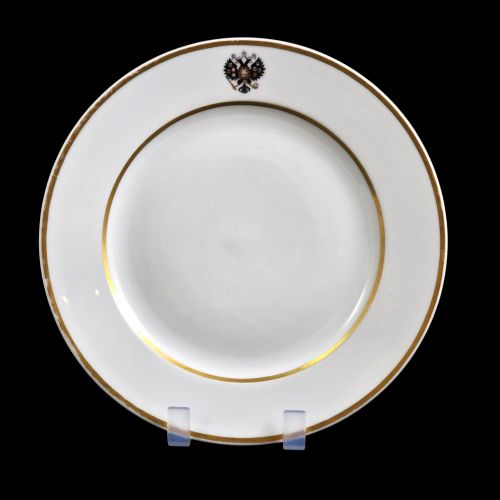
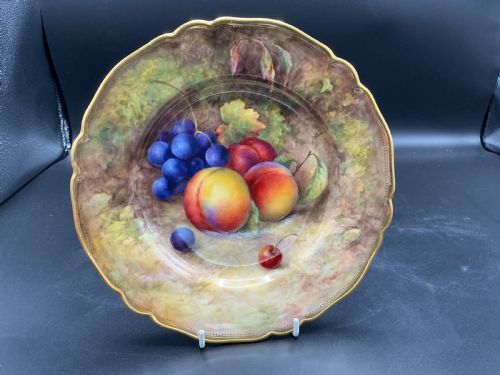
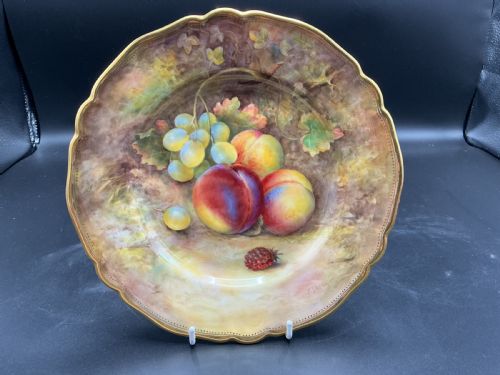
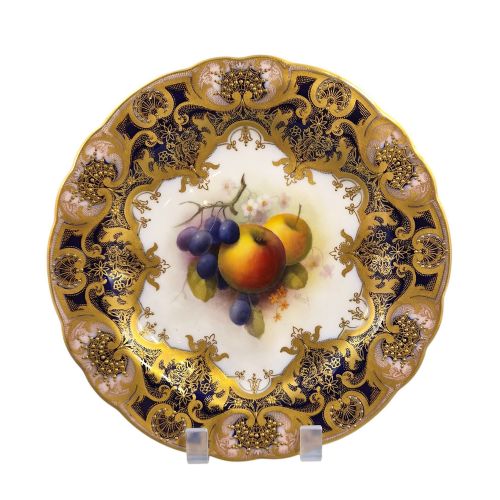
Gilt rimmed plates bring painted fruit, floral patterns, and intricate gilding to the table or cabinet from periods spanning the eighteenth century to the mid-twentieth.
Gilt Rimmed Plates
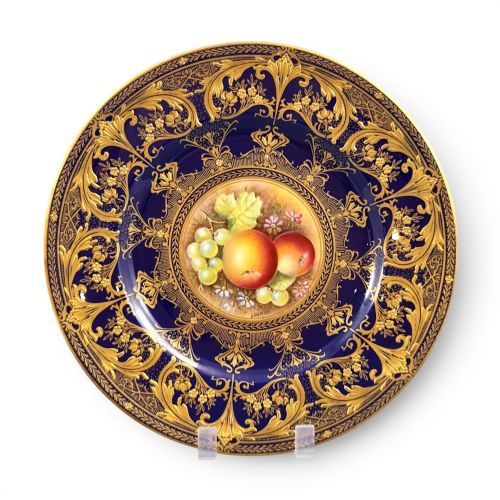
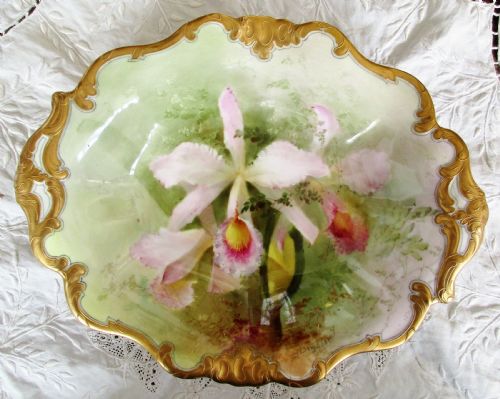
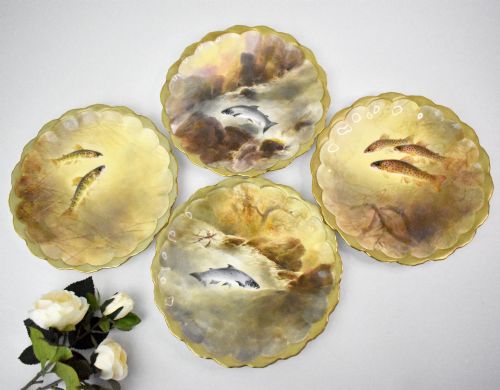
When you search for gilt rimmed plates, you encounter pieces designed for display in cabinets or service at the table, often hand-painted with fruit, flowers, birds, or classical scenes. The selection includes cabinet plates, soup dishes, chargers, and dessert services from diverse makers and periods.
You are most likely to meet twentieth-century pieces by factories such as Royal Worcester and Royal Doulton alongside Victorian and nineteenth-century examples. Forms range from simple side plates to large exhibition chargers with pierced borders or shaped edges.
The origins span English potteries, continental porcelain manufacturers like Meissen and Sèvres, and Japanese export wares. Each piece reflects the decorative taste of its era, from the restraint of the Georgian period to the ornate styles of the Victorian and Edwardian decades.
Materials and technique
The pieces on this page are formed from porcelain, bone china, ironstone, and ceramic, providing a fine white or buff body suitable for detailed enamel painting. Potters shaped these materials into plates, dishes, and chargers using traditional moulding and throwing techniques.
Makers applied gold leaf, gilt, and gilding to the rims and borders, often combining raised gold paste with hand-painted enamel motifs. Firing fixed the metallic decoration and vibrant colours to the glazed ceramic surface, resulting in durable finishes designed for formal dining or display.
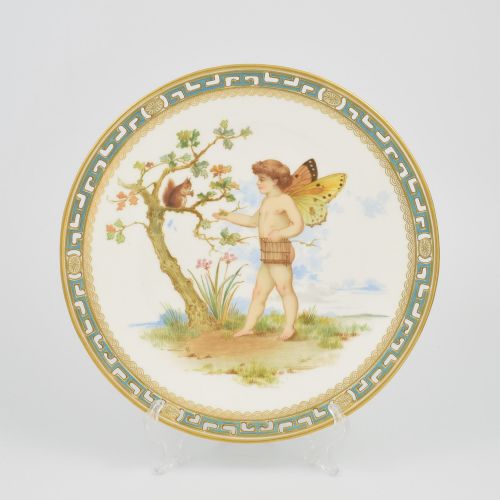
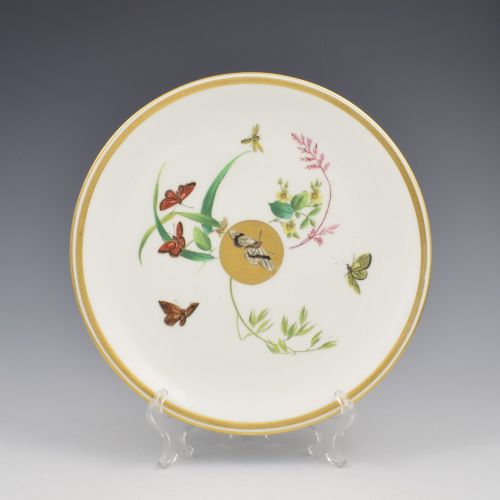
Squirrels and fairies gaze across nineteenth-century porcelain borders.
Distinctions in quality
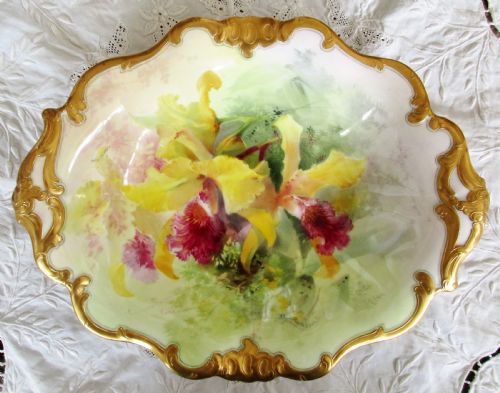
The standard of a plate is largely determined by the skill of the artist responsible for the hand-painted centre, whether depicting fruit, orchids, or figures. Named artists whose signatures or recognised works appear on the porcelain command greater attention from collectors.
The precision and weight of the gilding along the rim indicate the level of craftsmanship, with heavy hand-applied gold leaf showing superior execution compared to simpler transfer-printed borders. The crispness of porcelain moulding, reticulation, and piercing further separates standard production wares from exhibition-grade cabinet pieces.
Royal Worcester·Royal Doulton·Meissen·Coalport·Wedgwood
The Gilt Rimmed Plates Glossary
- Cabinet plate
- A decorative plate intended for display in a cabinet rather than for daily dining use.
- Gilding
- The application of gold leaf or gold powder to the ceramic surface, particularly along the rim.
- Reticulation
- An openwork or pierced lattice border created in the wet clay before firing.
- Imari
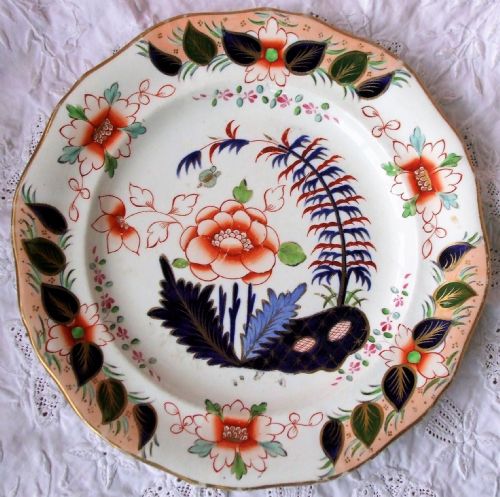
- A decorative pattern style featuring deep cobalt blue, iron red, and gilt, originating in Japan and copied by European potteries.
- Charger
- A large decorative plate or dish, often utilised as a base setting or hung for display.
Gilt Rimmed Plates: Frequently Asked Questions
Were these plates used for dining?
Many examples on this page served as functional tableware during formal dinners, particularly dessert services and soup dishes from the nineteenth and early twentieth centuries.
Other items, specifically cabinet plates and exhibition pieces, were created strictly for visual display and feature delicate painted scenes that would not withstand heavy service.
How do I identify the maker?
Makers usually marked the reverse of the ceramic with factory stamps, impressed ciphers, or painted symbols that evolved across different periods.
Artist signatures, such as those by Royal Worcester painters, frequently appear on the front of painted fruit and scenic plates near the rim.
What is the difference between porcelain and ironstone?
Porcelain is a vitrified, translucent ceramic material fired at high temperatures, typical of fine cabinet plates from European factories.
Ironstone is a heavier, opaque earthenware developed to be more robust for table service while maintaining a refined glazed finish.
How should I display a cabinet plate?
Displaying these plates safely involves using specialised wall hangers with rubber-coated prongs or sturdy plate stands designed for cabinet shelves.
Positioning them away from direct sunlight protects the hand-painted enamel colours and gold leaf from fading over time.