


Meissen Cabinet Plates
Meissen cabinet plates are fine hard-paste porcelain pieces decorated with hand-painted birds, floral sprays, or pastoral scenes, bringing historic German craftsmanship into a modern interior.
Meissen Cabinet Plates
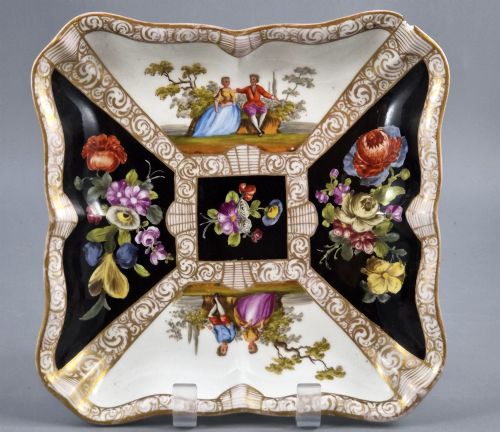
Meissen cabinet plates represent the height of German porcelain production, appearing on this page in forms such as square dishes, reticulated plates, and dessert dishes. These pieces primarily date from the nineteenth century, spanning decades from eighteen fifty to nineteen twenty.
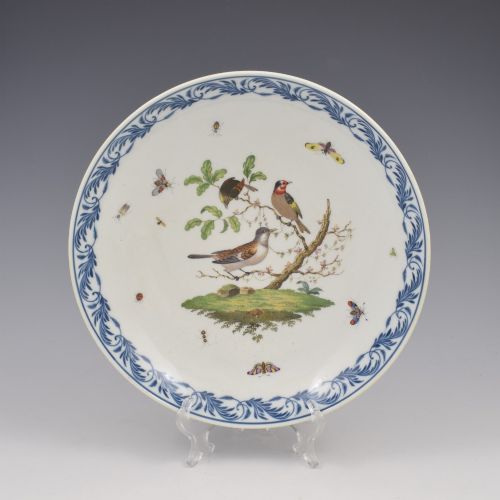
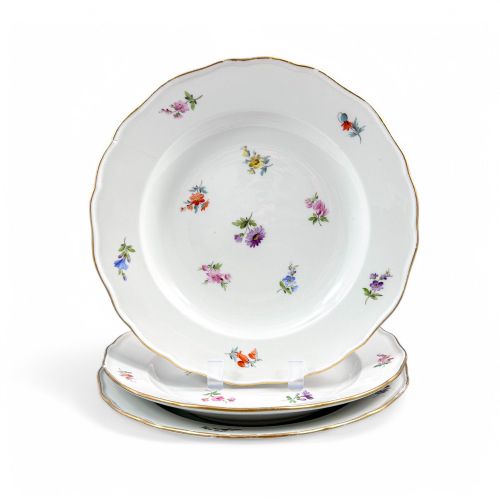
The decorative subjects draw heavily on established artistic traditions, including hand-painted ornithological bird studies, exotic birds, and figurative scenes after Boucher or Watteau. Alongside these pictorial designs, simpler patterns featuring Streublumen floral motifs or the Kakiemon Gelber Löwe pattern also appear across the selection.
How they were made
Makers utilised hard-paste porcelain as the base material, shaping it into plates, bowls, and square dishes before applying detailed overglaze enamel painting. The resulting painted surfaces display rich polychrome colour palettes applied by hand.
Many examples incorporate raised or flat gold leaf and heavy gilt embellishments to highlight reticulated borders and rims. These gilt details complement the central painted motifs and tie the Rococo Revival and Victorian styles together.
Materials recorded on this page include enamel, gold leaf, and gilt applied over a white porcelain body.
What varies in quality
The standard of execution in the hand-painted elements dictates the division between ordinary and exceptional pieces. Plates featuring finely detailed exotic birds or carefully rendered figures after Boucher demand a higher level of artistic skill than repetitive floral sprays.
The presence of intricate manufacturing techniques, such as reticulated pierced borders combined with extensive gold leaf and gilt work, separates standard utility wares from ornamental cabinet pieces intended for display.
The Meissen Cabinet Plates Glossary
- Hard-paste porcelain
- A dense, vitrified ceramic composition fired at very high temperatures, forming the durable white body characteristic of Meissen manufacture.
- Overglaze enamel
- Coloured glass powders fused to the fired porcelain surface in a secondary kiln firing, allowing for bright and varied pictorial decoration.
- Reticulated
- Having an openwork or pierced lattice design incorporated into the rim or border of the plate during shaping.
- Streublumen
- A decorative motif composed of scattered small floral sprays painted across the white porcelain ground.
- Kakiemon
- A Japanese enamel style emulated by European factories, featuring distinct asymmetrical bird and floral arrangements on a white background.
Meissen Cabinet Plates: Frequently Asked Questions
What are meissen cabinet plates?
Meissen cabinet plates are decorative hard-paste porcelain dishes produced by the German factory, featuring hand-painted designs meant for display rather than dining.
They encompass various nineteenth-century forms, including square dishes, reticulated plates, and dessert dishes adorned with birds, flowers, or historical scenes.
How do I date these plates?
Dating relies on stylistic clues like Rococo Revival moulding, specific hand-painted subjects such as Watteau scenes, and recorded production eras from the nineteenth century.
Changes in painting style and decorative patterns also help place individual pieces within decades spanning eighteen fifty to nineteen twenty.
How were they used historically?
These pieces served primarily as ornamental items for display in cabinets or on walls within prosperous nineteenth-century homes, showcasing the owner's taste.
While some take the form of dessert dishes or plates, their intricate gilding and detailed paintings suited them for visual appreciation.
How do I care for antique porcelain?
Antique porcelain requires gentle handling and dusting with a soft, dry cloth to protect the delicate overglaze enamels and applied gold leaf.
Avoiding harsh cleaning agents and keeping the pieces away from direct, abrasive contact preserves the hand-painted surfaces and gilt borders.