




Polychrome Ceramic Urn Pair
These polychrome ceramic urn pairs bring together centuries of global artistry, offering symmetrical statements of painted colour and form for your home.
Polychrome Ceramic Urn Pair
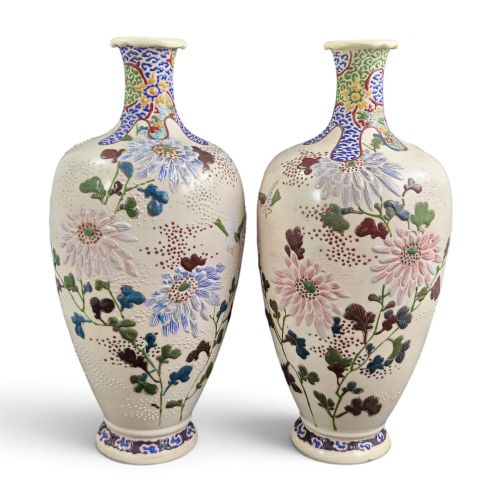
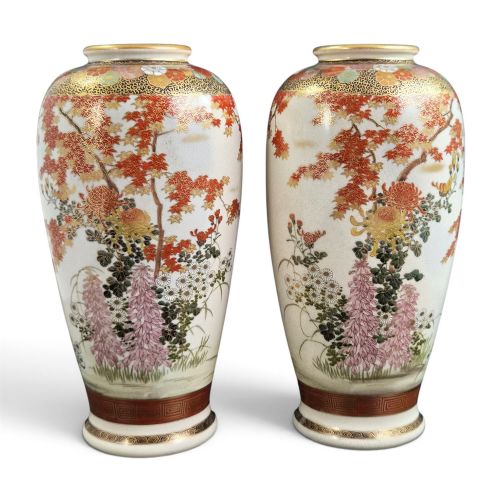
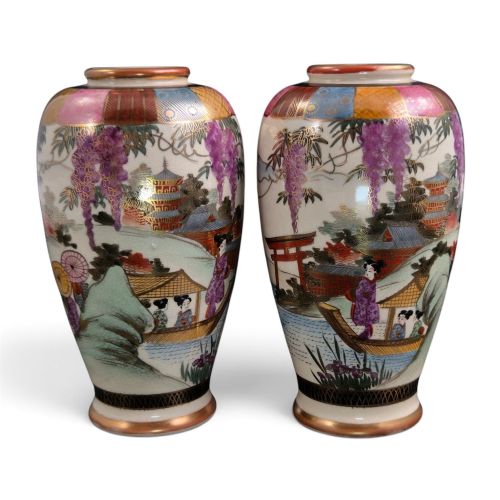
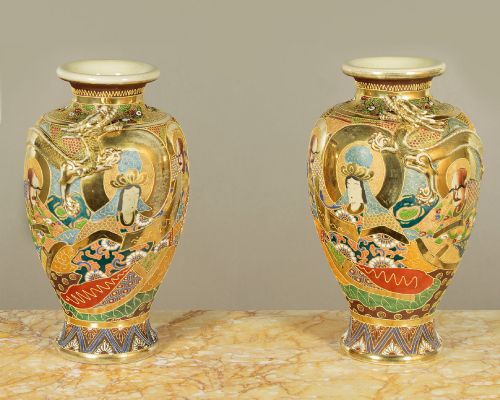
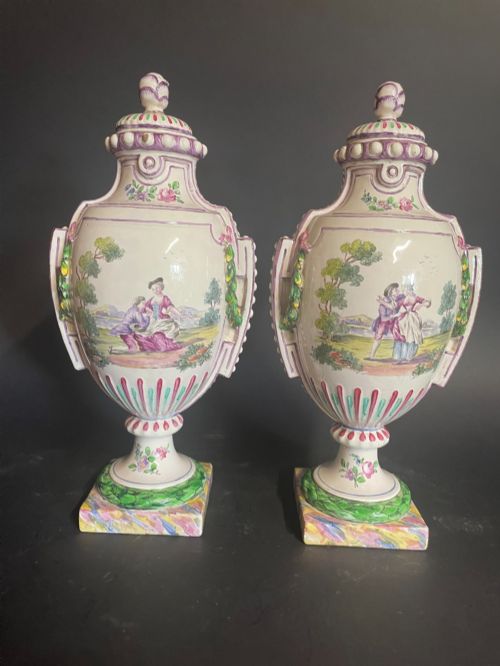
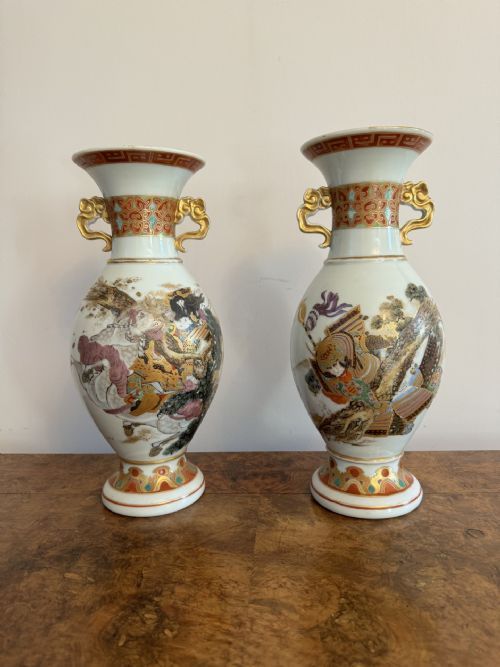
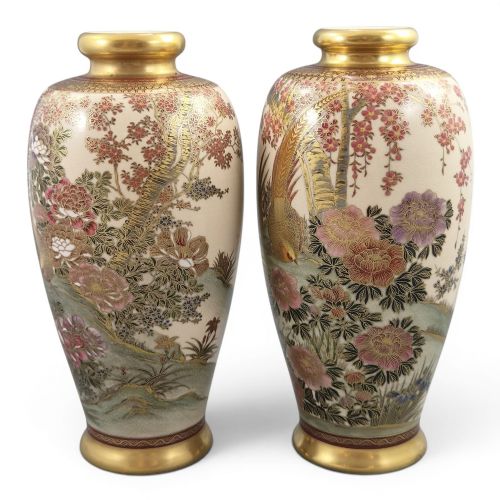
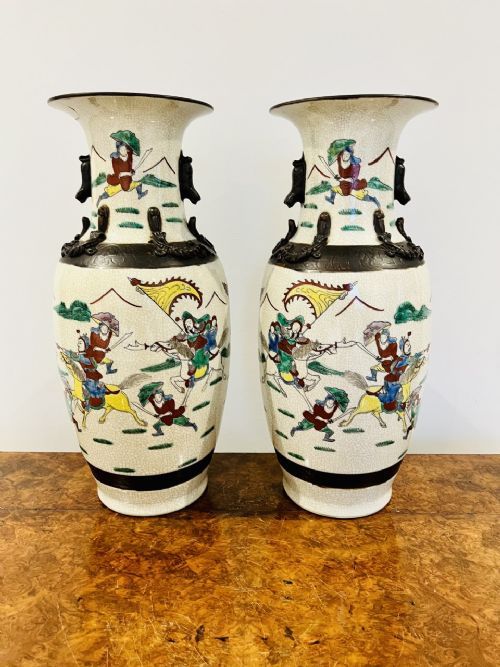
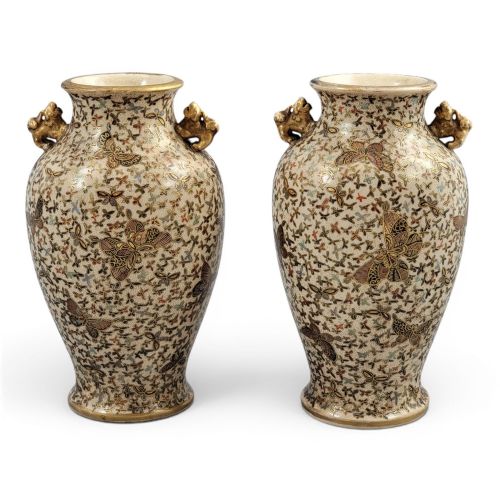
When searching for a polychrome ceramic urn pair, you are looking at matched vessels created for display, most frequently taking the form of Japanese Satsuma and Kutani wares alongside Chinese Canton and export porcelain from the nineteenth and early twentieth centuries. These decorative objects span diverse cultural traditions, including Meiji period Japanese works and Qing dynasty Chinese pieces, designed originally for export or domestic exhibition.
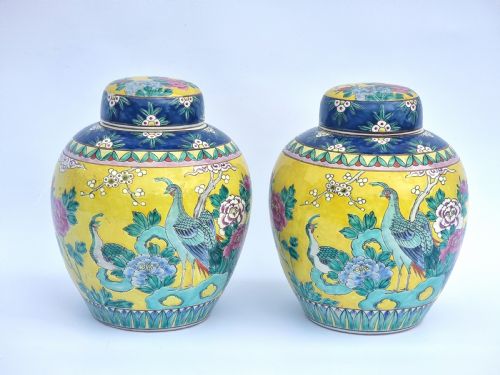
You are most likely to encounter nineteenth-century and Edwardian examples on this page, ranging from large floor vases to smaller lidded ginger jars and table lamps. The selection heavily represents earthenware and porcelain bodies decorated with intricate hand-painted motifs, figures, landscapes, and floral arrangements.
The enduring appeal of these pairs lies in their balanced visual presence, offering matching dual forms that anchor a mantelpiece, sideboard, or architectural niche. Each pair reflects the specific decorative tastes of its period of origin, from elaborate Chinoiserie to traditional Japanese motifs.
How they were made
The creation of these pieces relies on ceramic and earthenware bodies shaped into vases, ginger jars, and urns, which are then finished with detailed hand-painting using enamel colours. Artisans applied rich surface decoration often enhanced with gold leaf and gilt glaze to highlight specific motifs and patterns.
Techniques varied by region and period, encompassing the fine translucent quality of porcelain alongside the heavier, more opaque substance of ironstone and earthenware. Many pieces received multiple firings to set the complex polychrome enamels and metallic accents firmly onto the ceramic surface.
The listings on this page span several ceramic bodies, including porcelain, earthenware, and ironstone, decorated with enamel and gold leaf.
What varies in quality
Quality in these polychrome ceramic urn pairs rests primarily upon the precision and complexity of the hand-painted brushwork. Superior pieces display meticulous detail in figures, flora, and landscapes, whereas lesser examples rely on repetitive, mass-produced transfer printing rather than individual artistry.
The application and preservation of gilding also distinguish the range, with finer items utilising heavy gold leaf and elaborate raised enamel work that remains crisp and bright. Additionally, the crispness of the ceramic moulding and the harmonious balance of the paired shapes indicate the skill of the original workshop.
Maruni Kobe·Manpei·Kinzan·Hododa·Rozenburg·Fukagawa·Mason
The Polychrome Ceramic Urn Pair Glossary
- Polychrome
- Decoration executed in multiple colours. This multi-coloured approach is fundamental to the vibrant appearance of these painted ceramic vessels.
- Satsuma
- A type of Japanese earthenware originating from Satsuma Province, typically featuring a ivory crackle glaze and elaborate polychrome and gilt ornamentation.
- Ironstone
- A type of durable earthenware patented in the nineteenth century. It provides a robust body suitable for heavy use and intricate enamelling.
- Famille Rose
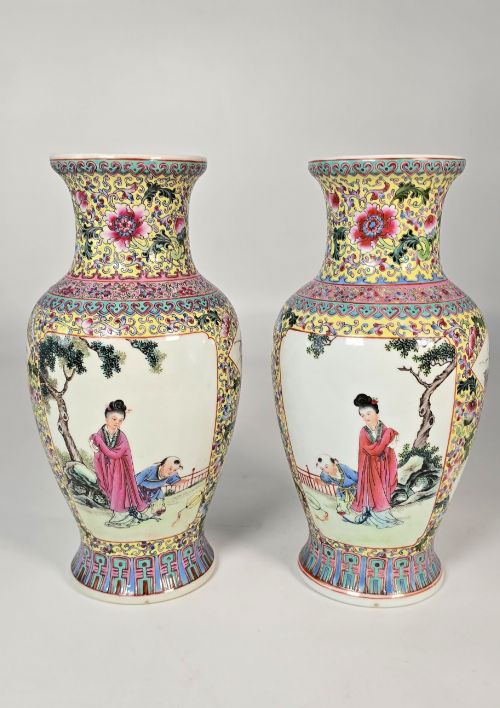
- A major palette of Chinese ceramic glazes introduced in the Qing dynasty, distinguished by its predominant opaque pink or rose enamel colour.
Polychrome Ceramic Urn Pair: Frequently Asked Questions
How were these urn pairs used?
Historically, these matched vessels served as prominent decorative centerpieces in domestic interiors, mantelpieces, and reception rooms. Their dual nature provided formal balance to a room's arrangement.
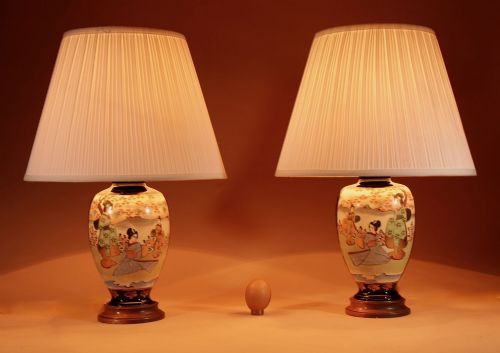
Some examples were later adapted into table lamps while retaining their original hand-painted ceramic bodies, shifting from purely aesthetic objects to functional lighting.
How do I live with them?
Placing a matched pair of urns on a sideboard, console table, or mantelpiece creates a natural focal point that draws the eye and anchors the surrounding decor. Their detailed surfaces reward close viewing in well-lit spaces.
Because these pieces feature delicate enamels and gilding, they benefit from stable placement away from high-traffic areas and direct, harsh sunlight to preserve their painted finishes.
How do I tell periods apart?
Distinguishing between periods involves examining the specific painting styles, glaze characteristics, and potting techniques recorded in the piece. For instance, nineteenth-century examples often feature dense hand-painted motifs like Rose Medallion, while later periods show shifts in colour palettes and clay bodies.
Maker marks, signatures, and exhibition labels where present provide direct clues to the exact era of production, ranging from the Meiji period to the Edwardian era.