
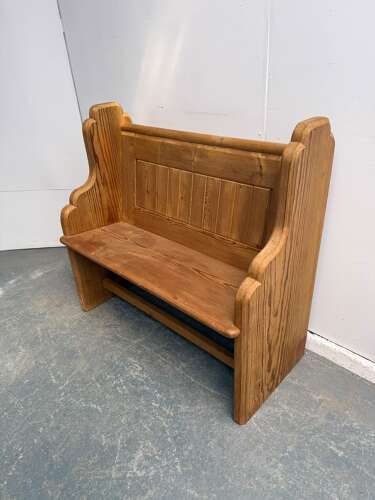
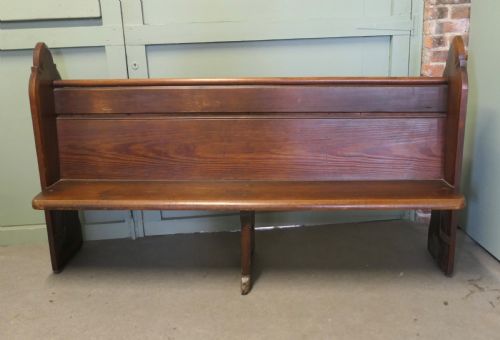
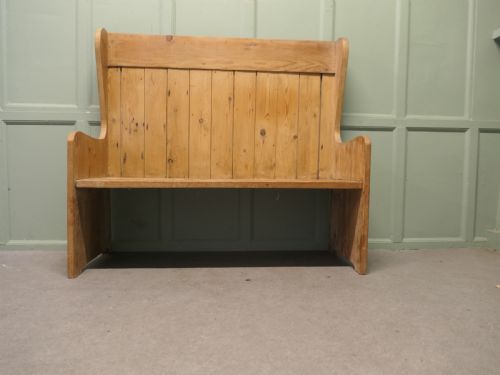
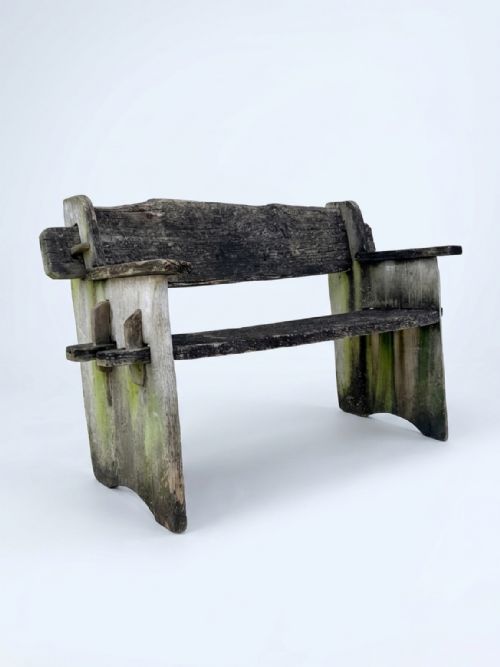
Pine Wooden Bench
A pine wooden bench brings honest utility and straightforward comfort to an interior, built for daily life in farmhouses, churches, and halls.
Pine Wooden Bench
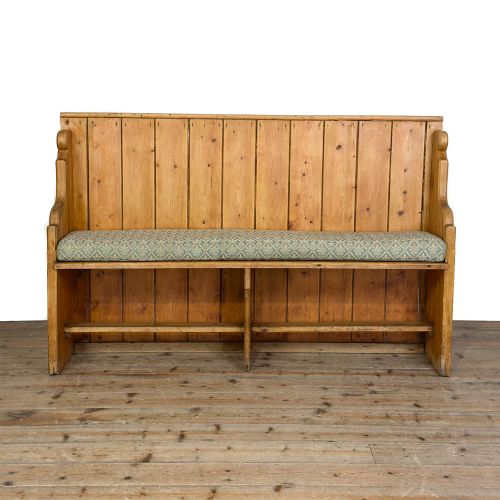
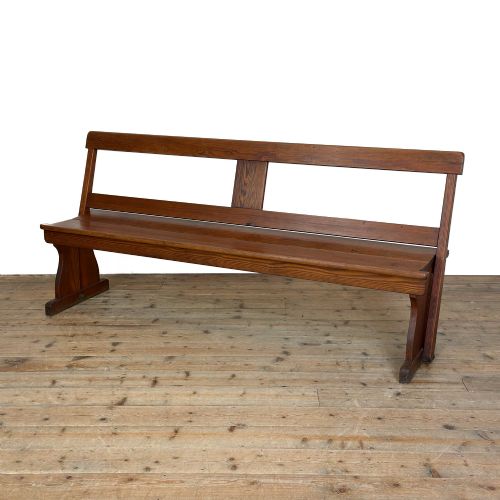
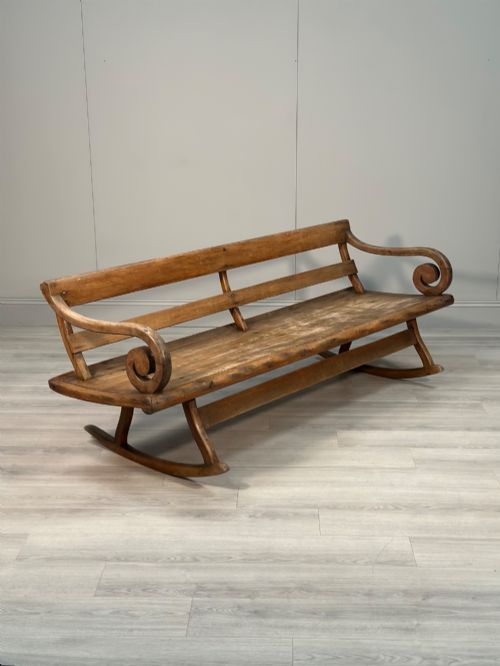
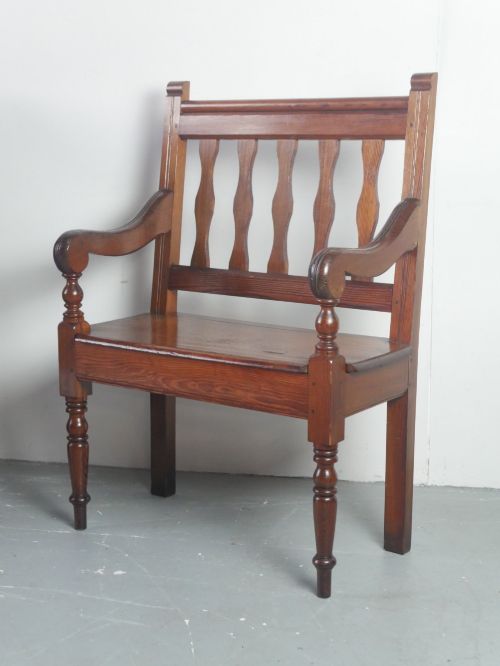
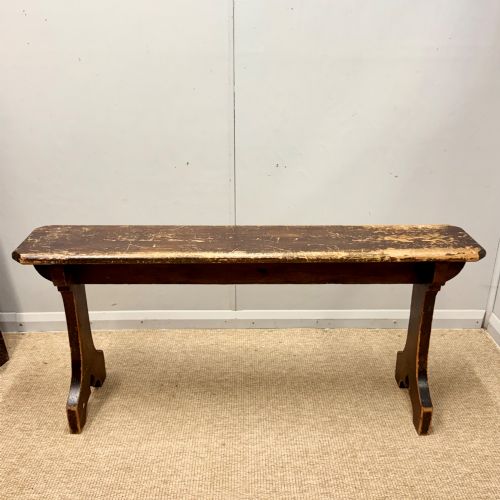
A pine wooden bench is a practical seating form designed for communal spaces, domestic halls, and rural kitchens. The pieces found here span the Georgian, Victorian, and Edwardian eras, encompassing domestic settlers, church pews, and narrow hallway designs.
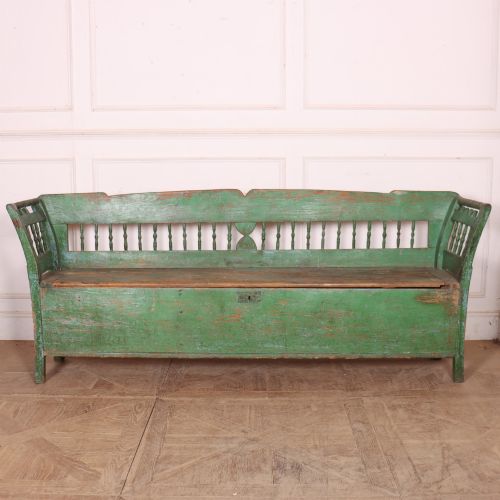
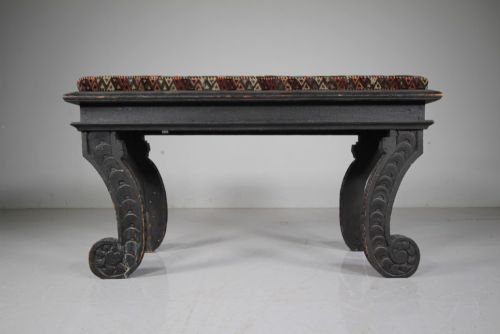
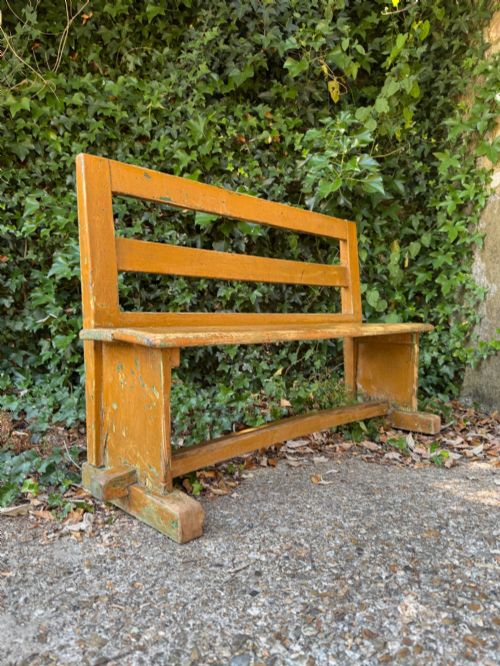
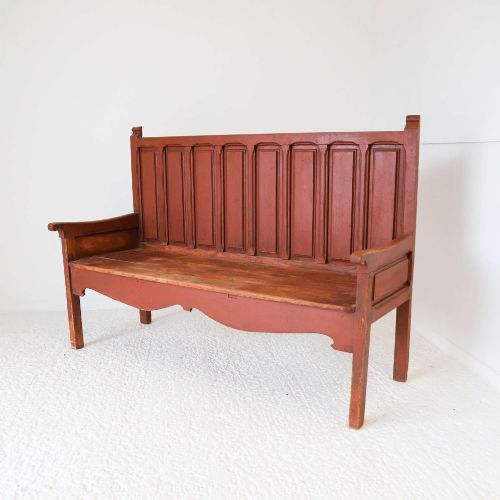
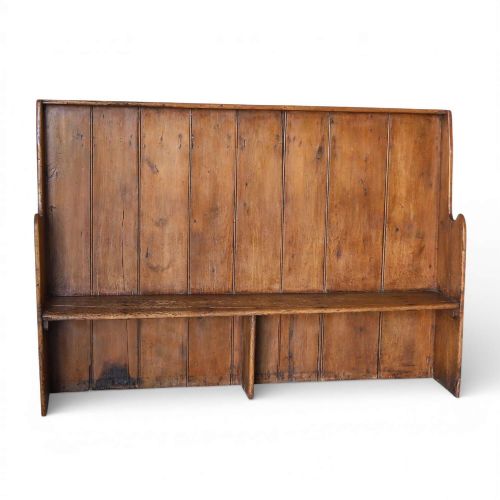
The most frequent examples are nineteenth-century church pews and farmhouse benches, valued for straightforward construction and long proportions. Regional variations include Hungarian painted seating, English settles with high backs, and compact window seats.
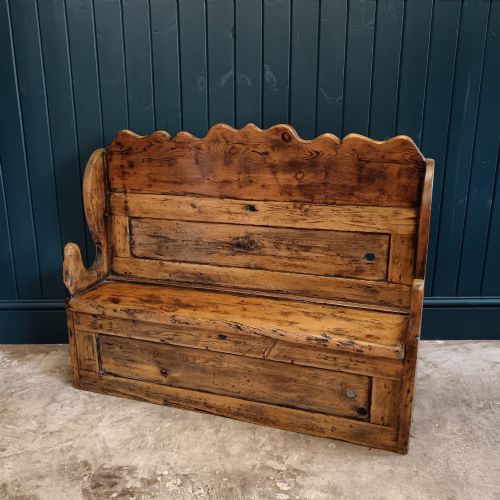
Makers often adapted these forms for specific domestic or institutional uses, resulting in chapel pews, organist benches, and box settles with storage beneath the seat. Their utility remains central, serving dining areas, boot rooms, and gardens.
Materials and construction
These benches rely primarily on solid pine and pitch pine, occasionally paired with secondary timbers like elm or sycamore for seats and tops. Joinery follows traditional carpentry methods, utilising pegged mortise and tenon joints to withstand heavy weight.
Surfaces show varying finishes, from clear wax that highlights the honey brown grain to original painted coats in blue, green, grey, or ochre. Iron fixings and leatherette upholstery appear on specific period examples, particularly Arts and Crafts box settles and chapel pews.
Pine Wooden Bench Retail Price Guide 2026
Typical asking prices for pine wooden bench among the pieces listed under this phrase on Sellingantiques today, from the lower quarter to the upper quarter. They describe what is for sale here now, not the wider market.
Listings feature pieces spanning the Georgian, Victorian, and Edwardian periods, constructed from pine, pitch pine, paint, and timber.
Assessing quality and character
Quality rests in the integrity of the original timber and the retention of authentic surface patination, whether accumulated wax or untouched historic paint. Pieces retaining their original proportions, unreduced lengths, and sound structural joinery stand apart.
Subtle details separate everyday utility pieces from finer examples, such as turned spindles, fielded panel backs, or integrated storage boxes. Surface wear tells the history of the timber, where honest marks of use enhance the character of the seating.
The Pine Wooden Bench Glossary
- Settle
- A wooden bench with a high back, solid arms, and often a enclosed box base designed to block draughts in traditional rooms.
- Pew
- An ecclesiastical bench traditionally found in churches and chapels, constructed with straight backs and simple or panelled ends.
- Pitch pine
- A dense, resinous variety of pine timber known for pronounced grain patterns and durability, frequently utilised in nineteenth-century joinery.
- Patina
- The surface sheen and colour developed on timber through decades of handling, exposure to light, and application of wax.
- Box settle
- A specific form of settle featuring a hinged seat lifting to reveal storage space underneath for household goods or blankets.
Pine Wooden Bench: Frequently Asked Questions
Where should I place a pine bench?
A pine bench fits well in a narrow hallway, along a kitchen dining table, or providing seating in a boot room. Their slim profiles allow them to occupy circulation spaces without blocking movement.
In living areas, high-back settles create cosy corners away from draughts. Garden variants suit sheltered outdoor seating areas.
How do I care for waxed pine furniture?
Maintain waxed pine by applying a traditional beeswax polish every few months to nourish the timber and preserve the surface finish. Buff the surface gently with a soft cloth to maintain a natural sheen.
Keep these benches away from direct heat sources and radiators to prevent the wood from drying out or splitting.
What is the difference between a pew and a settle?
Pews are straight-backed benches originally built for churches, typically featuring open or panelled ends and fixed lengths. They focus on upright seating for congregations.
Settles are domestic pieces featuring high backs, enclosed sides, and frequently a solid panel or box base designed to keep out cold air in older houses.
How can I tell the age of a pine bench?
Age is indicated by construction methods, tool marks left by hand planes, and the depth of the timber patina. Hand-cut nails, pegged joints, and older screw types point towards nineteenth-century origins or earlier.
Styles also guide dating, from Georgian panelled construction through to Victorian proportions and Arts and Crafts simplicity.