




Swedish Country Bench
A swedish country bench brings understated Scandinavian proportion and honest pine construction into a modern room.
Swedish Country Bench
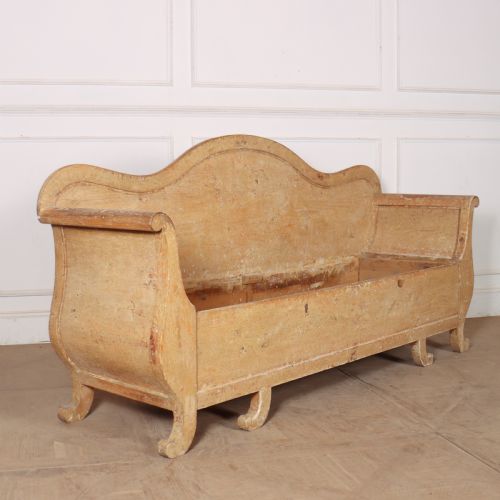
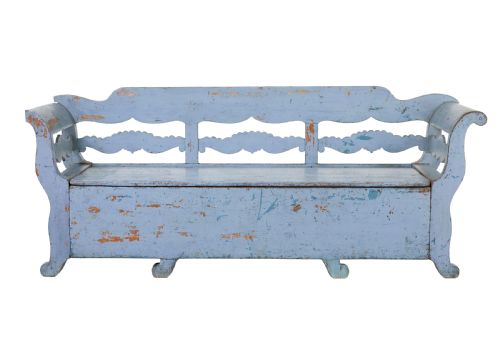
A swedish country bench is a practical seating form rooted in Scandinavian domestic history, spanning simple workbenches to high-backed settle benches with integrated storage. When you search for this phrase, you meet pieces built primarily during the nineteenth and eighteenth centuries, shaped by Scandinavian country and Gustavian design traditions.
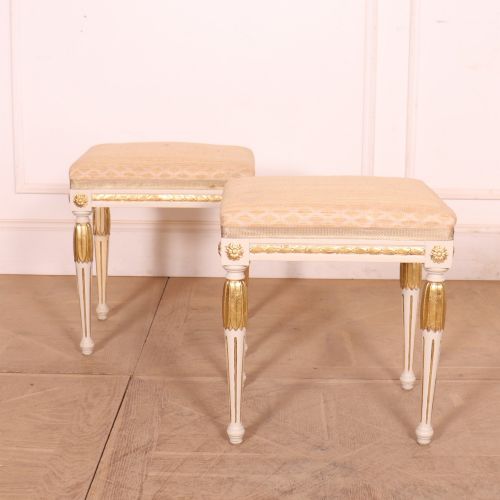
The selections here range from children's beechwood stools and rustic painted pine benches to large eighteenth-century settle benches. Alongside standard benches, you encounter related forms like worktables and dining preparation tables that share the same utilitarian origins.
How they were made
Makers built these pieces predominantly from solid pine and beechwood, selecting timber suited to heavy domestic or workshop use. Construction relied on traditional joinery methods that kept the timber stable through harsh seasonal changes.
Surfaces frequently carry historic layers of paint, with some examples incorporating fabric upholstery or subtle touches of gold leaf. Iron hardware provided necessary reinforcement for hardworking settlement benches and workbenches.
Several items double as serious meal-prepping surfaces, proving that historic Swedish carpenters took their pastry rolling very seriously indeed.
What varies in quality
Quality rests upon the integrity of the original painted surface and the honesty of the timber construction. Pieces that retain their early or original painted finishes command closer attention than later overpainted examples.
Proportion and scale distinguish finer regional iterations from standard utility items. The restraint of Gustavian-inspired lines demonstrates a higher design ambition than simpler rustic workshop pieces.
The Swedish Country Bench Glossary
- Settle bench
- A wooden bench featuring a high back and solid sides designed to block draughts, often enclosing a storage compartment beneath the seat.
- Gustavian
- The Swedish interpretation of neoclassical style, characterised by restrained carving, lighter proportions, and pale painted finishes.
- Pine
- A softwood commonly utilised across Scandinavian furniture making for its accessibility, workability, and resilience.
- Workbench
- A heavy utilitarian table fitted with vices or stops, designed specifically for manual craft and preparation tasks.
Swedish Country Bench: Frequently Asked Questions
How do I style a painted bench?
A painted bench works well placed against a plain wall in a hallway or paired with a dining table for relaxed seating. Its linear profile brings functional surface area and subtle colour without dominating a room.
Allow the natural wear of the painted surface to show against simpler modern backgrounds. Adding a simple textile seat pad introduces comfort while respecting the rustic character of the timber.
What is a settle bench used for?
Historically, a settle bench provided seating by the hearth while shielding occupants from cold floor draughts. The enclosed base served as a secure chest for household blankets and provisions.
In contemporary spaces, the deep seat and high back make these pieces practical for entryways. They offer hidden storage for everyday items while functioning as a primary seating anchor.
How do I care for antique pine?
Keep pine furniture away from direct heat sources and drastic humidity shifts to prevent the timber from splitting. Dust the surface regularly with a dry cloth rather than applying heavy liquid polishes.
Preserve historic painted surfaces by avoiding chemical cleaners that strip the finish. Gentle maintenance ensures the patination develops naturally over decades of use.
How can I tell an older bench?
Examine the construction joints, tool marks, and the character of the paint layers for signs of age. Eighteenth and nineteenth-century pieces often display hand-planed surfaces and forged iron fixings characteristic of period workshops.
Check for consistency in wear patterns around high-contact areas like seat edges and armrests. Original paint finishes typically exhibit a dry, chalky texture and gradual thinning rather than uniform modern application.