


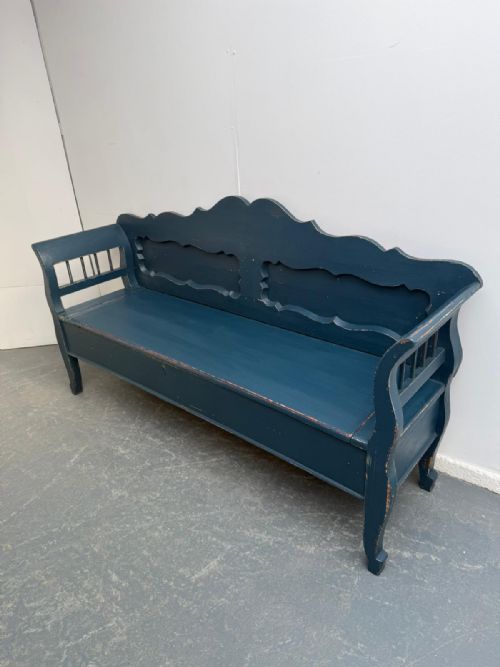


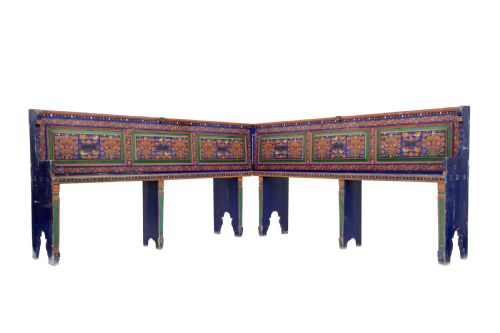


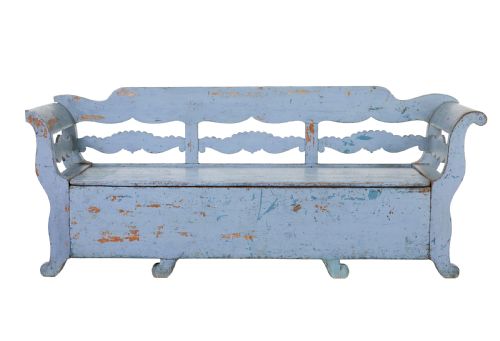

Blue Painted Bench
A blue painted bench brings immediate rustic character to a hallway or garden, combining practical seating with enduring folk art charm.
Blue Painted Bench
When searching for a blue painted bench, buyers encounter a diverse selection of seating ranging from English country settles to grander continental pieces. The pieces available here span several distinct periods including the Georgian, Victorian, and Edwardian eras, alongside 19th-century examples.
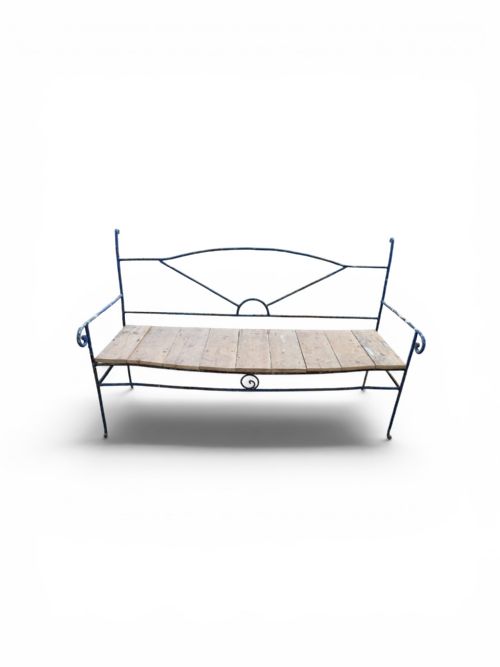
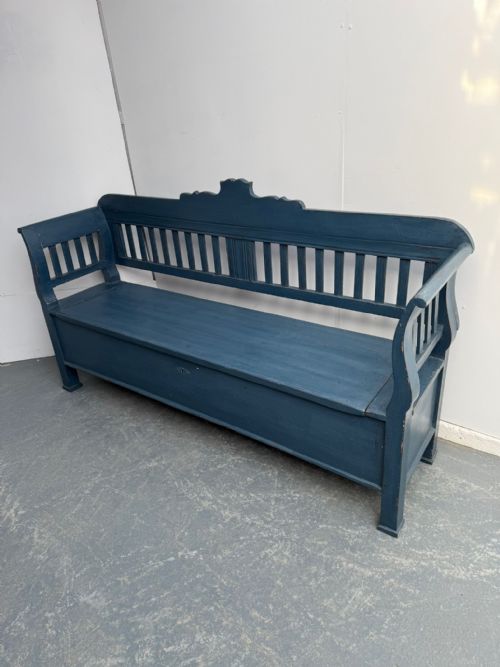
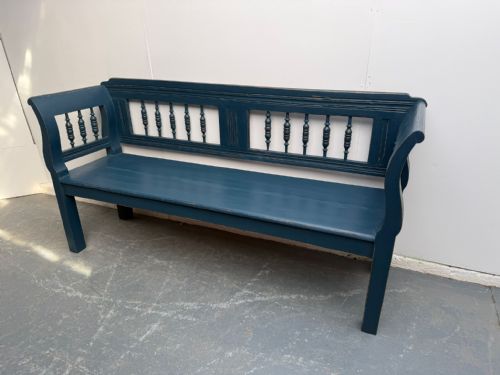
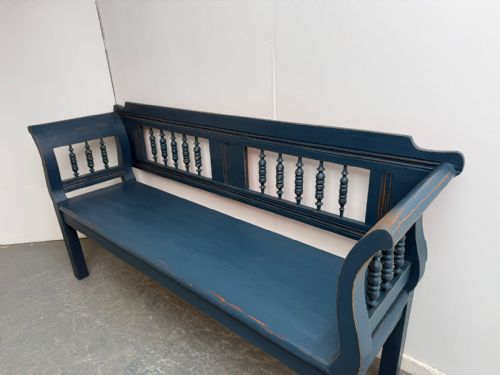
The most common forms on this page are generous three-seater pine benches originating from Hungary, alongside English high back settles and garden seating. These items demonstrate various regional traditions, taking inspiration from European folk art and Scandinavian country aesthetics as well as French Louis styles.
Object types stretch beyond standard benches to include storage benches, settle benches, window seats, and settees. Buyers will find that a blue painted bench serves equally well as a functional boot room seat or a decorative focal point in a living space.
Materials and construction methods
The construction of these pieces relies heavily on solid timber, with pine being the predominant wood used across the Hungarian and English vernacular examples. Beech and other domestic hardwoods also appear occasionally in the framework of settees and smaller window seats.
Paint is the defining surface treatment, applied over wood to create the characteristic blue finishes seen on folk art and country pieces. Metal elements such as brass or wrought iron occasionally provide structural reinforcement or decorative detailing on specific benches and sofas.
Blue Painted Bench Retail Price Guide 2026
Typical asking prices for blue painted bench among the pieces listed under this phrase on Sellingantiques today, from the lower quarter to the upper quarter. They describe what is for sale here now, not the wider market.
Listings feature 19th-century pine benches alongside Edwardian and Georgian examples, demonstrating a strong tradition of Hungarian folk art craftsmanship.
Assessing quality in painted seating
Quality in these benches is fundamentally defined by the integrity of the timber and the character of the surface finish. Pieces retaining original paint layers command greater interest from collectors than those with modern re-paintings, as the depth and patina of the pigment tell a clearer story of age.
Structural joinery dictates longevity, with traditional pegged joints and solid pine construction separating robust vernacular furniture from lighter decorative pieces. The sophistication of the carving, whether simple rustic shaping on a settle high back or refined fluted legs on a French-influenced settee, also marks the distinction between workshop tiers.
The Blue Painted Bench Glossary
- Settle
- A wooden bench with a high back, solid arms, and often a box seat compartment underneath. This form was designed to keep out draughts in older domestic interiors.
- Pine
- A soft softwood widely used in European country furniture for its accessibility and workability. It takes paint exceptionally well, making it the primary canvas for folk art decoration.
- Folk art
- Artistic work created within a traditional culture by self-taught makers, often featuring regional motifs and vibrant hand-painted surfaces. Pieces in this style carry a distinct local identity.
- Louis XV style
- A French design movement characterised by asymmetrical curves, cabriole legs, and ornate carving. This aesthetic appears on more formal settees rather than rustic country benches.
- Box settle
- A specific variety of settle featuring a hinged seat lifting to reveal storage space below. These dual-purpose items were staples of farmhouse kitchens.
Blue Painted Bench: Frequently Asked Questions
How do I clean a painted bench?
Dust the surface gently with a soft, dry cloth to remove everyday particles without disturbing the underlying finish. Avoid modern chemical sprays or abrasive cleaners that can damage historical paint layers.
For stubborn marks, use a barely damp cloth with mild soap, drying the wood immediately afterwards. Preserving the existing patina requires a delicate touch and minimal intervention.
Are these benches suitable for daily seating?
Most of these pieces were built for robust domestic use and remain entirely practical for everyday sitting. Pine construction offers substantial sturdiness, though older joints benefit from sensible weight distribution.
Placing cushions on the seat can improve comfort while protecting the historical wood from direct wear. Ensure the bench rests on a level surface to prevent undue stress on the frame.
Where should I place a painted bench?
A generous three-seater bench works wonderfully in a spacious hallway or boot room for putting on shoes. They also add striking colour and texture when positioned against a plain wall in a living room.
Keep wooden and painted furniture away from direct radiator heat or prolonged strong sunlight to prevent warping and fading. Garden-specific variants are treated for outdoor conditions, but indoor pieces should remain inside.
How can I tell an original finish from a modern repaint?
Original paint surfaces typically exhibit natural wear, softening around edges where hands have touched the wood over generations. Close inspection often reveals subtle craquelure and multiple microscopic layers beneath the top coat.
Modern repaints tend to present a uniform flatness without the varied tonal depth accumulated through decades of ageing. Examining the underside and interior surfaces usually clarifies whether the paint application matches the age of the timber.