





Swedish Wooden Bench
When you want a swedish wooden bench, you are looking at substantial pine and painted seating rooted in Scandinavian tradition.
Swedish Wooden Bench
A swedish wooden bench spans simple pine settles and refined painted seating from the eighteenth and nineteenth centuries. These pieces encompass rustic storage benches, settle benches, and grander sofas derived from classical styles.
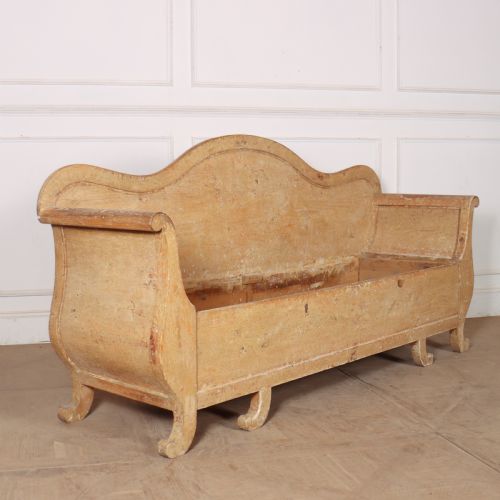
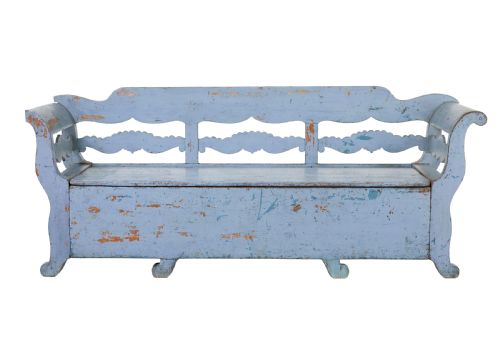
The version most commonly met on this page is the painted pine bench or settle from the nineteenth century. These sturdy items often display original paintwork reflecting Scandinavian country aesthetics.
Alongside conventional benches, the selection includes related forms such as workbenches, settees, and stools. Their origins stretch from provincial workshops to formal urban commissions.
What varies in quality
The standard of carving and architectural proportion distinguishes provincial work from high style pieces. Refined pieces draw directly on Gustavian and empire design idioms.
The survival of original paint surfaces heavily dictates the character of each piece. Untouched historic paint finishes hold more visual depth than later repainting.
Construction heft and timber selection create clear divisions among seating types. Dense old growth pine provides greater structural integrity than younger secondary woods.
Listings feature pine, beechwood, and giltwood constructed items spanning the eighteenth and nineteenth centuries.
John Tesch
The Swedish Wooden Bench Glossary
- Gustavian Neoclassical
- A Swedish adaptation of neoclassical design characterised by restraint, symmetry, and pale finishes. It emerged during the late eighteenth century under royal patronage.
- Settle
- A wooden bench featuring high backs, solid arms, and often enclosed storage beneath the seat. This form provided effective protection against drafts in historic rooms.
- Giltwood
- Timber coated with a thin layer of gold leaf or powder over a prepared base. This technique highlights carved ornament on formal seating.
- Hessian
- A coarse woven fabric typically utilised for underlying upholstery support or simple coverings. It appears frequently in period seating construction.
- Empire
- A decorative style inspired by classical antiquity featuring bold architectural lines and restrained ornamentation. It dominated European design during the early nineteenth century.
Swedish Wooden Bench: Frequently Asked Questions
What is a swedish settle bench?
A swedish settle bench is a high backed wooden seat designed to keep out drafts in traditional interiors. Many examples include integrated storage boxes beneath the seat base.
These pieces typically utilise pine construction and frequently display original painted finishes from the nineteenth century.
How do I identify a gustavian bench?
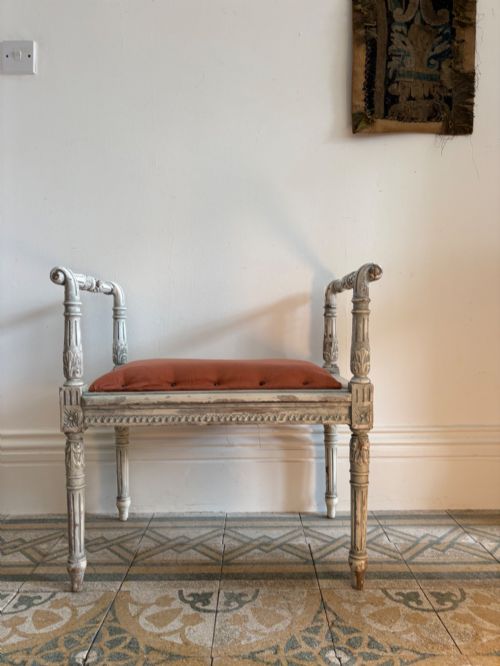
Gustavian benches exhibit restrained neoclassical lines, symmetrical forms, and pale painted surfaces. They draw inspiration from French louis xvi design interpreted through a scandinavian lens.
Such seating often pairs carved fluted legs with simple upholstery or exposed wood frames.
What woods were used?
Pine is the dominant timber found across these nineteenth and eighteenth century benches and settles. Beechwood also appears in specific smaller stool and chair formats.
Makers selected these softwoods and hardwoods for their local availability and ease of working.
Are these benches painted?
Many of these pieces feature painted wood surfaces ranging from original historic pigments to later decorative coats. Pine frames were frequently finished in pale tones to brighten traditional rooms.
Original paint retention remains a key characteristic sought after in provincial scandinavian furniture.