





Gustavian Style Bench
A gustavian style bench brings restrained northern elegance to a room through pale painted surfaces and clean neoclassical lines.
Gustavian Style Bench
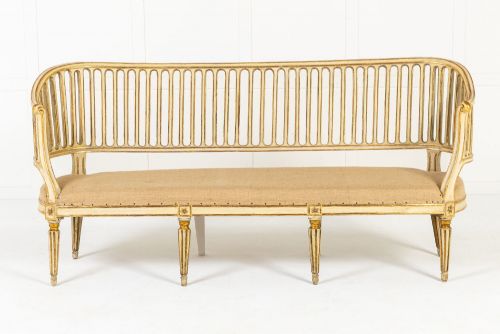
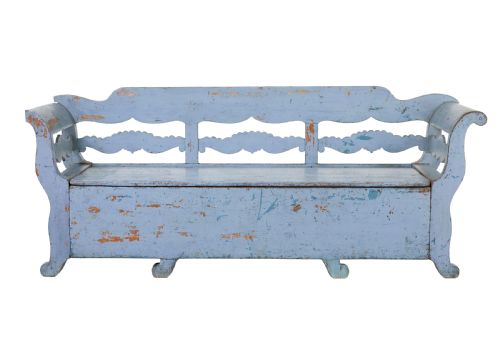
A gustavian style bench sits firmly within Scandinavian country traditions, drawing heavily on Swedish interpretations of neoclassical design. These seating pieces typically appear as painted wooden settles, settees or long benches originating from the eighteenth and nineteenth centuries.
Buyers will encounter items ranging from original period pieces to later nineteenth-century interpretations and twentieth-century examples. The forms vary from straightforward pine construction to gilded frames reflecting broader European design movements of the era.
While the search targets benches, the broader grouping encompasses related seating such as settees and sofas, alongside occasional dining tables and stools that share the same pale palette and regional craftsmanship.
Materials and construction
Makers relied primarily on pine and general wood construction to build the structural framework of these benches. Artisans then applied layers of paint, often in pale tones, to achieve the signature matt finish characteristic of Scandinavian furniture.
Upholstery and fabric appear frequently on settees and sofas, providing cushioned seating atop the wooden frames. Some finer examples incorporate cane work or detailed giltwood embellishments, reflecting the neoclassical aesthetic adapted by Swedish craftsmen.
Even dining preparation tables occasionally sneak into the seating listings, proving that eighteenth-century makers kept their kitchens very busy.
Judging quality and craftsmanship
Quality rests heavily on the integrity of the painted surface, where original layered paint finishes hold greater interest than later repainting. The subtlety of the carved neoclassical detailing also distinguishes finer workshop production from simpler country pieces.
Structural proportion and the balance between the wooden frame and upholstered elements dictate the visual success of the piece. Earlier eighteenth-century examples generally display more refined proportions than subsequent nineteenth-century adaptations.
The Gustavian Style Bench Glossary
- Gustavian
- A Swedish neoclassical design movement spanning the late eighteenth and early nineteenth centuries. It is characterised by lighter proportions, restrained ornamentation, and pale painted finishes.
- Settee
- A small upholstered sofa with arms and a backrest, designed for multiple occupants. These pieces often feature exposed wooden frames finished in paint or giltwood.
- Giltwood
- Wood that has been coated with gold leaf or a gold-coloured metallic finish. This technique highlights carved neoclassical details on more formal seating.
- Pine
- A softwood commonly utilised by Scandinavian makers for structural joinery and painted furniture. Its straight grain provides a stable base for layered paint applications.
Gustavian Style Bench: Frequently Asked Questions
How do I date a painted bench?
Dating relies on construction methods, wood types, and the character of the painted surface rather than strict makers' marks.
Eighteenth-century examples generally show more hand-shaped joinery and aged patina compared to nineteenth-century interpretations.
Where should I place a settee?
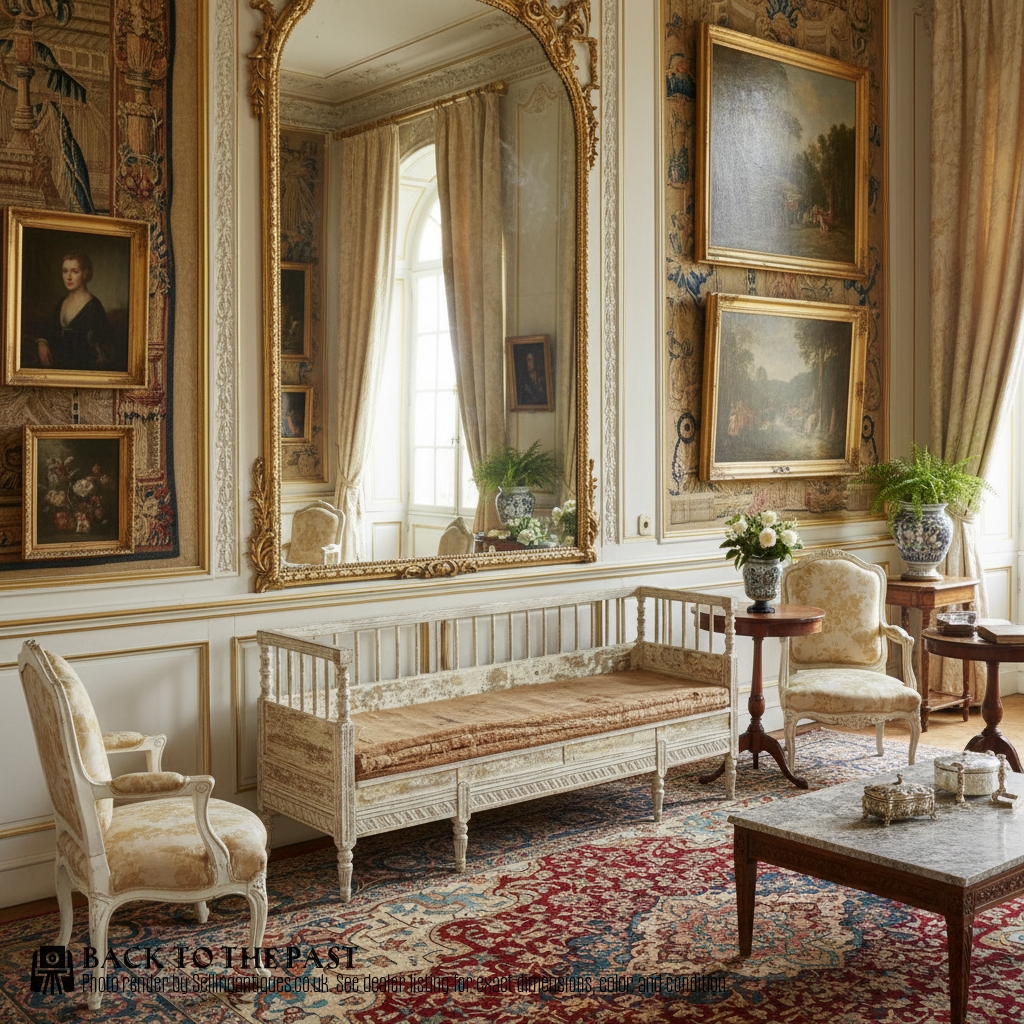
These seating pieces work well in hallways, living rooms, or bedrooms where their pale finishes can brighten an interior space.
They pair easily with both traditional country furniture and cleaner modern surroundings.
Are these benches comfortable for daily use?
Many settees and sofas incorporate upholstered cushions that provide a softer seat than standard wooden benches.
Adding loose textiles or squabs can also increase comfort on simpler pine or cane-backed forms.