
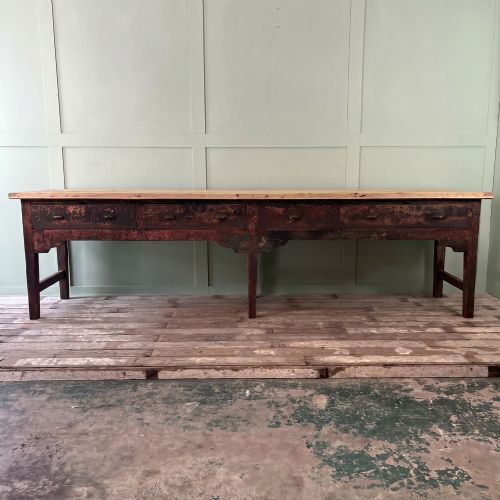
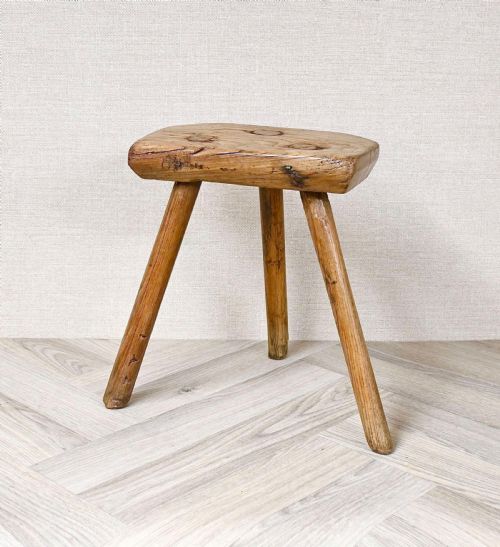
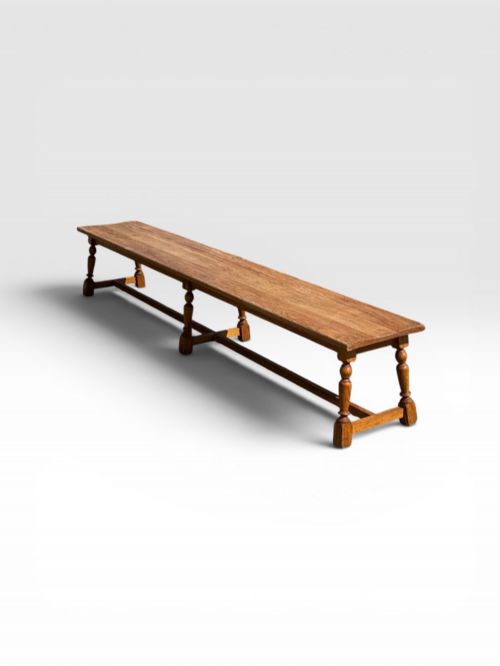
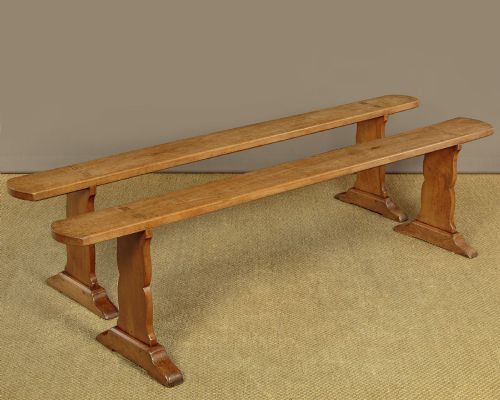
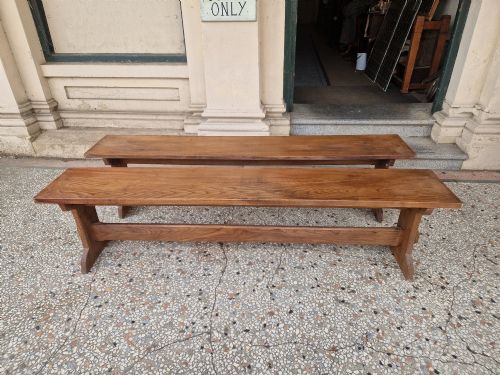


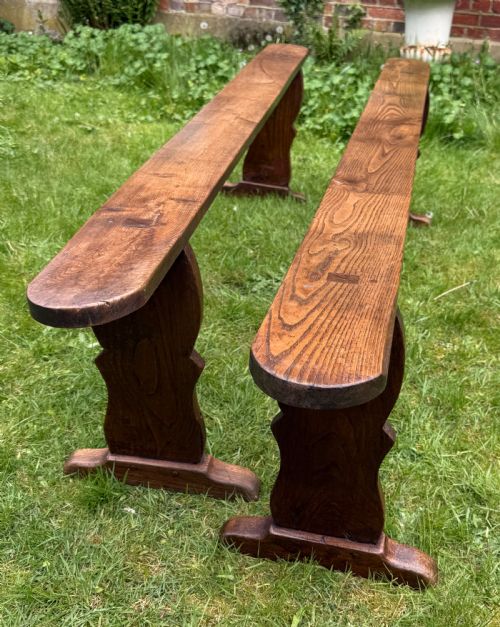
Antique Farmhouse Bench
An antique farmhouse bench brings hard-wearing utility and regional timber character into a modern interior.
Antique Farmhouse Bench
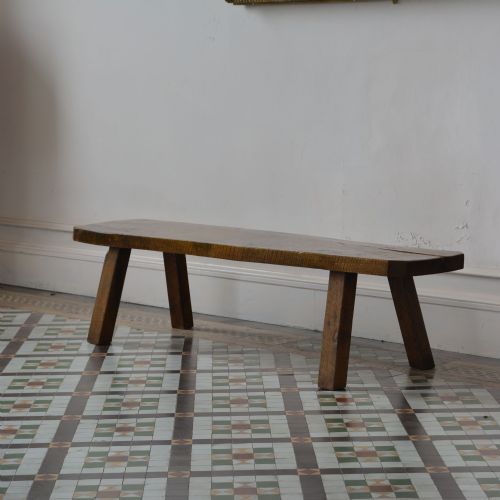
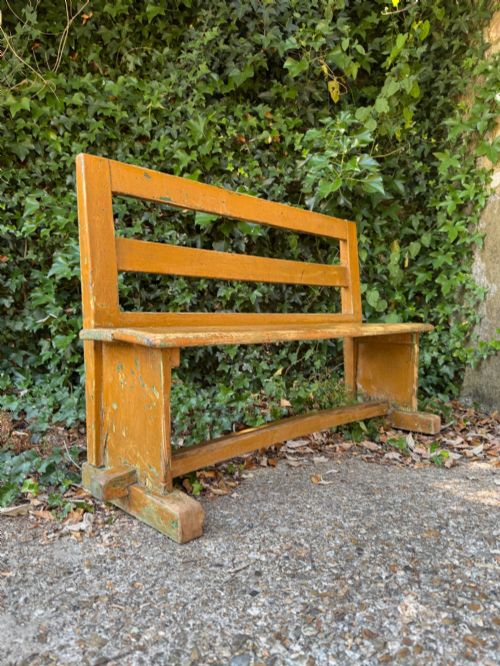
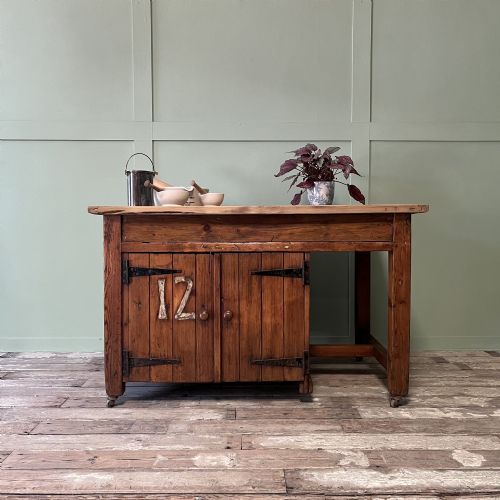
When you search for an antique farmhouse bench, you find functional seating shaped by utilitarian origins across British, French, Hungarian, and Austrian country houses. These pieces range from simple plank-top forms to high-backed settles and specialist work benches.
The version most likely to meet you on this page is a rustic pine or elm seating piece dating from the nineteenth or early twentieth century. Many originate from country kitchens, dairies, and taverns where long daily service required sturdy construction.
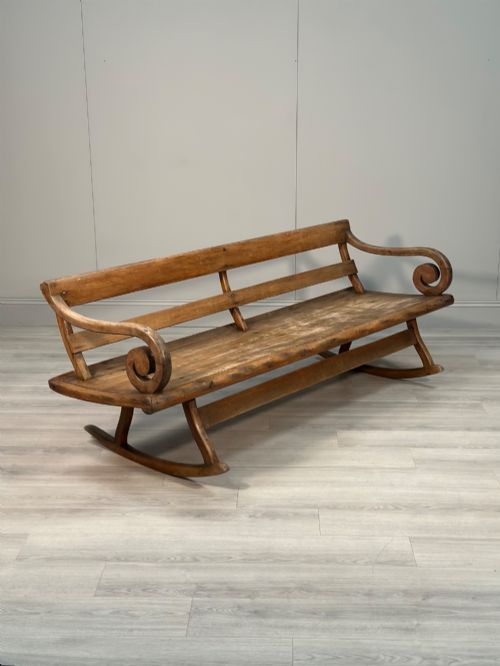
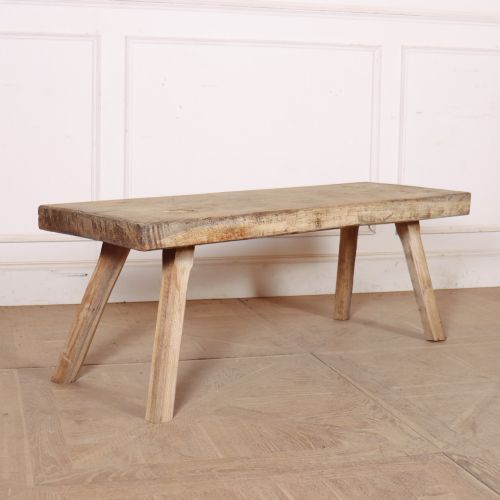
Makers often built these items to suit specific domestic tasks, resulting in variations like pig benches, hall seats, and long dining benches. Surviving examples show the honest wear of generations of agricultural and domestic use.
What varies in quality
The distinction between ordinary and exceptional examples rests on the integrity of the timber and the depth of natural patination accumulated through decades of use. Unaltered surfaces with original scrubbed finishes or early paint hold more character than heavily restored timber.
Proportion and scale dictate the standing of a piece, with unusually long dimensions, native hardwood construction, or integrated storage boxes marking out superior regional examples. Structural honesty, where legs and top remain original to one another, determines lasting integrity.
The Antique Farmhouse Bench Glossary
- Settle
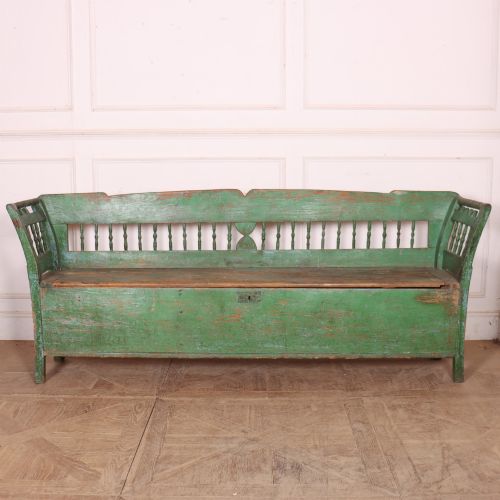
- A wooden bench with a high back, solid arms, and often an enclosed base designed to block draughts in traditional rooms. Many feature panelled backs or hinged seats concealing storage boxes.
- Pig bench
- A low, narrow wooden table or bench historically used in rural butchery and preparation work. Their utilitarian narrow proportions now make them useful as coffee tables or narrow console surfaces.
- Trestle
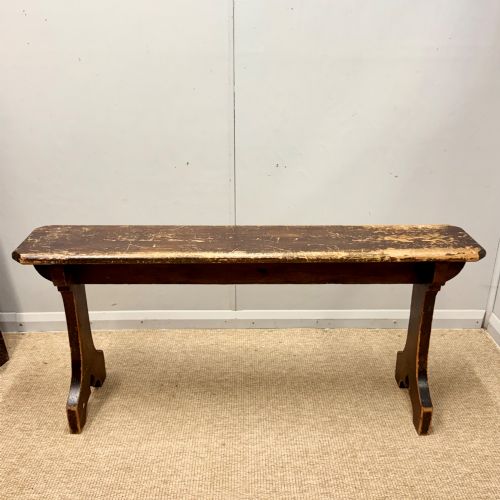
- A structural support consisting of a horizontal beam fixed to two splayed legs, commonly found beneath long dining benches and refectory tables. This design allowed maximum legroom for seated diners.
- Patina
- The surface sheen and colour depth developed by wood and paint over many years of handling, cleaning, and exposure to light. A rich patina indicates age and genuine domestic service.
- Scrubbed finish
- A pale wooden surface repeatedly scrubbed with water and soap to keep timber hygienic in farm kitchens. This process leaves the grain raised and bleached.
Antique Farmhouse Bench: Frequently Asked Questions
How were these benches used originally?
These benches served daily domestic and agricultural functions around the farmhouse, functioning as seating for communal dining tables and resting places in hallways.
Specialist variants supported kitchen preparations, whilst high-backed settles sheltered household members from draughty stone floors and doorways.
How do I fit a long bench into a modern home?
A long wooden bench slides neatly beneath a dining table to save floor space when not in use, creating an informal seating arrangement.
In hallways or living rooms, a narrow pine or oak bench provides practical seating alongside wall space without blocking narrow walkways.
How do I tell nineteenth-century pine from later timber?
Nineteenth-century pine displays tighter growth rings, hand-sawn board marks, and a dense wax or dry scrubbed finish developed over generations.
Later twentieth-century pine often shows mechanical saw markings, lighter weight, and less distinct surface depth in the grain.
Why do some benches have scrubbed tops?
Scrubbed tops result from generations of vigorous cleaning with water, sand, and soap to keep kitchen work surfaces hygienic.
This historical maintenance removed old finishes and left the bare timber grain pale, smooth, and tactile.