




Green Wooden Settle
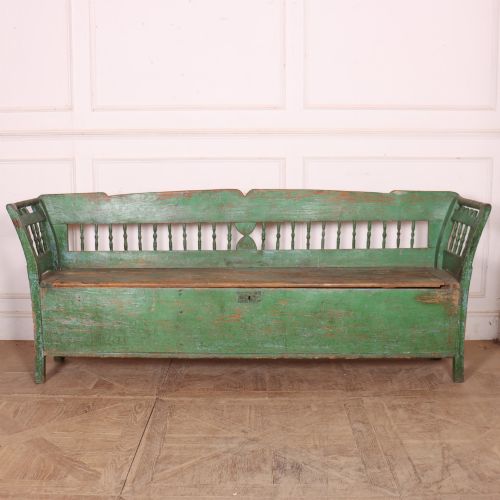
These green wooden settle pieces bring robust rustic character and practical seating straight from European farmhouses into modern homes.
Green Wooden Settle
A green wooden settle provides sturdy seating with high backs and enclosed bases, originating from traditional rural households across Europe. When searching for a green wooden settle, buyers encounter long benches and storage variants designed for draughty hallways and farmhouses.
The selections span country folk art traditions and formal revival periods, including pieces from Austria, Hungary, Sweden, and the Netherlands. Most examples date from the nineteenth century, featuring painted finishes or carved woodwork.
Makers produced these items to serve dual purposes as benches and storage chests, often utilising box seat designs. Their enduring appeal lies in the combination of utility and regional decorative styles.
How they were made
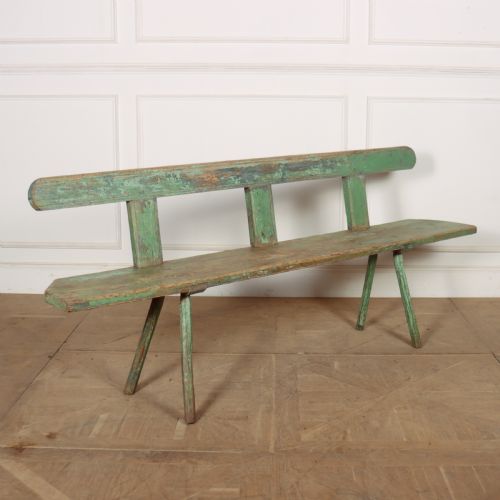
Carpenters constructed these items using regional timbers such as pine, oak, and mahogany, shaped with hand tools and traditional joinery. Workshops applied layers of paint, notably green and cream schemes, which have weathered through decades of domestic use.
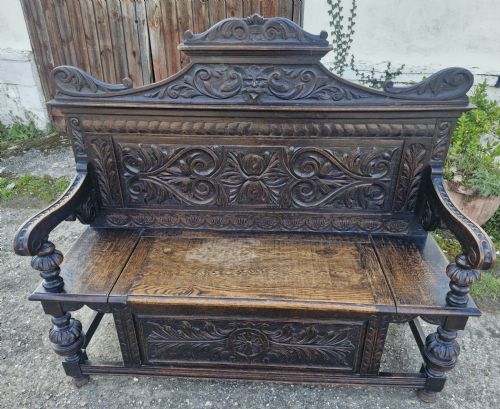
Certain pieces incorporate carved details, such as the distinctive green man motifs found on Victorian oak examples. Iron and brass fittings secure the structural joints and provide functional hardware for box lids.
Green Wooden Settle Retail Price Guide 2026
Typical asking prices for green wooden settle among the pieces listed under this phrase on Sellingantiques today, from the lower quarter to the upper quarter. They describe what is for sale here now, not the wider market.
Listings feature pine and oak constructions spanning the eighteenth and nineteenth centuries, alongside regional variants from Austria, Hungary, Sweden, and the Netherlands.
What varies in quality
The distinction between standard utility items and superior pieces rests on the integrity of the original painted surface and timber preservation. Untouched folk art paintwork commands greater interest than later repainted surfaces.
Depth of carving and structural complexity, such as integrated box storage compartments or sculptural armrests, elevate specific examples above plain utilitarian benches. Regional authenticity and untouched hardware complete the measure of quality.
The Green Wooden Settle Glossary
- Settle
- A wooden bench with high backs, solid arms, and often a storage box beneath the seat. This form protected sitters from cold draughts in old farmhouses.
- Box settle
- A variant featuring a hinged seat lifting to reveal a storage compartment underneath. It kept blankets and household goods dry and secure.
- Folk art
- Decorative craft produced within a traditional community culture rather than by academic artists. Austrian and Hungarian examples show distinctive regional painting styles.
- Green man
- A sculptural face carved from leaves, branches, or vines representing rebirth. This motif appears on Victorian Gothic revival woodwork.
Green Wooden Settle: Frequently Asked Questions
What is a green wooden settle used for?
These pieces served as heavy-duty seating in farmhouse kitchens and entrance halls, protecting occupants from cold draughts with their high panelled backs.
Many incorporated a hinged box base underneath the seat to store heavy textiles, boots, or dry goods out of sight.
How do I care for painted wooden settles?
Keep the wood away from direct heat sources and dramatic humidity shifts to prevent the painted surface from flaking or the timber from splitting.
Dust gently with a soft dry cloth and avoid harsh chemical cleaners that can damage historic paint layers.
How can I tell nineteenth century pieces apart?
Examine the joinery methods, tool marks on the timber, and the nature of the paint degradation across high-wear areas.
Nineteenth century country furniture often displays hand-planed surfaces and forged iron hardware rather than modern machine screws.
Where did regional painted settles originate?
Makers across Austria, Hungary, Sweden, and the Netherlands produced these benches to suit local rural interior traditions.
Each region developed specific palettes and decorative motifs, ranging from simple block colours to folk art floral ornamentation.