

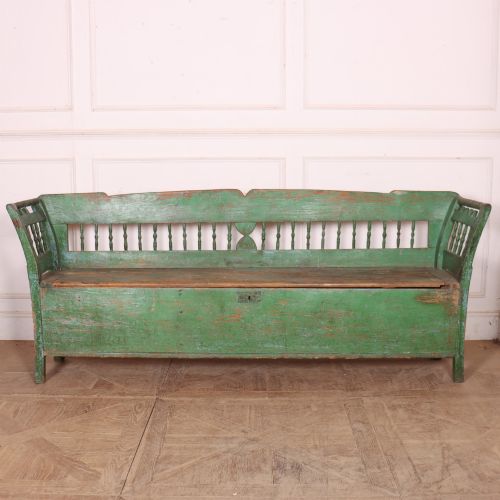


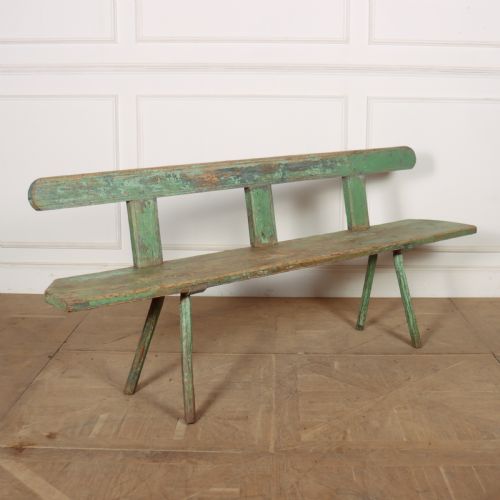

Distressed Green Bench
These distressed green bench pieces bring authentic rustic charm into a home through weathered paint and sturdy timber.
Distressed Green Bench
A distressed green bench brings a distinct country aesthetic into interior and exterior spaces, drawing on traditional folk and farmhouse designs. When searching for a distressed green bench, buyers encounter pieces originating from the nineteenth and early twentieth centuries.
Most examples rely on time-worn painted surfaces that reveal layers of history beneath the distressed finish. Buyers will find that softwood and pine construction dominate these rustic utilitarian forms.
How they were made
Makers utilised timber such as pine and softwood for the primary frames, constructing sturdy joints suitable for daily utility. Iron hardware, metal tacks, and cast elements appear frequently to reinforce the structure.
Surfaces received successive layers of paint that have weathered naturally over decades of use in farmhouses, potting sheds, and gardens. Copper tops also feature on related work tables, providing a durable and patinated surface.
Distressed Green Bench Retail Price Guide 2026
Typical asking prices for distressed green bench among the pieces listed under this phrase on Sellingantiques today, from the lower quarter to the upper quarter. They describe what is for sale here now, not the wider market.
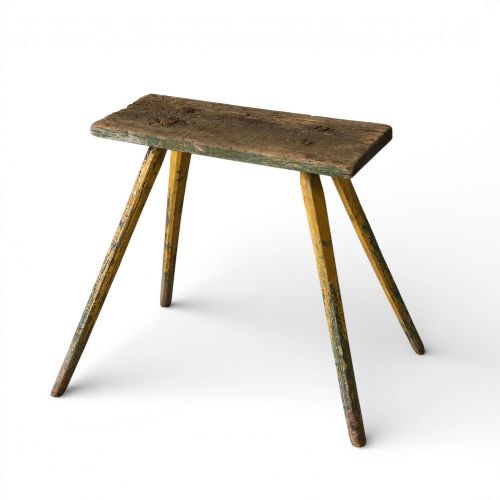
A milking stool proves that even the humblest three-legged seat deserves a splash of historic green paint.
What varies in quality
The authenticity of the paint surface separates standard items from exceptional survivals, particularly where original layers remain untouched by modern restoration. Genuine wear acquired through decades of agricultural or domestic use carries a superior visual depth.
Construction integrity dictates value, with robust joinery and solid timber framing ensuring the piece remains functional. Subtle details in the turning of legs or the shaping of settles distinguish regional folk artistry from basic utility.
The Distressed Green Bench Glossary
- Pine
- A softwood commonly used in country furniture for its accessibility and workability. It forms the primary carcass of many regional European benches.
- Settle
- A wooden bench featuring a high back to block draughts, often incorporating storage beneath the seat. This form remained a staple in traditional farmhouses.
- Verdigris
- A green patina formed naturally on copper through atmospheric oxidation. It appears on metal surfaces exposed to moisture over long periods.
- Softwood
- Timber derived from conifers, typically lighter and easier to carve than hardwood. It served as the standard material for everyday provincial furniture.
Distressed Green Bench: Frequently Asked Questions
How do I date a painted bench?
Dating relies on examining the construction methods, nail types, and the composition of the paint layers. Hand-cut timber marks and genuine wear patterns indicate nineteenth or early twentieth-century origin.
Secondary indicators include the style of regional joinery and the specific hues of mineral pigments used in the original paint formulations.
Are these benches suitable for gardens?
Many painted softwood and iron benches were designed for utility in potting sheds, orangeries, and outdoor spaces. Timber species like pine require protection from persistent dampness to prevent rot.
Using them in sheltered outdoor areas helps preserve the historic painted surfaces while maintaining their rustic function.
What is folk art furniture?
Folk art furniture encompasses utilitarian items made by rural craftspeople rather than urban cabinetmakers. These pieces often feature regional decorative painting and practical adaptations for farm life.
Austrian and Scandinavian country pieces frequently display these distinct local aesthetic traditions.
How should I clean a distressed surface?
Cleaning should be limited to gentle dusting with a dry or slightly damp cloth to preserve fragile historic paint. Avoid chemical solvents or abrasive cleaners that might strip away the original patination.
Regular care protects the delicate balance between weathered timber and aged pigment.