




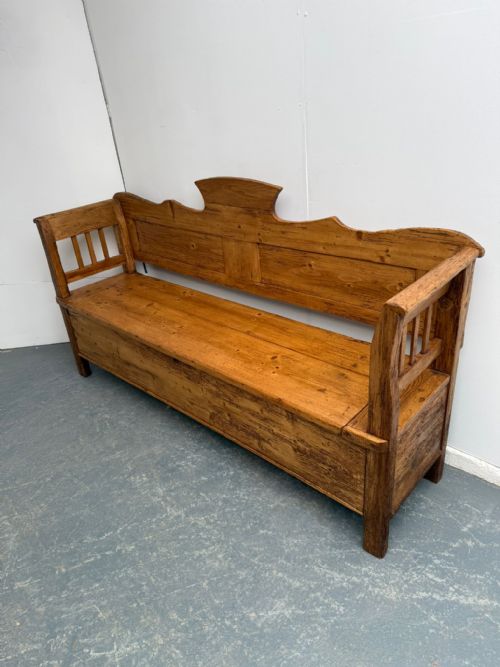

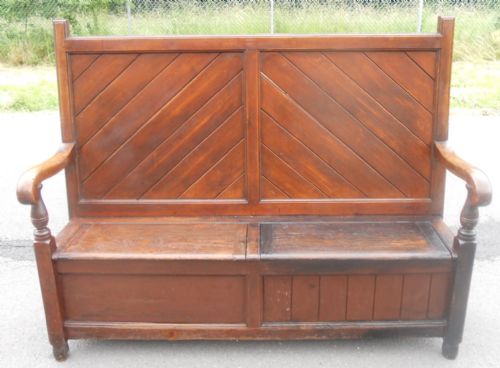


Rustic Pine Coffer Bench
A rustic pine coffer bench combines utility with regional charm, offering storage and seating shaped by centuries of European and English country life.
Rustic Pine Coffer Bench
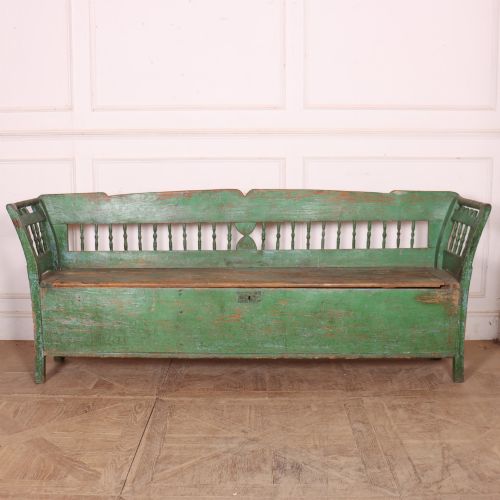
When you search for rustic pine coffer bench, you are looking at sturdy seating forms that double as enclosed storage boxes, ranging from English tavern settles to continental farmhouse benches. These pieces encompass Hungarian settle benches, Dutch chests, and Austrian farmhouse forms produced across the eighteenth and nineteenth centuries. The listings on this page span styles from folk art and rustic farmhouse to English and European country traditions.
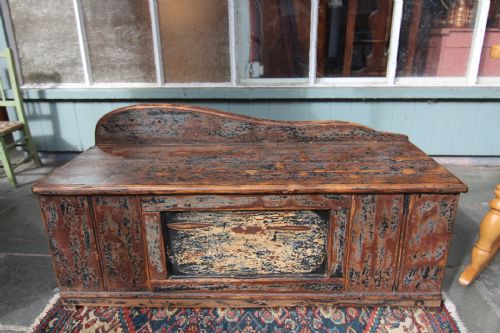
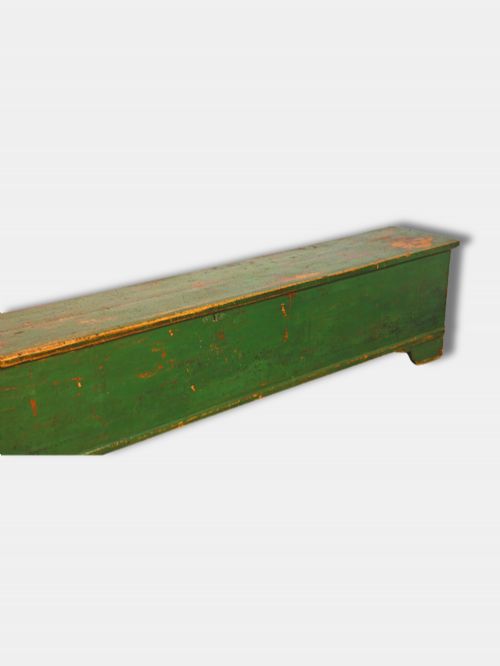
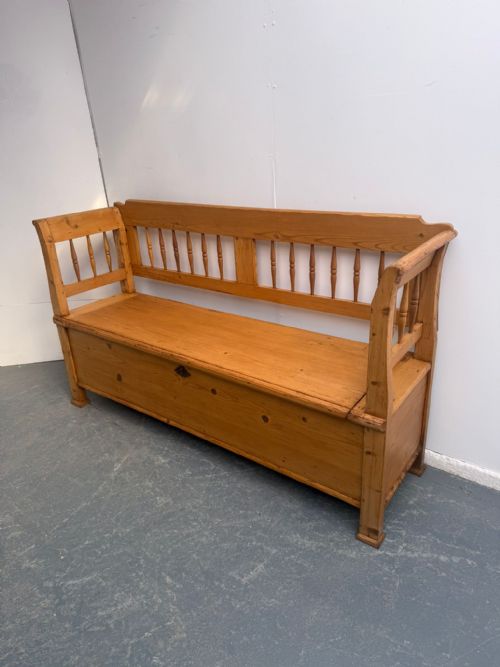
You are most likely to meet nineteenth-century examples alongside eighteenth-century panelled hall benches and Georgian country primitives. Many of these pieces function as two or three-seater settles featuring high backs, box seats, and integrated armrests. Regional variations include polychrome barge box seats, painted black or green finishes, and waxed surfaces that highlight the grain of the wood.
Materials and construction methods
Pine serves as the primary timber for these benches, shaped into panelled construction, planked lids, and spindled backs. Carpenters utilised local softwood to build functional seating for domestic interiors, farmhouses, and taverns.
Iron and wrought iron provide structural reinforcement through strap hinges, latches, and keys for blanket boxes and storage chests. Surface treatments range from clear wax finishes to original painted schemes in black, green, or polychrome folk art designs.
Rustic Pine Coffer Bench Retail Price Guide 2026
Typical asking prices for rustic pine coffer bench among the pieces listed under this phrase on Sellingantiques today, from the lower quarter to the upper quarter. They describe what is for sale here now, not the wider market.
The listings span the eighteenth and nineteenth centuries, featuring materials such as pine, iron, paint, and wrought iron across English and European country styles.
Assessing quality in country seating
The distinction between standard utility items and finer examples rests in the survival of original painted surfaces, patination, and regional vernacular details. Pieces retaining their early green or black paint, or multi-coloured barge decorations, hold greater visual presence than stripped alternatives.
Proportion and construction integrity also separate the range, with larger panelled hall benches and well-balanced spindled settles demonstrating more deliberate workshop craftsmanship. The depth of the wax finish and the integration of original wrought iron hardware further distinguish the better examples.
The Rustic Pine Coffer Bench Glossary
- Coffer
- A large wooden chest used for storing valuables or household goods, which forms the base of a coffer bench. These boxes often feature hinged lids that serve as seats.
- Settle
- A wooden bench with a high back, solid arms, and a closed base designed to keep out drafts in older homes. Many examples include a box seat compartment beneath the squab.
- Patination
- The surface sheen and colour acquired by wood and paint through decades of handling, exposure, and waxing. This gradual ageing process marks authentic period pieces.
- Polychrome
- Decorated in multiple colours, frequently seen on folk art and painted country pieces. This technique adds vibrant visual detail to utilitarian furniture.
- Primitive
- A term describing rustic, simply constructed furniture made by local joiners rather than urban cabinetmakers. These items prioritise robust function over refined stylistic convention.
Rustic Pine Coffer Bench: Frequently Asked Questions
What is a coffer bench?
A coffer bench is a dual-purpose piece of furniture that combines a traditional storage chest with a seated bench. The top of the chest acts as a seat, while the interior provides enclosed space for blankets or household items.
These pieces were common in European and English farmhouses, halls, and taverns where floor space was at a premium.
How do I date a pine bench?
Dating a pine bench involves examining the construction methods, tool marks, hardware, and surface wear. Eighteenth-century examples often feature hand-planed panels and pegged joints, whereas later nineteenth-century pieces may show different fastener types and factory-made hinges.
Surface finishes like early wax or original paint layers also provide clues to the age and regional origin of the furniture.
Where were these benches made?
These benches originate from various regions across England and continental Europe, including Hungary, Austria, and the Netherlands. Each region developed distinct stylistic traits, such as the spindled backs seen on Hungarian settles or the painted finishes found on Austrian and Dutch pieces.
Local joiners built them to suit the specific domestic needs of rural communities.
How do I care for waxed pine?
Caring for waxed pine involves applying a quality bees-wax polish periodically to nourish the wood and maintain its protective sheen. Avoid placing the bench near direct heat sources or strong sunlight, which can dry out the timber and fade painted or waxed surfaces.
Regular dusting with a soft, dry cloth is sufficient for routine maintenance.