



Dark Pine Bench
A dark pine bench offers sturdy utility and plain charm, bringing functional seating rooted in centuries of vernacular tradition to your home.
Dark Pine Bench
When you search for a dark pine bench, you encounter robust seating shaped by vernacular woodworking traditions across Britain and continental Europe. These pieces span centuries of domestic and institutional use, emerging from periods ranging from the Georgian era through to the early twentieth century.
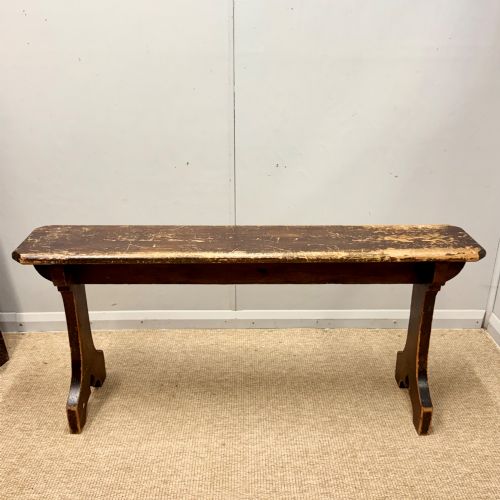
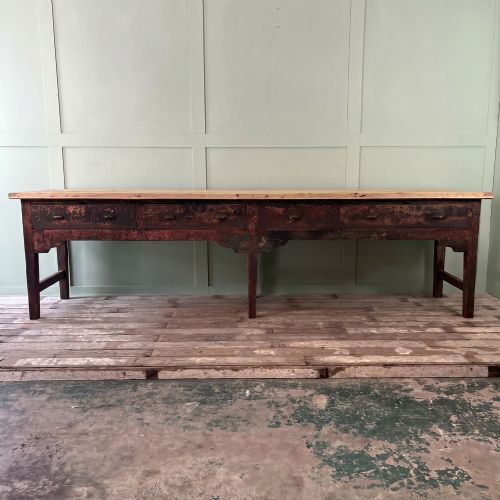
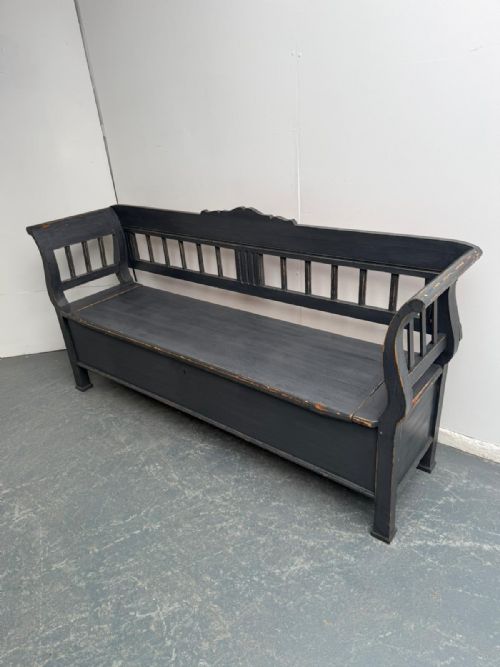
The selections on this page encompass various forms, including straightforward long benches, high-backed settles, and hall benches. Examples appear in unpainted timber or retain traces of original paint, reflecting rural and folk art aesthetics from Spain, Scandinavia, Hungary, and Italy.
Settles with canopies or high backs provide protection from draughts, while simpler plank forms serve dining or hallway spaces. Construction relies predominantly on pine, occasionally augmented by chestnut, oak, or elm elements.
How they were made
Carpenters constructed these benches using solid pine boards joined with traditional pegged mortise and tenon joints to withstand heavy daily use. Iron brackets, braces, and hinges occasionally reinforce structural stress points on industrial or vernacular examples.
Surfaces frequently show traces of historic paintwork, ranging from plain grey to regional folk decoration, applied directly to the bare timber. Simple hand tools shaped the edges and seats, leaving tool marks that record the manual labour of regional joiners.
Dark Pine Bench Retail Price Guide 2026
Typical asking prices for dark pine bench among the pieces listed under this phrase on Sellingantiques today, from the lower quarter to the upper quarter. They describe what is for sale here now, not the wider market.
Several settles double as draught excluders, proving that historical interior design took indoor weather very seriously indeed.
What varies in quality
Quality rests in the integrity of the original construction and the survival of untouched surface treatments like early paint. Benches retaining their original structural timbers and authentic patination command greater interest than those altered or stripped down over time.
Proportion and regional character distinguish finer vernacular examples from utilitarian workshop seating. The balance between sturdy joinery and honest wear defines the enduring appeal of each piece.
The Dark Pine Bench Glossary
- Settle
- A wooden bench with a high back, solid arms, and often a storage box beneath the seat. This form protected sitters from cold draughts in pre-central heating interiors.
- Vernacular
- Everyday objects made by local craftsmen using regional styles and readily available materials without high-style academic design. It represents the domestic traditions of a specific area.
- Patina
- The surface sheen and colour acquired by wood through age, handling, and exposure to light. It serves as a visual record of a piece's history.
- Folk Art
- Artistic work produced from an indigenous culture or peasant tradition. These pieces reflect communal styles rather than academic training.
Dark Pine Bench: Frequently Asked Questions
Where should I place a settle?
High-backed settles work well in entrance halls or alongside dining tables against a wall. Their enclosed backs help block cold air in larger rooms.
Ensure you measure the clearance for the seat and any integrated storage compartments before final placement.
How do I care for painted pine?
Dust regularly with a dry cloth and avoid harsh chemical cleaners that might lift historic paint layers. Keep wooden seating away from direct heat sources to prevent timber splitting.
Maintain stable indoor humidity levels to preserve both the paint and the underlying pine.
Are these benches comfortable?
Most antique pine benches feature solid wood seats designed for utilitarian function rather than cushioned lounging. Adding loose wool or linen squabs provides extra comfort for prolonged seating.
The upright posture encouraged by high backs suits dining and hallway settings.
How can I tell the period?
Construction methods, tool marks, and fastener types offer clues to age, alongside stylistic details typical of Georgian or Victorian vernacular design. Original paint finishes and surface wear also help contextualise the era of manufacture.
Comparing joint styles helps separate eighteenth-century work from later nineteenth-century interpretations.