
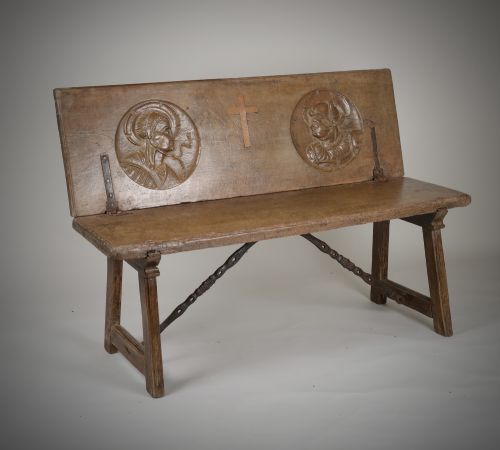
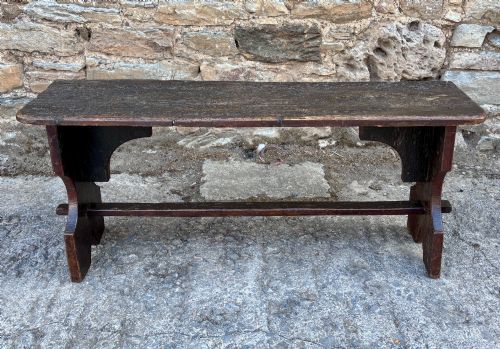
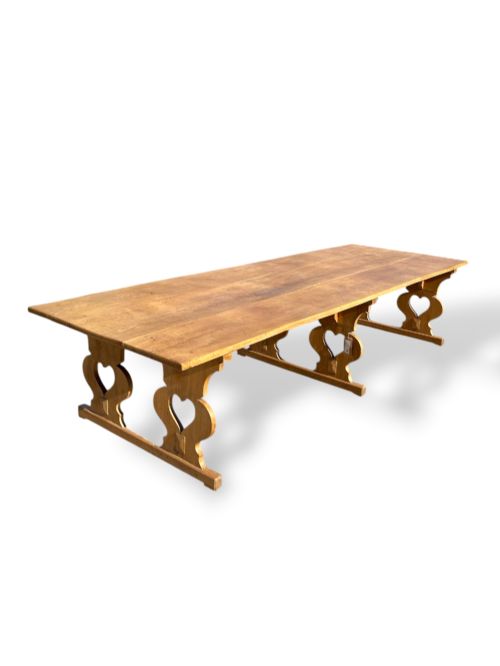
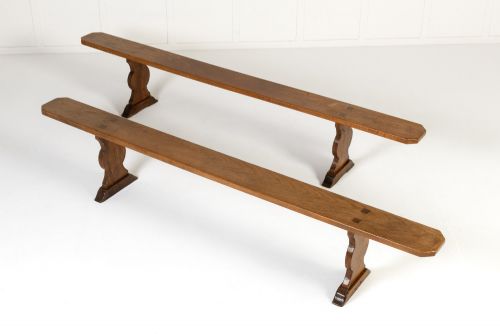
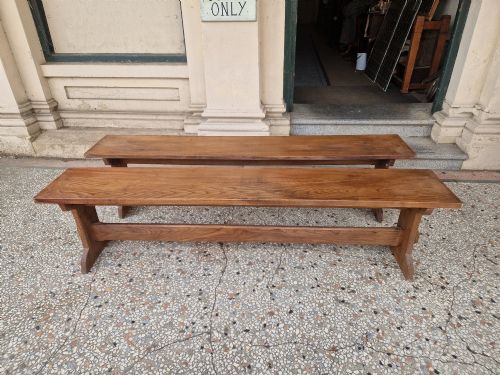


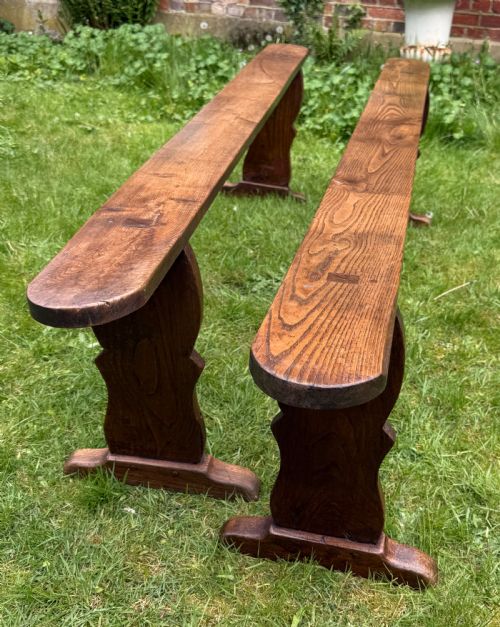
Rustic Trestle Bench
A rustic trestle bench brings honest utility and timeless character to a room, offering sturdy seating hewn from solid timber.
What They Are
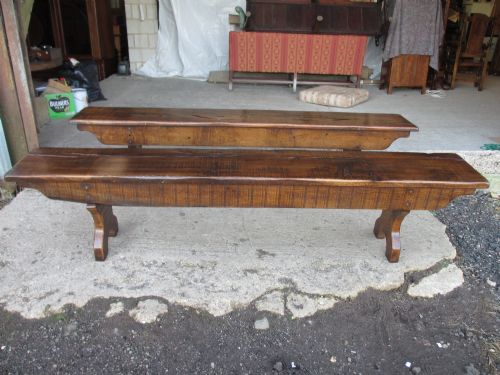
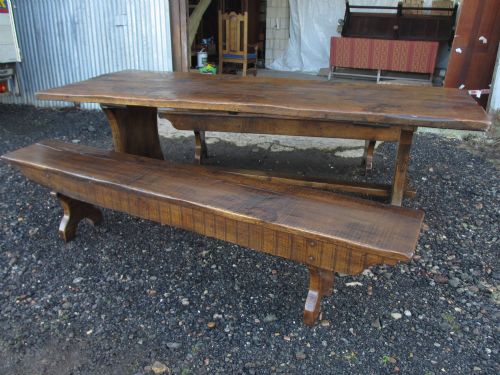
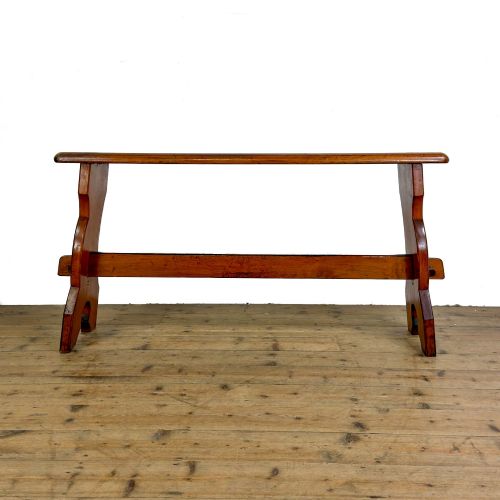
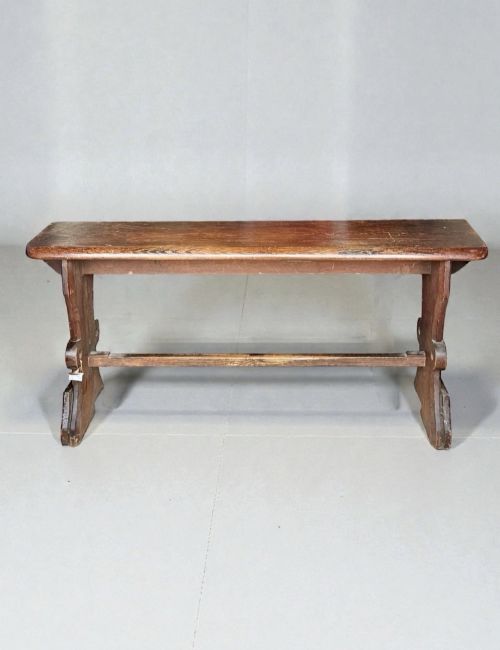
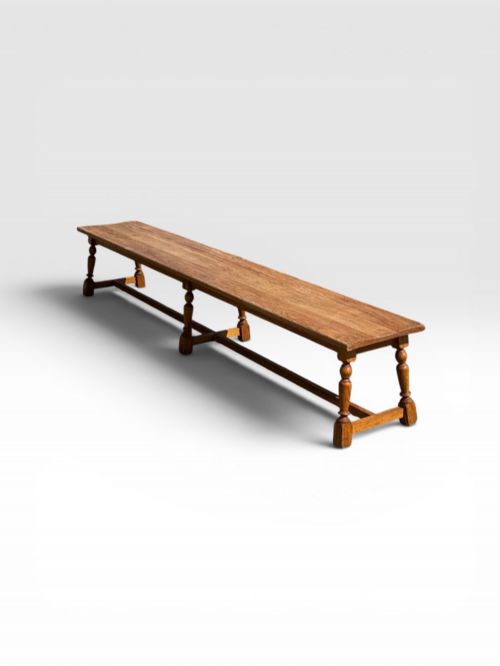
A rustic trestle bench is a practical seating form designed for communal dining and everyday domestic life. These pieces appear in forms ranging from long refectory examples to paired seating arrangements intended to flank a table.
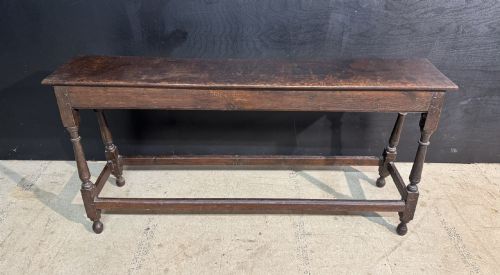
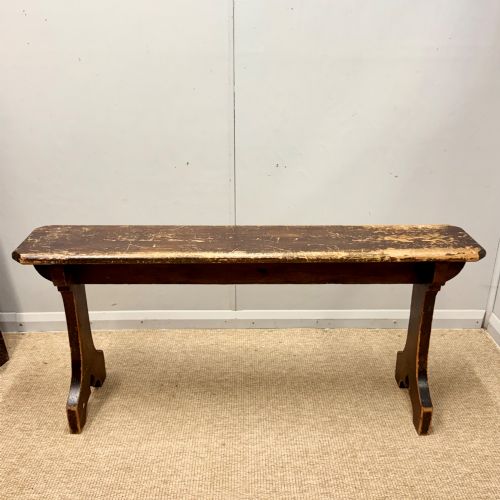
The rustic trestle bench spans multiple periods, with pieces originating from the eighteenth century, the Victorian era, and the early twentieth century. Styles encompass rustic farmhouse, French provincial, Victorian country, and Georgian designs.
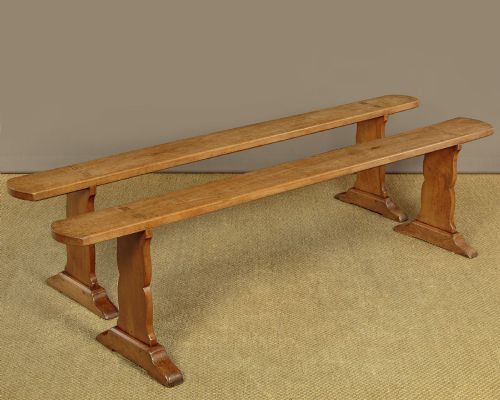
Buyers encounter single long formats alongside paired configurations designed for matching dining settings. Origins cross both British and French traditions, utilising traditional joinery and robust timber construction.
How They Were Made
These benches are constructed from solid timbers including pine, oak, fruitwood, cherry, and cherrywood. Makers selected durable domestic woods capable of withstanding heavy daily use in kitchens, halls, and dining rooms.
Construction relies on traditional carpentry techniques, joining thick timber tops to sturdy supporting bases or trestle ends. Surfaces show the direct marks of hand-tooling, plain sawing, and natural grain patination accumulated over generations of use.
Retail Price Guide 2026
Typical UK retail prices for rustic trestle bench, calculated from the Sellingantiques database of over a million retail prices indexed since 2003. This retail price guide relies exclusively on Sellingantiques data; no external sources or auction records are used, so the figures do not describe the wider market.
What Varies in Quality
Quality rests upon the choice of timber and the structural integrity of the base. Dense hardwoods such as oak and fruitwood offer greater longevity and resilience compared to softer pine alternatives.
The character of the surface patina dictates the visual appeal of each piece. Tables and benches retaining uncompromised original wood surfaces and honest wear distinguish finer examples from altered or heavily restored items.
The Rustic Trestle Bench Glossary
- Trestle
- A structural support consisting of a horizontal beam fixed to two splayed legs. This design provides maximum legroom beneath long seating surfaces.
- Refectory
- A large communal dining hall, typically monastic or academic, which inspired long narrow dining tables and matching benches. Pieces bearing this descriptor are built for substantial gatherings.
- Fruitwood
- A collective term for timbers harvested from fruit-bearing trees such as cherry, pear, or apple. These woods yield fine grain patterns and warm tones.
- Patina
- The surface sheen and colour acquired by wood through age, handling, and wax polishing. A deep patina indicates decades of continuous domestic use.
Frequently Asked Questions
What is a rustic trestle bench used for?
These benches serve primarily as practical seating around dining tables, fitting neatly underneath when not in use. Historically they provided adaptable seating for large households in kitchens and dining halls.
Today they function effectively in modern dining spaces, hallways, or boot rooms. Their narrow footprint makes them versatile for narrow rooms where chairs take up too much space.
How do I date an antique bench?
Dating relies on examining the timber species, construction tool marks, and overall wear patterns. Eighteenth-century examples display hand-hewn joinery and distinctive wood movement absent in later items.
Twentieth-century pieces generally show more uniform machine sawing and standardised fixings. Comparing the style, such as Georgian versus Victorian country, helps narrow down the period of manufacture.
Are pine benches durable enough for daily use?
Pine provides a surprisingly resilient surface that absorbs the knocks and bumps of daily life. While softer than oak or fruitwood, antique pine develops a tough surface skin over centuries.
Regular waxing helps protect the timber from moisture and staining. Many survive from the Victorian era precisely because the wood remains stable and repairable.
Do antique benches come in pairs?
Many listings feature matching pairs designed to sit opposite each other across a dining table. These matched sets originated together in provincial French or British country settings.
Single long benches also appear frequently, often originating from larger institutional or refectory contexts. Pairs command distinct interest for creating symmetrical dining arrangements.