
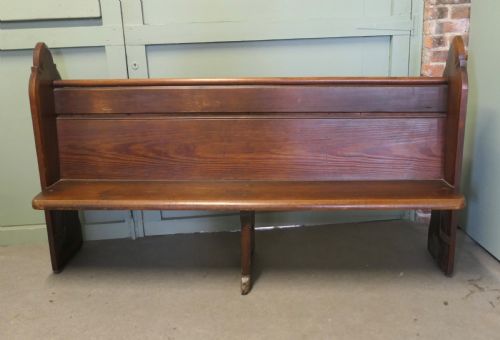
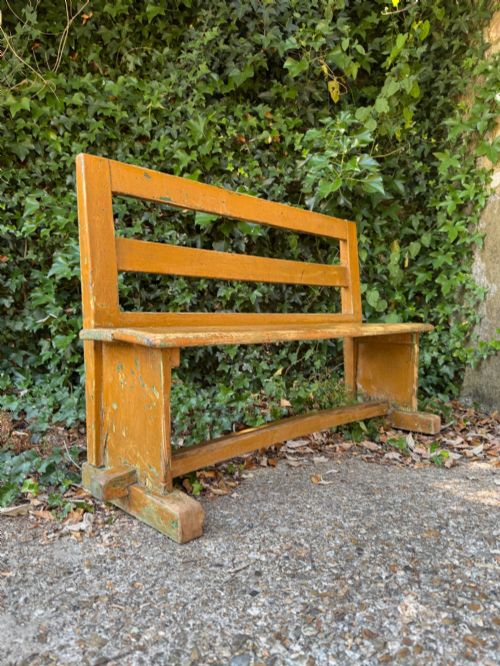
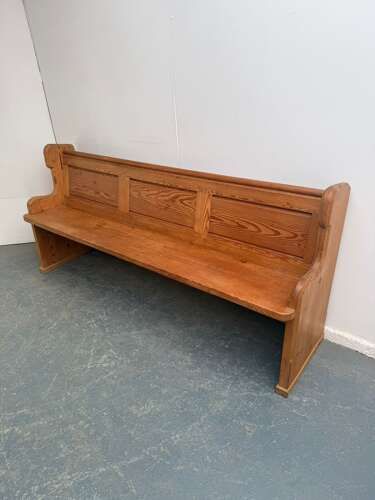


Pine Dining Bench
These pine dining bench examples offer honest seating built from sturdy timber, bringing practical utility and straightforward country character to your home.
What these pieces are
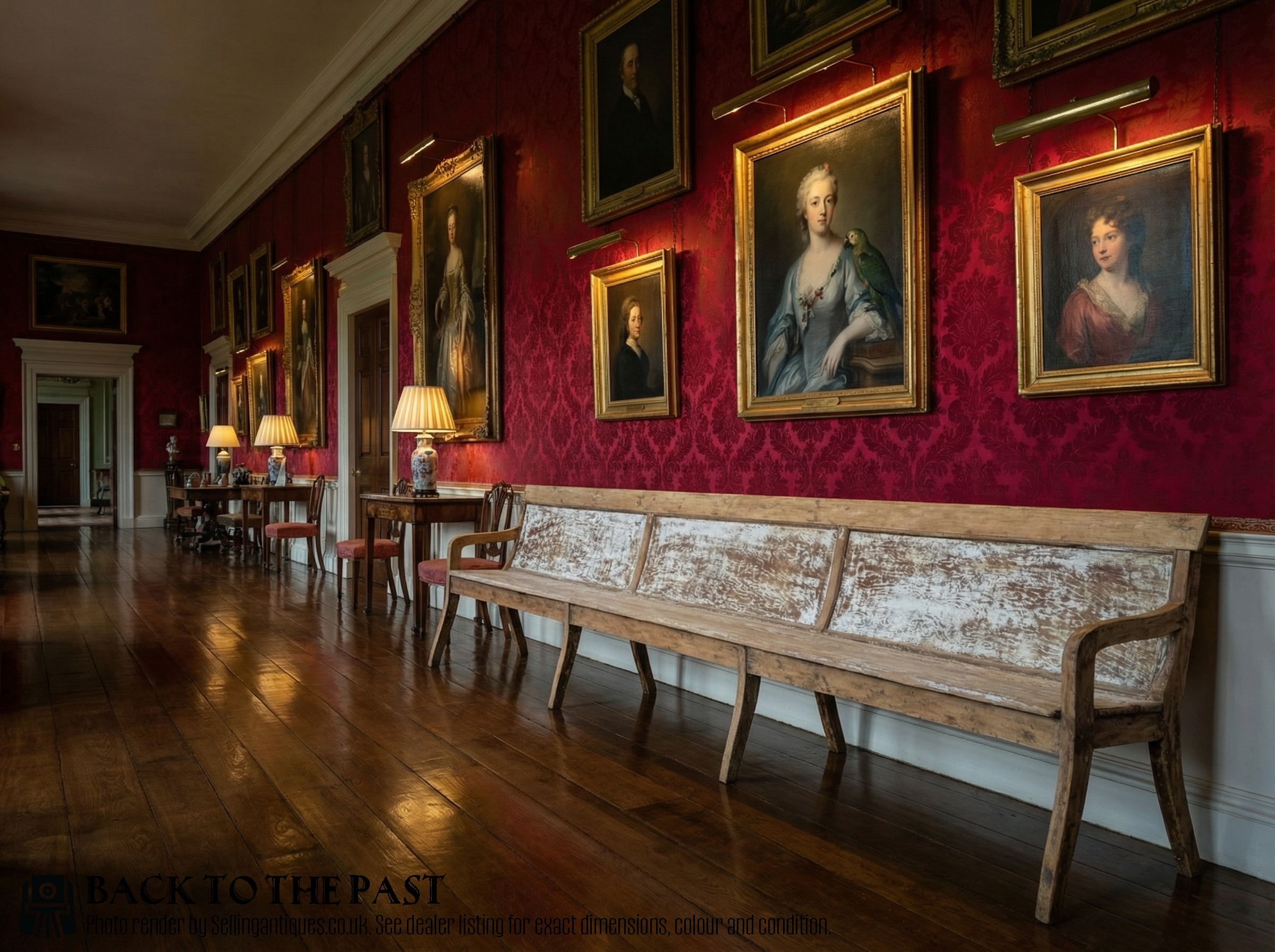
When searching for a pine dining bench, buyers encounter long seating options shaped by everyday utility rather than formal salon display. The selections gathered here include Victorian examples, school pieces, pew bench seats, and French dining benches.
The material throughout the records is pine and pitch pine timber, fashioned into long benches and plank dining seats. These items originate from periods spanning the late nineteenth century into the early twentieth century.
Rustic farmhouse and rustic country styles dominate the forms, alongside Victorian designs and French country variations. Buyers are most likely to meet long single benches or matched pairs suited for communal dining spaces.
How they were made
Makers utilised solid pine and pitch pine timber, selecting softwoods valued for their straight grain and resilience under heavy daily use. Construction relied on straightforward carpentry joints and thick planks capable of spanning long distances without excessive deflection.
Surfaces received simple finishes that highlighted the natural grain of the wood, developing a rich patina over decades of handling and cleaning.
Retail Price Guide 2026
Typical UK retail prices for pine dining bench, calculated from the Sellingantiques database of over a million retail prices indexed since 2003. This retail price guide relies exclusively on Sellingantiques data; no external sources or auction records are used, so the figures do not describe the wider market.
Styles recorded across these benches range from rustic farmhouse and French country to Victorian institutional forms.
What varies in quality
The distinction between ordinary utility items and superior examples lies in the integrity of the timber selection and the retention of original structural framing. Thicker seat planks and minimal alterations to the original length preserve the structural honesty of the piece.
Proportion and length drive distinction, particularly in long pairs and gymnasium or school derivations where uniform wear across the entire span indicates balanced original use.
The Pine Dining Bench Glossary
- Pitch pine
- A dense variety of pine timber containing high resin content, known for a darker reddish hue and greater durability than standard softwoods. It resists moisture well and forms sturdy structural members.
- Plank bench
- A seating form constructed from broad boards joined to form the seat top, typical of country kitchen and dining furniture. These pieces rely on thick timber rather than intricate internal framing.
- Pew bench
- A church or institutional bench featuring enclosed ends and a fixed seat, adapted here for domestic dining use. They provide rigid back support and deep seating capacities.
- Patina
- The surface sheen and colour variation developed through age, light exposure, and regular handling. It marks the distinction between untouched historical surfaces and stripped modern wood.
Frequently Asked Questions
How do I clean a pine bench?
Wipe surfaces using a dry or slightly damp cloth to remove dust without raising the grain of the soft timber.
Avoid harsh chemical cleaners that strip the historical patina and dry out the natural resins in the wood.
Are these benches sturdy enough for daily dining?
Constructed from thick pine and pitch pine planks, these seats were originally built for heavy institutional or domestic utility.
Most long benches easily accommodate multiple diners when placed alongside a suitably sized kitchen or farmhouse table.
What is the difference between pine and pitch pine?
Pitch pine contains a higher concentration of natural resins, giving the timber a heavier weight and a darker, more reddish coloration.
Standard pine tends to be lighter in tone and slightly softer, though both materials offer dependable strength for seating.
How do I date an antique pine bench?
Examine the construction methods, tool marks on the underside of the plank seats, and the depth of the surface patina.
Pieces originating from the Victorian era or late nineteenth century display specific joinery traits and timber maturation consistent with their period.