


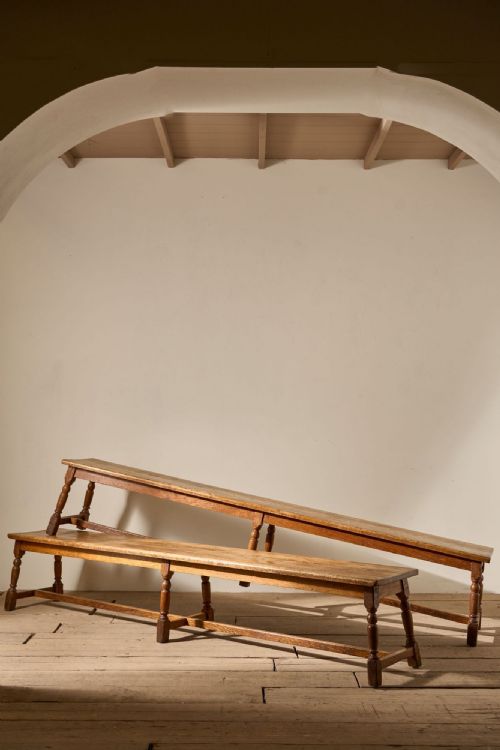


Long Wooden Form
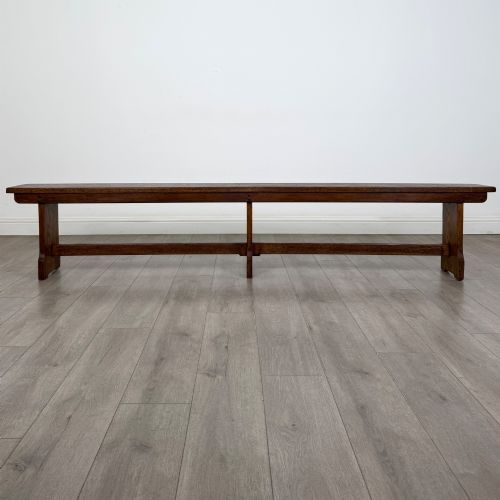
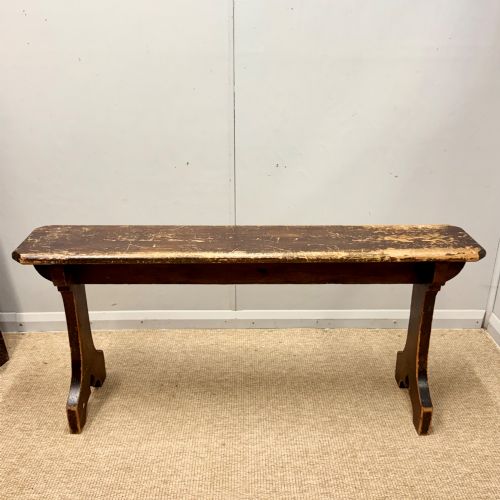
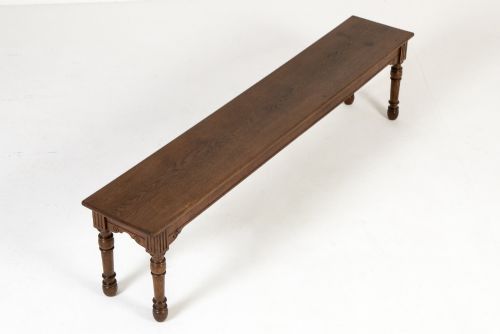
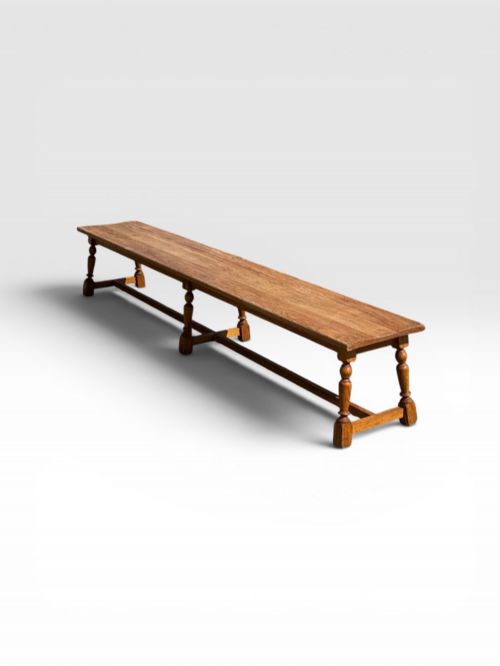
A long wooden form offers robust seating with centuries of honest utility, spanning simple pine school benches to substantial oak tavern seating.
Long Wooden Form
When you search for a long wooden form, you are looking at substantial communal seating designed for domestic, institutional, or tavern use. These pieces take the form of benches and dining benches, providing extended seating solutions across various historical periods.
The versions you are most likely to meet on this page originate from the eighteenth and nineteenth centuries, alongside early twentieth-century examples. They appear in styles ranging from rustic farmhouse and country to Georgian and French provincial.
Makers and builders constructed these forms primarily for practical utility in halls, refectories, and schools. Their prolonged survival demonstrates their robust construction and enduring functional appeal in modern interiors.
Materials and construction
Makers fashioned these forms from native hardwoods and softwoods, predominantly utilising oak, pine, fruitwood, and elm. Oak and elm provided strength for heavy-use tavern and hall benches, while pine served well for school and domestic utility seating.
Construction techniques relied on traditional joinery suited to heavy loads, often pairing thick timber tops with robust stretchers and underframes. Carpenters selected timber grains to withstand regular sitting and movement without compromising structural integrity.
Current listings feature pieces spanning the eighteenth century through to the 1920s, constructed in oak, pine, fruitwood, and elm.
Factors of quality
Quality in these forms lies in the proportion and integrity of the timber used for the seat and supports. A superior piece displays honest patination from decades of use while retaining its original structural rigidity and uncompromised joinery.
The distinction between standard utility items and finer examples rests on timber selection, such as wide single-board oak tops versus joined pine planks. Provenance and original context also elevate a piece, separating straightforward utilitarian seating from documented items.
The Long Wooden Form Glossary
- Refectory
- A large dining hall, typically in a monastery or institution, where long benches were standard. Benches built for these settings required exceptional length and stability.
- Patina
- The surface sheen and colour developed over decades through handling, polishing, and wear. This aged appearance indicates genuine age and use.
- Stretcher
- A horizontal support connecting the legs of a bench to increase rigidity. These are essential for maintaining stability in long wooden seating.
- Board
- A flat piece of sawn timber used for the seat top. Wide single boards indicate high-quality material selection from mature trees.
Long Wooden Form: Frequently Asked Questions
How were long wooden benches used historically?
These forms served primarily as communal seating in taverns, halls, and dining refectories where multiple people needed to sit together along a table.
They also found application in schools and large domestic kitchens, designed for heavy daily use and easy repositioning.
What woods are typical for these benches?
The listings show frequent use of oak, pine, fruitwood, and elm for these extended forms.
Oak and elm provided hard-wearing durability for high-traffic environments, whereas pine and fruitwood appeared in domestic and regional country settings.
How do I style a long bench at home?
A long form pairs naturally with dining tables in a kitchen or dining room to create an informal, open seating arrangement.
They also function well placed against a hallway wall or beneath a window for practical daily seating and surface display.
Can I date a bench by its timber?
Timber choice and board width offer clues to age, with wide oak boards frequently pointing towards eighteenth-century craftsmanship.
Pine and lighter construction methods often correlate with nineteenth and early twentieth-century utilitarian production.