


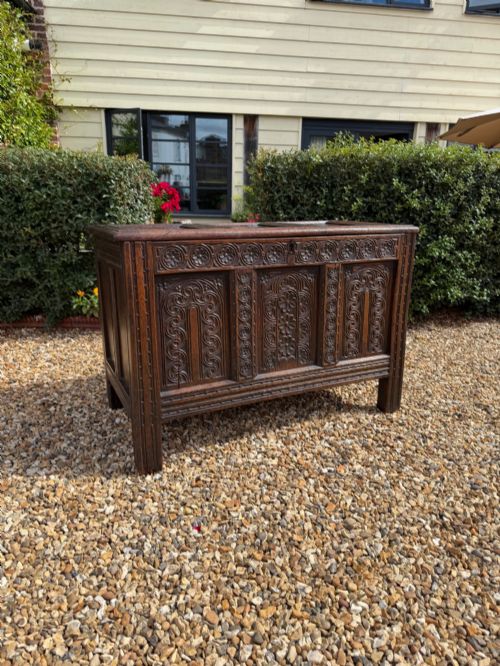
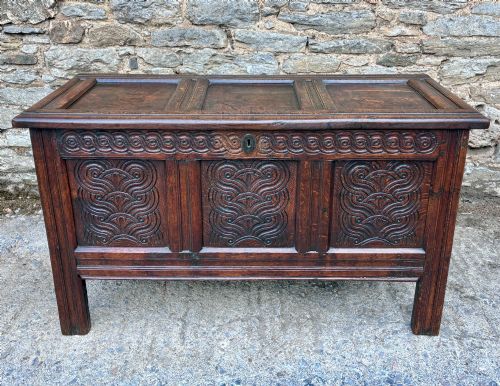
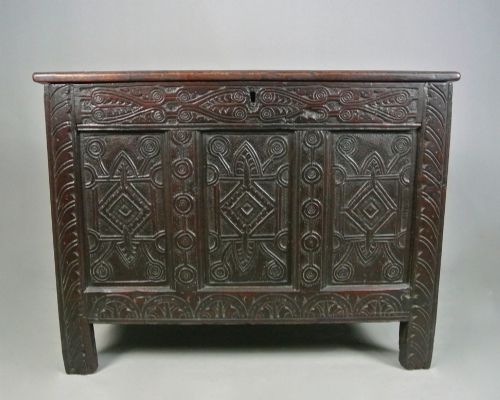
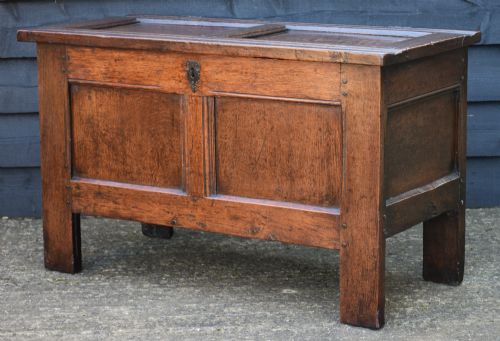
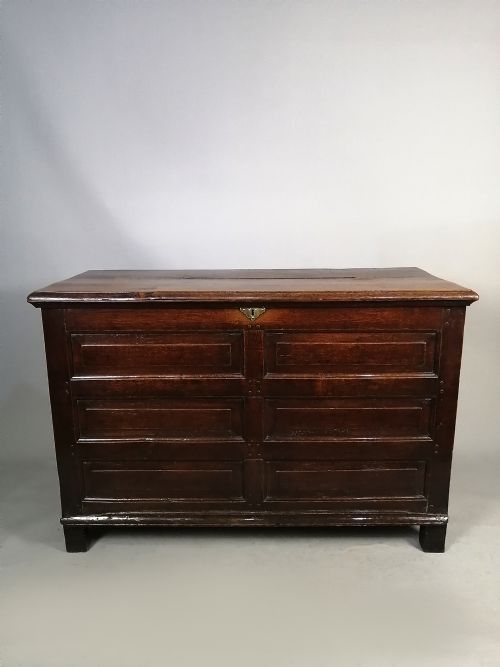
Period Oak Storage Trunk
A period oak storage trunk brings centuries of craft and utility into a room, offering robust storage with deep historical character.

Period Oak Storage Trunk
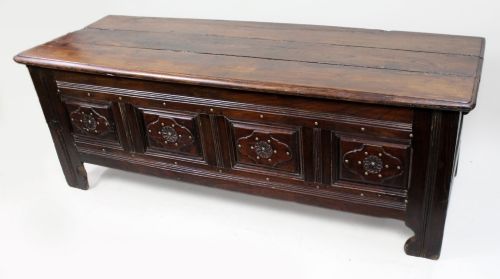
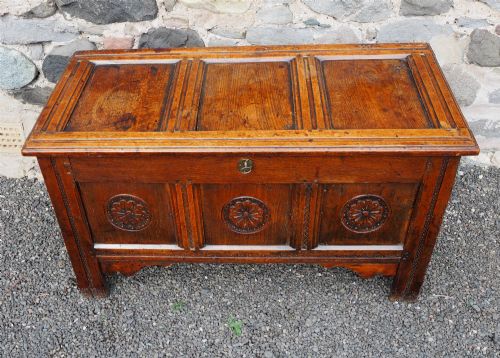
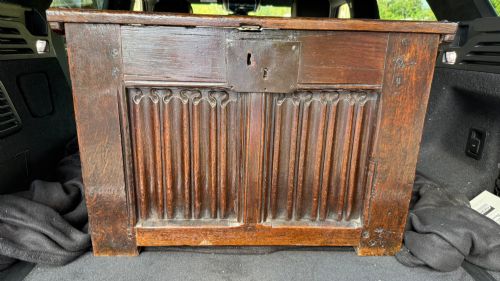
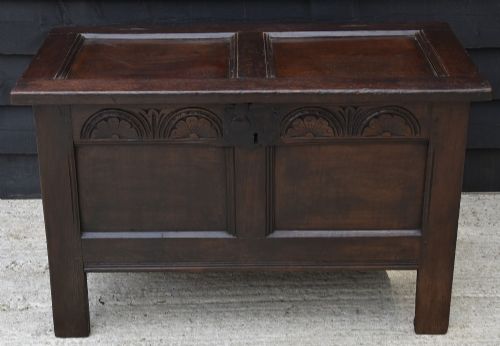
A period oak storage trunk primarily appears as a coffer or blanket chest, shaped by centuries of domestic use. The 17th century supplies the largest share of these pieces, alongside examples from the 16th and 18th centuries.
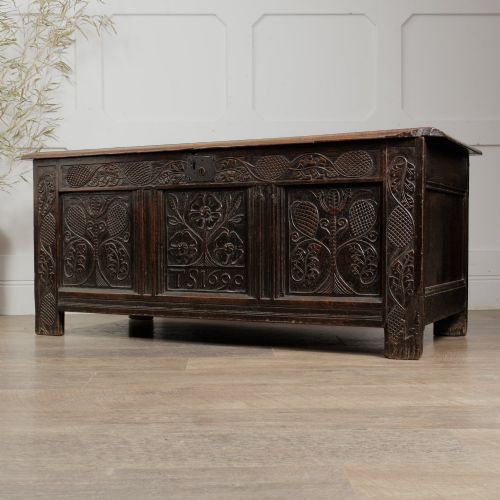
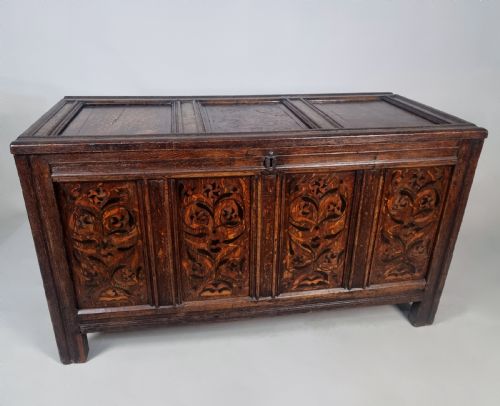
Makers fashioned these coffers and storage chests using durable timber, frequently incorporating panels, carved details, and joined construction. Regional variations emerge clearly, from Welsh Gower Peninsula pieces to English Dorset examples and continental Flemish work.
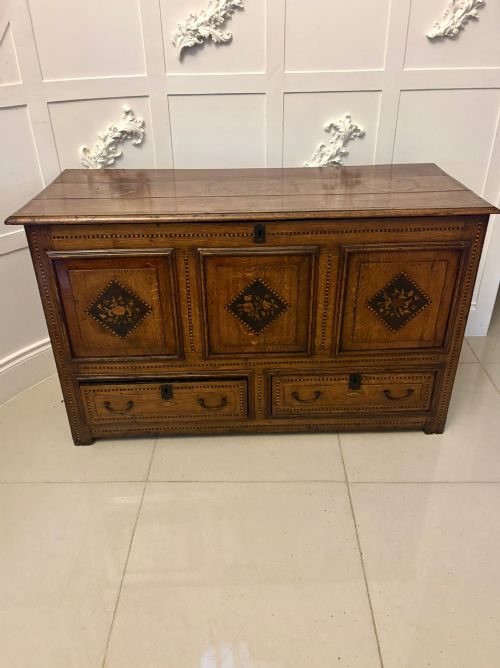
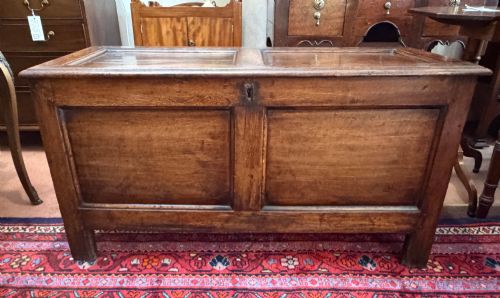
The form functions equally well as a linen chest or window seat, maintaining the practical purpose it served centuries ago. Buyers encounter simple boarded boxes alongside elaborately carved James I period items and mule chests fitted with lower drawers.
Materials and construction
Makers relied on solid oak as the primary timber, complemented by iron or brass hardware for hinges and locks. Wrought iron provided structural reinforcement and durable security for heavy lids and sides.
Craftsmen utilised joined frameworks and panelled construction to accommodate the natural movement of timber over time. Marquetry inlay, mixed inlay woods, fruitwood, and wood inlay enriched the surfaces of finer examples.
Surface decoration frequently involved carved fluting, geometric patterns, or linen fold panels executed by hand. Iron strapwork and hinges added both functional strength and visual contrast to the dense grain of the oak.
Several early chests still bear the scars of medieval broadaxes used to split the oak logs before planing.
Judging quality in oak trunks
Quality rests heavily on the integrity of the original construction, particularly the survival of joined framing and uncompromised timber panels. Pieces retaining their original wrought iron hardware and working hinges command greater interest.
The depth and crispness of hand carving distinguish standard items from exceptional ones. Surfaces displaying rich, undisturbed patination demonstrate decades of careful handling and correct environmental conditions.
Proportions and regional provenance elevate certain chests, particularly smaller proportions or documented Welsh and English provincial origins. The presence of marquetry inlay or mixed woods introduces a higher tier of craftsmanship.
The Period Oak Storage Trunk Glossary
- Coffer
- A heavy wooden box with a hinged lid used for storing valuables, linens, and documents.
- Mule chest
- A traditional storage chest featuring one or more drawers built beneath the main compartment.
- Linen fold
- A carved wooden panel motif resembling folded cloth, popular in early cabinetry.
- Marquetry inlay
- Decorative patterns formed by fitting contrasting pieces of wood veneer into a prepared surface.
- Joined construction
- A method using mortise and tenon joints secured by wooden pegs rather than modern fasteners.
Period Oak Storage Trunk: Frequently Asked Questions
What is a period oak storage trunk used for?
These pieces served historically for storing household textiles, garments, and valuable documents securely away from dampness and pests.
Today, they function practically as living room coffee tables, bedroom blanket chests, or hallway seating while providing concealed storage space.
How do I date an antique oak coffer?
Dating relies on examining construction methods, such as hand-cut pegged joints, tool marks, and the evolution of stylistic carving.
Secondary clues include the type of hinges, ironwork, and timber preparation visible on the underside and interior panels.
Are these chests made entirely of solid oak?
Most examples utilise solid oak for the primary structural framework, panels, and top boards.
Some refined pieces incorporate fruitwood or varied inlay woods specifically for decorative marquetry details on the facade.
How should I care for an oak trunk?
Protect the timber by placing the trunk away from direct heat sources, radiators, and prolonged direct sunlight.
Maintain the surface by applying traditional beeswax sparingly and buffing gently with a soft cloth to preserve the patina.
What is the difference between a coffer and a chest?
The terms are often used interchangeably, though a coffer traditionally denotes a more substantial container secured with heavy iron locks.
Chests frequently encompass simpler boarded utility boxes as well as elaborate panelled designs intended for domestic storage.