



Antique Grain Storage Box
An antique grain storage box offers sturdy utility and rich vernacular history, forged from solid timber to hold household stores.
Antique Grain Storage Box
When you search for an antique grain storage box, you encounter robust domestic vessels and heavy storage chests designed to protect dry goods and foodstuffs. These pieces emerge from periods spanning the seventeenth century through to the Victorian era, reflecting practical rural needs.
You are most likely to meet substantial oak arks, painted pine chests, and utilitarian bins on this page. Regional Welsh vernacular forms and rustic farmhouse examples dominate the selection alongside later scumbled finishes.
The objects cross several traditional categories, including blanket boxes, storage trunks, and specialised kitchen vessels. Each survivor demonstrates the heavy-duty requirements of historic household management.
Materials and construction
Construction relies heavily on durable domestic timbers such as oak and pine, joined to withstand heavy daily use. Artisans utilised brass and iron for hinges, handles, and campaign mounts, ensuring structural integrity for heavy contents.
Surface treatments range from natural wood grains to painted finishes, scumbled pine, and toleware. Cabinetmakers and country joiners employed straightforward carpentry techniques suited to utilitarian furniture.
Antique Grain Storage Box Retail Price Guide 2026
Typical asking prices for grain storage box among the pieces listed under this phrase on Sellingantiques today, from the lower quarter to the upper quarter. They describe what is for sale here now, not the wider market.
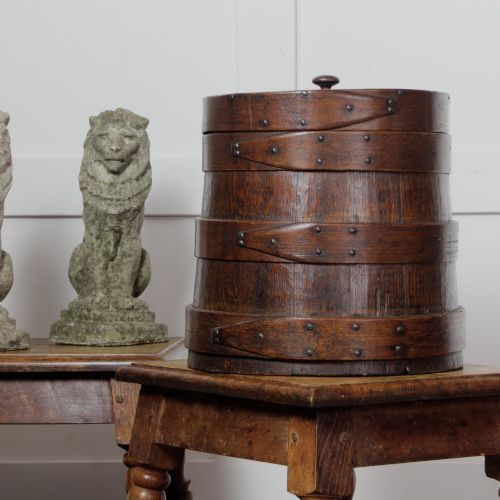
A kitchen maid once scrubbed this Toleware bucket, entirely unaware it would one day reside in a modern collector's study.
Assessing quality in grain storage
Quality rests upon the selection of timber and the preservation of original surface treatments, whether natural grain or scumbled paint. Heavy oak boards and intact iron or brass hardware distinguish superior examples from simpler utilitarian boxes.
The integrity of regional construction, such as early Welsh vernacular framing, separates exceptional vernacular pieces from standard domestic storage.
The Antique Grain Storage Box Glossary
- Ark
- A large wooden chest or bin traditionally used for storing flour, grain, or meal. These heavy vessels protected dry goods from damp and pests in historic domestic settings.
- Scumbled
- A decorative paint technique involving translucent layers dragged over a base coat to simulate the appearance of rich wood grain. This finish was widely applied to pine furniture during the Victorian period.
- Campaign trunk
- A portable chest constructed for travel, fitted with brass corners, flush handles, and durable hardwoods like camphorwood. These pieces dismantled or travelled easily with military officers.
- Mule chest
- A traditional storage chest featuring one or two drawers beneath the main compartment. It bridges the form of a coffer and a chest of drawers.
Antique Grain Storage Box: Frequently Asked Questions
What was an antique grain storage box used for?
These boxes stored bulk dry foodstuffs like grain or flour safely away from moisture and rodents in domestic kitchens and larders.
Their heavy timber construction ensured that provisions remained dry and secure throughout the winter months.
How do I date an antique grain box?
Dating relies on examining the timber species, joinery methods, and surface treatments visible on the piece. Early seventeenth-century examples display heavy oak framing, while Victorian pieces often feature pine with scumbled paint.
Hardware like iron strap hinges or brass campaign mounts also provides clear chronological clues regarding manufacture.
Can I use these boxes for modern storage?
These robust vessels serve brilliantly for holding blankets, linens, and bulky household items in contemporary living spaces.
Their sturdy construction easily accommodates modern storage demands while adding historic character to a room.
What is scumbled pine?
Scumbled pine is softwood painted and manipulated with specialised tools to mimic the rich grain of more expensive hardwoods. Victorian makers frequently used this technique to elevate economical furniture.
It offers a distinct decorative texture that patinates gracefully over time.