

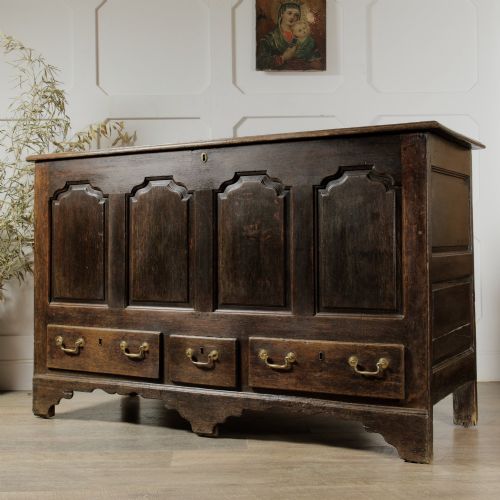
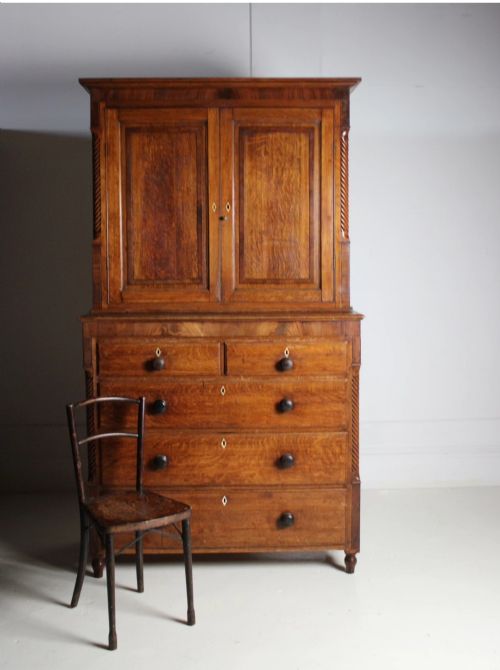
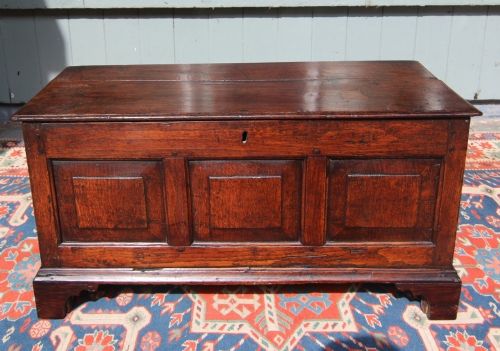

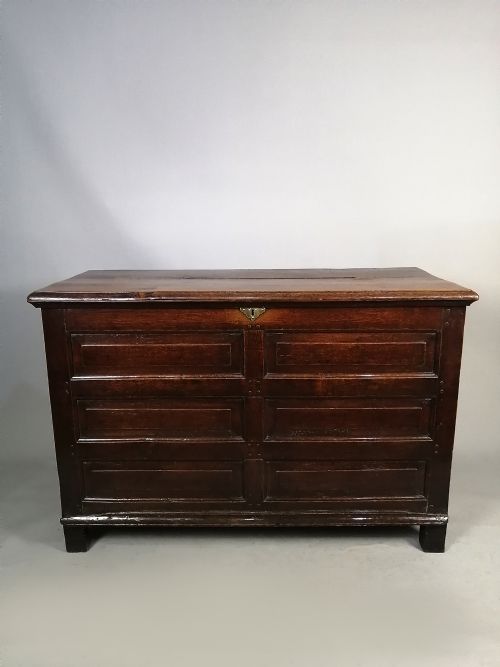
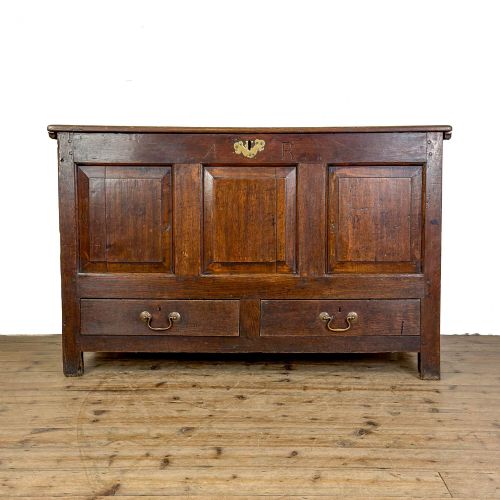
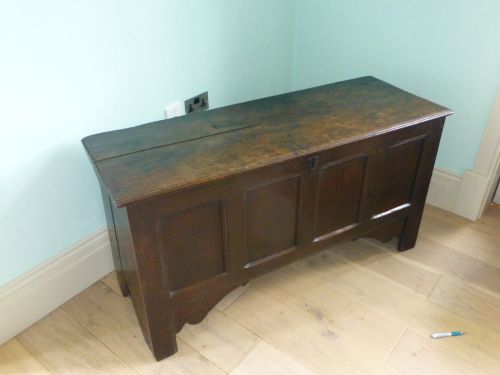


Welsh Panelled Oak Chest
A welsh panelled oak chest brings honest country craftsmanship into a room, offering robust storage built from timber that deepens in warmth over centuries.
Welsh Panelled Oak Chest
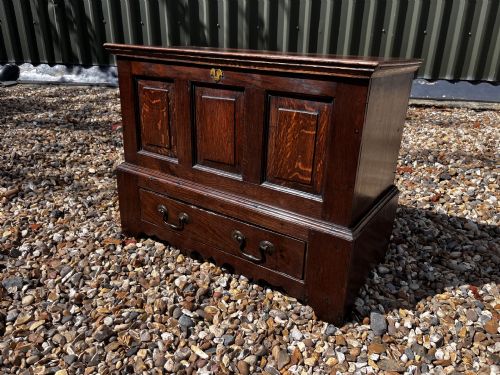
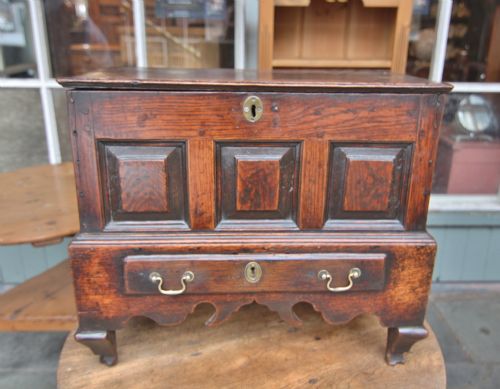
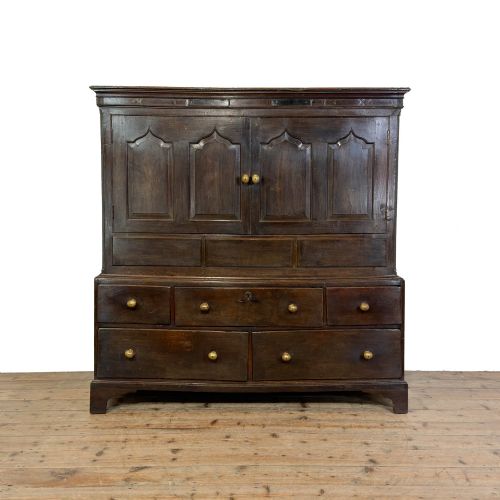
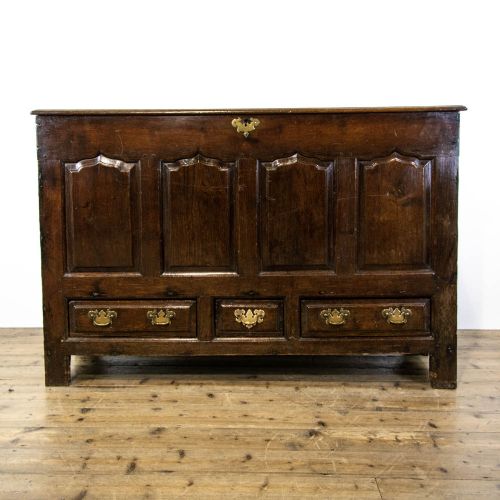
When you search for a welsh panelled oak chest, you encounter sturdy utilitarian furniture designed for domestic storage across rural households. These pieces range from small coffer bach variants to large mule chests and press cupboards originating from regions such as the Gower Peninsula, Carmarthenshire, and Snowdonia.
The forms span the seventeenth, eighteenth, and nineteenth centuries, demonstrating regional vernacular traditions distinct to Wales. You frequently meet planked and panelled constructions intended to hold linen, valuables, or provisions in domestic settings.
How they were made
The primary material across these pieces is solid oak, selected for durability and joined using traditional panelled construction methods. Iron and brass hardware, including hinges and lock plates, often secure the lids and doors.
Some examples incorporate marquetry inlay decoration to embellish the timber surfaces, while others rely entirely on the natural grain and carved details. Workshops shaped these containers to withstand heavy daily use through robust joinery techniques.
Welsh Panelled Oak Chest Retail Price Guide 2026
Typical asking prices for welsh panelled oak chest among the pieces listed under this phrase on Sellingantiques today, from the lower quarter to the upper quarter. They describe what is for sale here now, not the wider market.
Listings feature oak material predominantly, supplemented by brass and iron hardware, along with occasional marquetry inlay.
What varies in quality
Quality in these chests rests upon the integrity of the timber selection and the sophistication of the regional vernacular design. Finer examples display meticulous attention in the panel assembly and the retention of an untouched surface patina.
The Welsh Panelled Oak Chest Glossary
- Coffer bach
- A small Welsh chest, often featuring a drawer beneath the main compartment, used for holding valuables or linen.
- Mule chest
- A storage chest fitted with one or more drawers at the base, bridging the form between a standard coffer and a chest of drawers.
- Vernacular
- Architecture or furniture built by local craftsmen using traditional regional styles and locally available materials rather than metropolitan designs.
- Press cupboard
- A large storage piece combining enclosed shelving with hanging space or lower drawers for household textiles.
- Grain ark
- A specialised storage container traditionally used for holding grain or meal in rural Welsh domestic spaces.
Welsh Panelled Oak Chest: Frequently Asked Questions
What is a coffer bach?
A coffer bach is a miniature Welsh chest designed for tabletop use or storing small valuables and documents. These diminutive pieces mirror the construction of larger blanket chests.
Craftsmen often fitted them with a single small drawer beneath the main lidded compartment. They represent intimate examples of Welsh country carpentry.
How were these chests used?
Families utilised these sturdy oak pieces primarily for storing household linens, blankets, and woollen garments. In rural homes, they also doubled as seating or sturdy surfaces.
Larger versions held family valuables, dry goods, or provisions securely. Their robust timber construction ensured contents remained protected from dampness and pests.
How do I date an oak chest?
Dating relies on observing construction methods, hinge types, and stylistic vernacular details. Early pieces from the seventeenth century often show primitive pegging and hand-riven panels.
As time progressed into the Georgian period, drawer configurations and cleaner geometric lines became more common. Regional quirks help narrow down the likely decade of production.
Where were these chests made?
Makers constructed these pieces in local Welsh workshops across regions such as Snowdonia, Carmarthenshire, and the Gower Peninsula. Each area developed slight variations in decorative preference and proportion.
Local carpenters utilised native oak timber to supply farms and village homes. This regional independence created the distinct Welsh country styles seen today.