


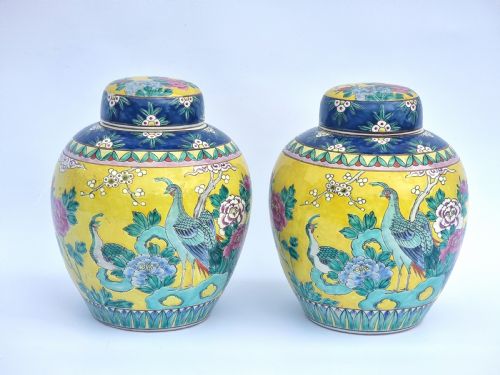


Pair of Chinoiserie Urns
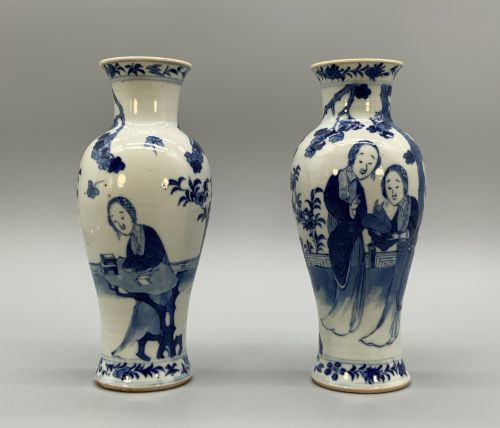
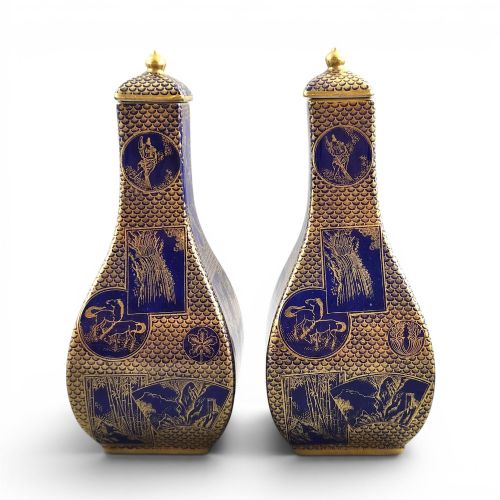
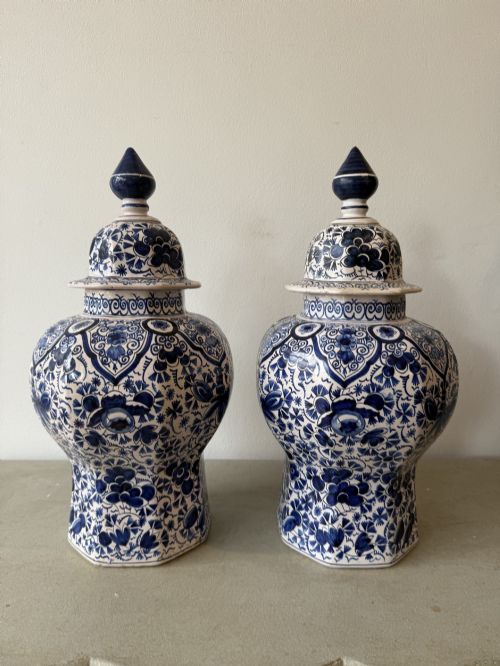
A pair of chinoiserie urns brings dramatic scale, hand-painted motifs and rich cultural history directly into a grand interior space.
Pair of Chinoiserie Urns
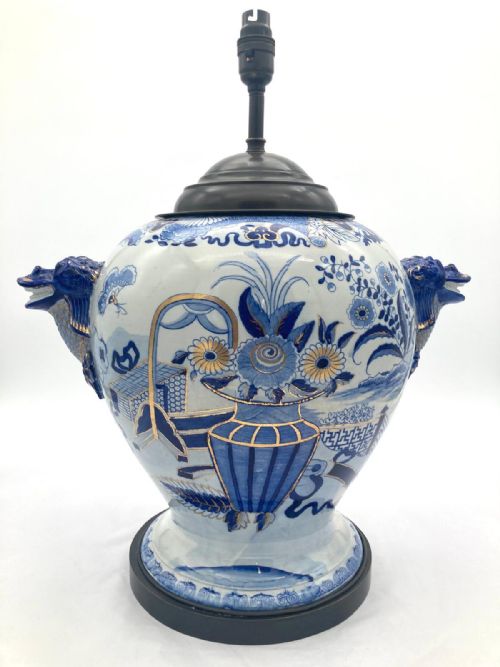
When searching for a pair of chinoiserie urns, you encounter striking symmetrical vessels decorated in distinct orientalist motifs and European interpretations of East Asian design. These objects frequently take the form of lidded jars, ginger jars or converted lamps originating from various decorative periods.
The pieces on this page span the Georgian, Regency, Victorian and Edwardian eras, extending through the 1920s, 1930s and 1940s. You will frequently meet blue and white porcelain, ironstone and toleware amongst the selection.
Originating both from Chinese export workshops and European makers adopting Chinese styles like Kangxi and Qianlong, these matched pairs serve as focal points for mantelpieces, pedestals and side tables.
Materials and methods of construction
Makers utilised ceramic, porcelain and ironstone as the primary bodies, shaped into vases, ginger jars and chestnut urns, then fired at high temperatures. Ironstone examples often received robust glazes and transfer-printed or hand-painted botanical and avian scenes.
Decoration relied heavily on hand painting, blue and white pigments, decalcomania, and sometimes rich applications of gold leaf or gilt. Certain larger architectural pieces incorporated lacquered papier-mâché or cloisonné enamel over metallic bases.
Mounting techniques involved securing porcelain bodies onto ormolu or brass bases, and occasionally adapting the vessels into table lamps with handmade shades during later periods.
The documented forms range from monumental temple vases and ginger jars down to posy vases and table lamps.
Distinctions in craftsmanship and design
The distinction between ordinary production and superior quality rests upon the crispness of the hand-painted brushwork and the depth of the glaze. Finer pieces display meticulously rendered figural scenes, exotic birds and intricate floral borders rather than flat, uniform transfers.
Material composition also dictates standing, with heavy ironstone bodies and well-preserved porcelain commanding greater admiration than lesser earthenware. The presence of original ormolu mounts, stamped maker marks or intact lids elevates the integrity of the pair.
Mason’s Patent Ironstone·Hicks and Meigh·Carlton Ware·Jennens & Bettridge
The Pair of Chinoiserie Urns Glossary
- Chinoiserie
- European artistic style reflecting Chinese artistic influences, prevalent in decorative arts and architecture.
- Ironstone
- A heavy, durable type of earthenware patented in Britain to imitate Chinese porcelain.
- Decalcomania
- A technique of transferring engravings or designs from prepared paper onto the surface of porcelain or glass.
- Toleware
- Enamelled and japanned metalware, commonly shaped into decorative urns and vessels during the Regency period.
- Kangxi Style
- An aesthetic inspired by the blue and white porcelain produced during the reign of the Kangxi Emperor.
Pair of Chinoiserie Urns: Frequently Asked Questions
Are these urns waterproof for fresh flowers?
Most antique ceramic and porcelain urns were created primarily for display or as lidded storage vessels rather than for holding water. Using them for fresh floral arrangements can risk moisture damage to historical glazes and interior bodies.
For practical floral displays, place a discreet glass or plastic liner securely inside the vessel to protect the antique material from direct contact with water.
How do I clean antique porcelain safely?
Dust your pieces regularly using a soft, dry ostrich feather brush or a clean microfibre cloth to prevent particulate buildup on delicate painted surfaces. Avoid harsh chemical cleaners, abrasive scouring pads and soaking, particularly on pieces with gilt or enamel details.
If deeper cleaning is necessary, dampen the cloth slightly with plain water and dry the surface immediately with a lint-free towel.
Can I safely convert these lamps back to vases?
Many lamps listed began their lives as decorative vases or ginger jars before receiving electrical fittings through the top or base. Reversing the process depends entirely on whether the original drilling altered the structural integrity of the ceramic body.
Consult a professional restorer or electrician to inspect the wiring and mounting method without damaging the antique porcelain or metal components.
How do I match period styles in a room?
Pairing these decorative objects with a room requires balancing the visual weight of the vessels with surrounding furniture such as occasional tables or plant stands. Mixing Georgian ironstone with later Edwardian or 1930s pieces works successfully if the colour palette, such as cobalt blue, remains consistent.
Allow the urns to anchor a focal point like a mantelpiece, letting the historical pattern dictate the accent colours of nearby textiles.