


Chinoiserie Decorative Vase
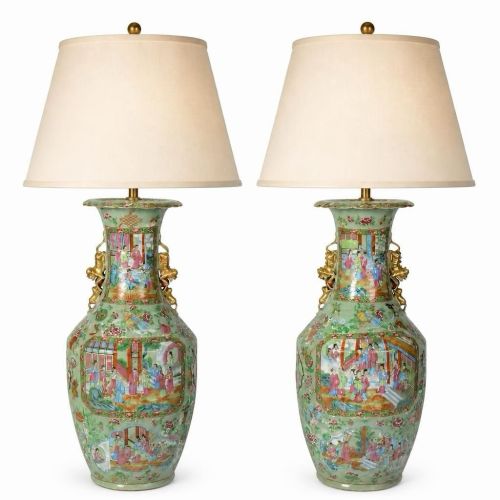
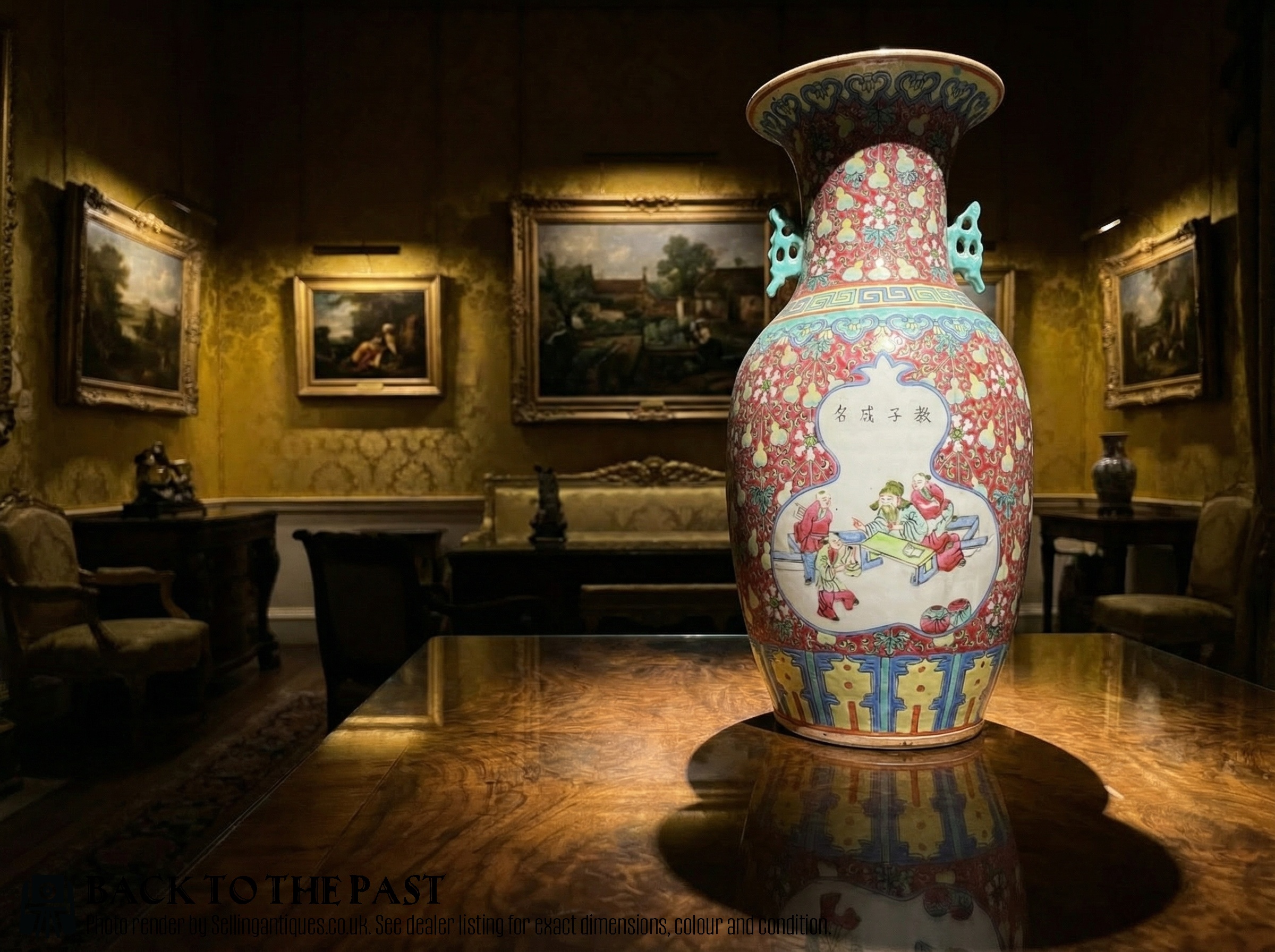
These chinoiserie decorative vase examples bring painted landscapes and exotic figures into a room.
Chinoiserie Decorative Vase
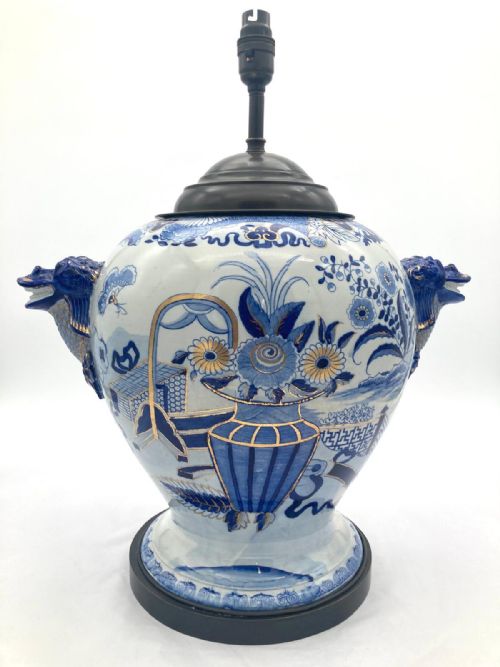
A chinoiserie decorative vase draws on European interpretations of East Asian artistic traditions, spanning earthenware, porcelain, and lacquer forms. The pieces available here encompass substantial nineteenth century ironstone examples, porcelain table lamps, and monumental temple vessels.
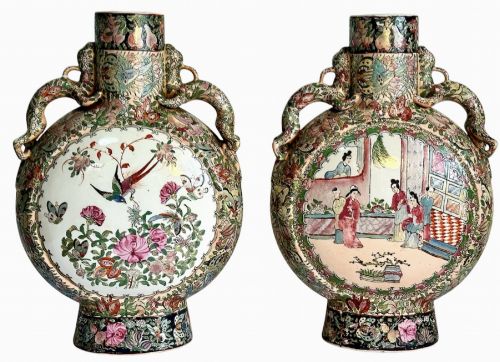
Buyers frequently encounter nineteenth century items alongside items from the Regency and Victorian eras. Forms range from moon flasks and potpourri vessels to large floor vases and covered jars.
Many of these vessels have been adapted into lamps over time while retaining their original hand-painted surfaces and decorative motifs.
Materials and construction
Potters utilised ironstone, porcelain, and ceramic as bodies for painting and enamelling, often applying cobalt blue, gold leaf, and vibrant polychrome palettes. Ironstone pieces from makers such as Mason's provide a heavy, durable earthenware base for intricate hand-applied decoration.
Lacquered papier mâche and cloisonné enamel represent alternative techniques seen across the selection, incorporating metal wires and layered resin finishes. Surface decoration frequently employs gilt highlights and detailed pictorial scenes depicting figures, pavilions, and floral motifs.
Materials across the listings include porcelain, enamel, brass, fabric, ironstone, ceramic, gold leaf, and gilt.
Judging quality and condition
Quality rests in the crispness of the hand-painting and the preservation of gilt and enamel details across the body of the vessel. Superior examples display finely rendered figures and balanced compositions that remain clear despite centuries of handling.
The integrity of the original material, whether ironstone, porcelain, or lacquered papier mâche, dictates the standing of a piece. Converted lamp fittings alter the original form, but professional mounting respects the body of the antique without causing structural damage.
Hicks and Meigh·Carlton Ware·Miles Mason·Jennens and Bettridge
The Chinoiserie Decorative Vase Glossary
- Ironstone
- A dense, durable type of earthenware patented in the nineteenth century. It provided a robust alternative to true porcelain for large decorative vessels.
- Famille rose
- A palette of opaque enamel colours dominated by pink or rose hues, introduced in Chinese export ceramics during the Qing dynasty.
- Cloisonné
- A metalwork technique where compartments are created using soldered wire and filled with enamel paste before firing.
- Lacquer
- A durable resin finish applied in multiple layers to a wooden or papier mâche core, often decorated with hand-painted or gilt designs.
- Moon flask
- A flat-backed ceramic vessel with a circular body, derived from traditional flask forms and frequently decorated with orientalist motifs.
Chinoiserie Decorative Vase: Frequently Asked Questions
What is a chinoiserie vase?
A chinoiserie decorative vase is a vessel decorated in a European stylistic interpretation of Chinese and East Asian art. These pieces typically feature painted landscapes, exotic figures, and floral motifs.
They span various materials including porcelain, ironstone, and lacquer, reflecting Western fascination with Eastern aesthetics across different centuries.
Are these vases functional?
While many items originated as display pieces, potpourri containers, or temple vessels, a significant number have been converted into table lamps over time.
Original display vessels can hold dried botanicals or remain empty as decorative focal points in a room.
How do I date an antique vase?
Dating relies on examining the material composition, maker's marks, and the style of the hand-painted decoration. Nineteenth century pieces often show specific ironstone bodies or characteristic enamel palettes.
Comparing the potting technique and glaze characteristics to documented examples helps establish the period.
How do I style these vases at home?
These substantial vessels work well as paired mantel ornaments, floor standing statement pieces, or converted table lamps. Their colourful painted surfaces complement both traditional and eclectic interiors.
Placement should consider natural light to highlight the gilt details and enamel brushwork on the ceramic body.