





Canton Enamel Urn
A canton enamel urn brings vibrant Qing Dynasty craftsmanship into a room through rich hand-painted porcelain and intricate enamel work.
Canton Enamel Urn
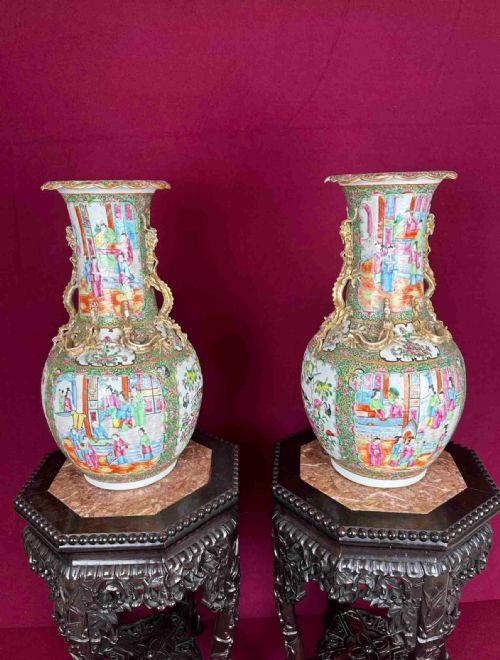
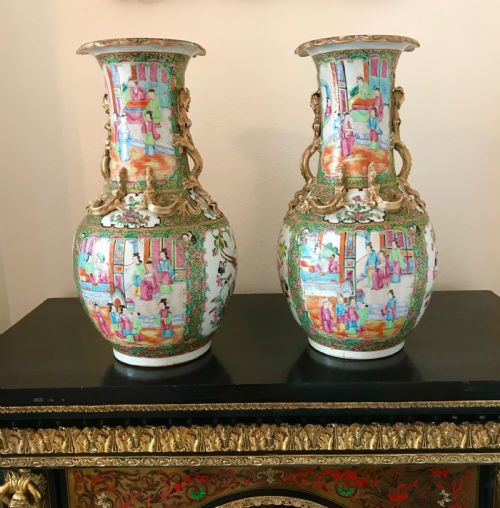
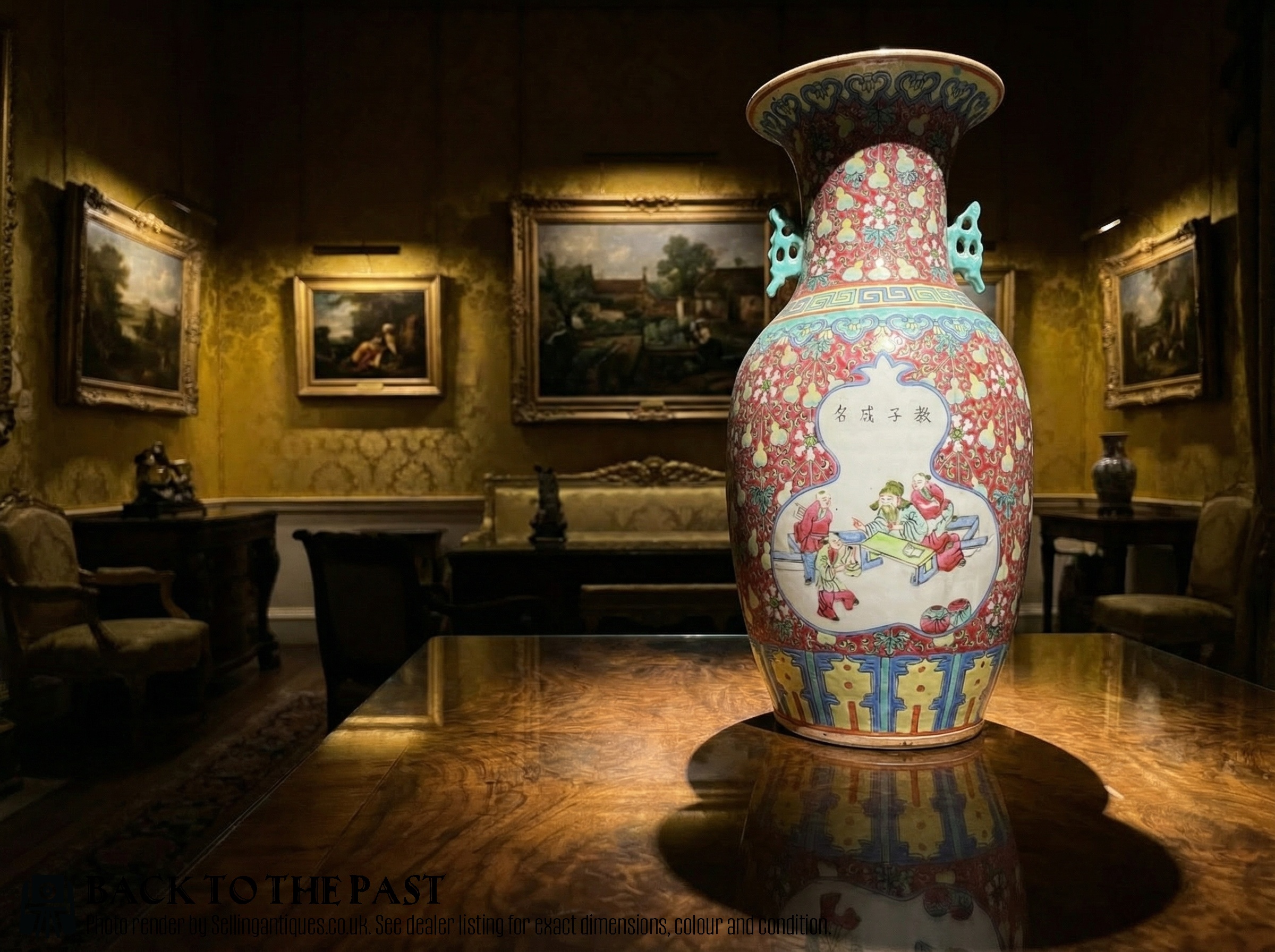
When you search for a canton enamel urn, you are looking at nineteenth-century Chinese export porcelain produced during the Qing Dynasty. The pieces on this page primarily take the form of large decorative vases, moon flasks, and lidded vessels dating from the 1870s and 1880s.
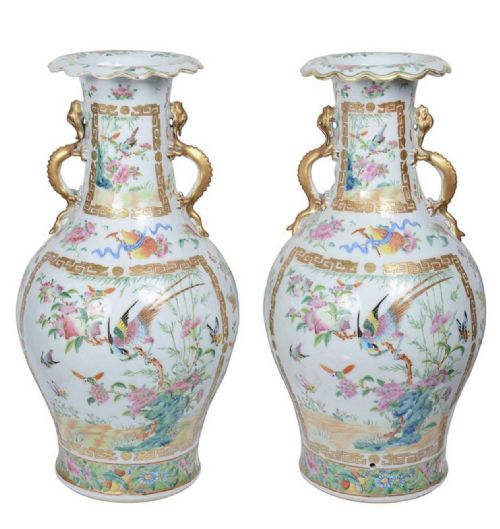
Most examples you will meet here belong to the Rose Medallion tradition, characterised by distinct panelled scenes of figures, birds, and flowers. These substantial objects were made for Western export markets during the Victorian era and remain notable for their scale and ornamentation.
Materials and construction
These items are built from white porcelain decorated with polychrome enamels and finished with gold leaf or gilt highlights. Artisans applied hand-painted glaze motifs across the ceramic body, often combining floral panels with narrative scenes in bright pinks, greens, and golds.
The decorative schemes rely on meticulous brushwork applied directly over the glaze before firing. Many surviving pieces incorporate substantial height, with certain monumental floor vases reaching past ninety centimetres.
Current listings span the nineteenth century, featuring Victorian-era Chinese export porcelain decorated with enamel, glaze, and gold leaf.
Judging the work
Quality in these pieces rests upon the precision and density of the hand-painted enamel work across the porcelain surface. Finer examples display tightly controlled compartmentalised designs with crisp detailing on figures and foliage.
The application of gold leaf and the vibrancy of the glaze also separate standard production from superior output. Pieces with well-preserved gilding and balanced composition command stronger visual presence.
The Canton Enamel Urn Glossary
- Famille rose
- A major palette of Chinese ceramic glazes introduced in the eighteenth century, dominated by opaque pink or rose enamel. This colouring defines the predominant style seen across nineteenth-century export wares.
- Rose medallion
- A specific decorative pattern featuring distinct alternating panels of figures and birds or flowers. This motif covers the surface of many large nineteenth-century export vases.
- Moon flask
- A flattened circular vessel with a narrow neck and small side handles, standing on a low base. These ceramic forms are traditional in Chinese export porcelain.
- Qing dynasty
- The final imperial dynasty of China, lasting from sixteen forty-four to nineteen twelve. Pieces on this page date from the later nineteenth century of this period.
Canton Enamel Urn: Frequently Asked Questions
What period do these vases come from?
The pieces listed on this page date from the nineteenth century, specifically spanning the 1870s and 1880s during the Qing Dynasty. This period corresponds to the Victorian era in Britain, when Chinese export porcelain was widely imported.
Most items carry nineteenth-century dating markers within their stylistic attribution, reflecting the peak of Rose Medallion production for Western markets.
How were these large vases used?
These substantial vessels were produced primarily as decorative display items for grand nineteenth-century interiors. Their large scale made them suitable for placement in hallways, reception rooms, and drawing rooms.
Some examples have subsequently been adapted as lamp bases, integrating nineteenth-century craftsmanship with later domestic lighting requirements while retaining their original ceramic bodies.
What is the difference between Canton and Rose Medallion?
Canton refers broadly to porcelain decorated in Guangzhou for export to Western markets during the Qing Dynasty. Rose Medallion is a specific subset of Canton porcelain defined by its panelled layout of figures and natural elements.
While all Rose Medallion pieces originate from the Canton region, not all Canton pieces use the iconic medallion panel layout seen on these vases.
How do I care for antique enamel porcelain?
These porcelain items require gentle handling due to their age and the delicate nature of the surface enamel and gilding. Dusting should be done carefully with a soft, dry cloth without applying harsh cleaning agents.
Keeping them away from direct sunlight and sudden temperature changes helps preserve the integrity of the coloured glazes and gold leaf highlights.