


Pair Cloisonne Vases
When you search for pair cloisonne vases, you enter a decorative world of patterned enamel vessels spanning Japanese Meiji and Chinese Qing traditions.
Pair Cloisonne Vases
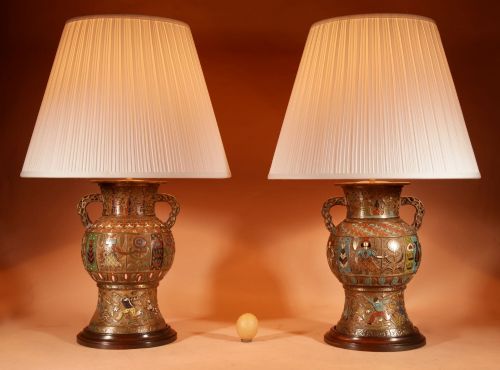
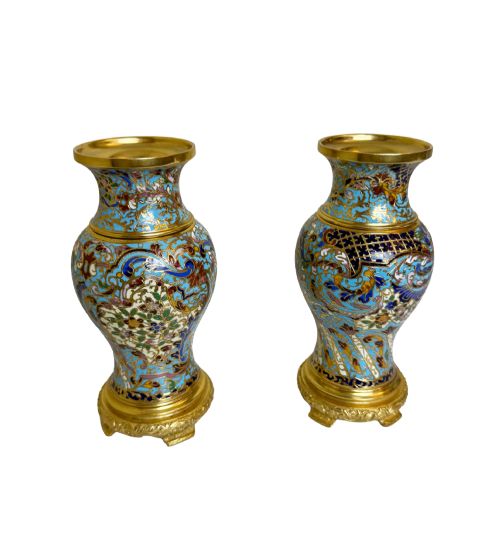
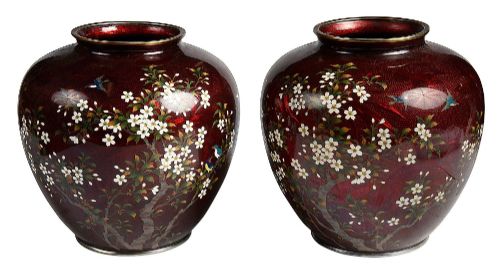
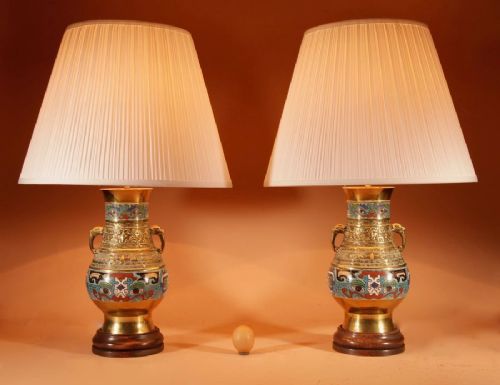
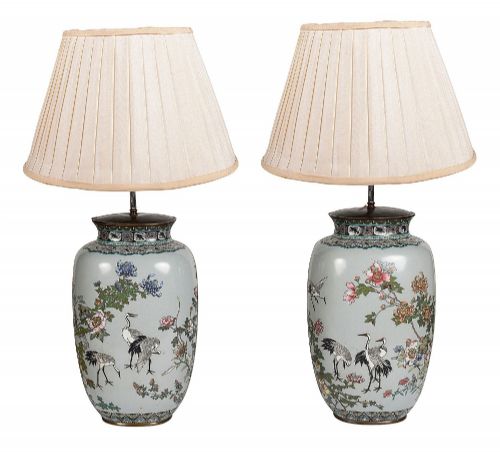
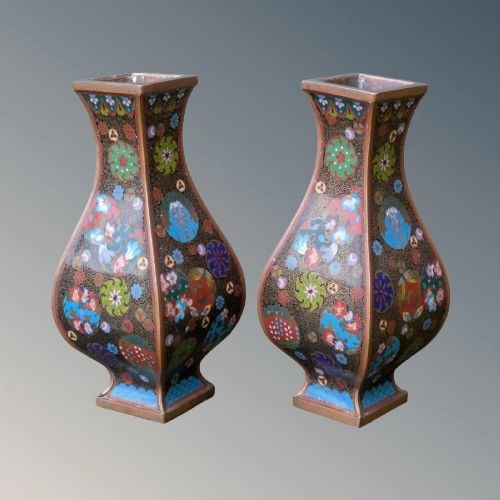
A pair cloisonne vases selection comprises symmetrical vessels intended for display, often appearing as ginger jars, lidded urns, or table lamps. These objects originate largely from nineteenth and early twentieth century Japanese and Chinese workshops, alongside occasional French decorative items.
Buyers encounter miniature vessels alongside massive palace urns reaching significant heights. Many pieces retain their original form, while others carry later lamp fittings or metal mounts.
Construction and materials
Artisans form these pieces using a metal base of copper, brass, or bronze, upon which thin metal wires create raised cellular compartments known as cloisons. Workers then fill these individual cells with vitreous enamel paste before firing and polishing the surface smooth.
Advanced techniques incorporate silver wire, gold wire, or translucent enamel layers over textured foil backgrounds. Mounts in ormolu or gilt bronze frequently complement the enamelled bodies.
Listings feature copper, brass, bronze, and gilt bronze bases paired with enamel work.
Standards of craftsmanship
Quality rests upon the precision of the wirework and the density of the enamel. Finer examples show meticulous symmetry, intricate avian or floral motifs, and absence of pitting in the glazed surface.
The sophistication of the underlying metalwork and the presence of documented workshop signatures elevate specific pieces above standard decorative production.
Ando Company·Hayashi·Jules Vieillard
The Pair Cloisonne Vases Glossary
- Cloisonne
- An enamelling technique where metal wires form compartments on a metal base to hold coloured paste. This method creates distinctive patterned surfaces across Japanese and Chinese vessels.
- Champleve
- An enamelling process where troughs or cells are carved directly into the metal surface rather than formed by soldered wires. These recessed areas receive the enamel before firing.
- Ginbari
- A Japanese enamelling method featuring a textured foil background beneath translucent enamel. This technique produces a patterned depth visible through the coloured glaze.
- Meiji
- A Japanese historical period spanning from 1868 to 1912 noted for exceptional decorative arts production. Pieces from this era frequently employ refined wirework.
- Ormolu
- Gilt bronze mounts applied to decorative objects. French and Asian makers utilised these metal additions for decorative borders and lamp bases.
Pair Cloisonne Vases: Frequently Asked Questions
How are these vases cleaned?
Dust the enamelled surface gently with a soft dry cloth to prevent accumulation. Avoid chemical cleaners or excessive moisture which can damage exposed metal wires and mounts.
Inspect the base and rim periodically to ensure any fitted lamp hardware remains secure. Gentle handling protects the delicate vitreous enamel from accidental impact.
Were these originally made as lamps?
Many nineteenth century vessels were adapted later into table lamps by adding electrical fittings. Original purpose often involved display as mantel ornaments or architectural garnitures.
Conversion work frequently retained the core ceramic or metal body intact. Buyers encounter both converted examples and purely decorative vessels.
How do I distinguish Chinese from Japanese pieces?
Chinese examples often feature heavier bronze bases with bolder champleve designs or traditional imperial motifs. Japanese production from the Meiji era frequently displays finer wirework and naturalistic bird or floral subjects.
Palace scale items and specific framing styles offer further clues to geographic origin. Examining the interior finish helps clarify workshop traditions.
What is ginbari enamel?
Ginbari is a specialised technique involving embossed foil applied to the metal body beneath a translucent enamel coat. This creates a textured pattern that catches light through the coloured surface.
Examples utilising this method date predominantly to the Meiji period. The technique requires considerable skill to execute without damaging the delicate foil layer.