




Chinese Enamelware Vases
Chinese enamelware vases are richly decorated vessels employing ancient techniques, sought after for their vibrant colours and intricate metalwork.
Chinese Enamelware Vases
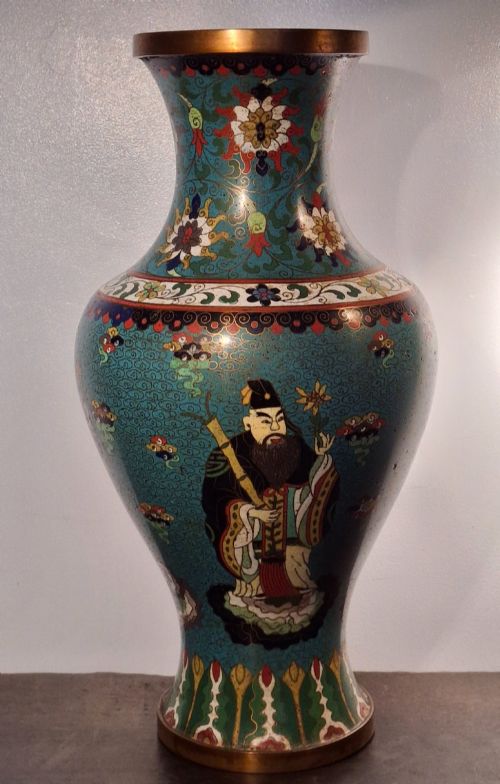
When buyers search for chinese enamelware vases, they encounter vessels dating from the nineteenth century through the early decades of the twentieth century, including pieces assigned to the Qing Dynasty and Edwardian eras. These objects manifest primarily as decorative vases, lidded vases, table lamps and urns.
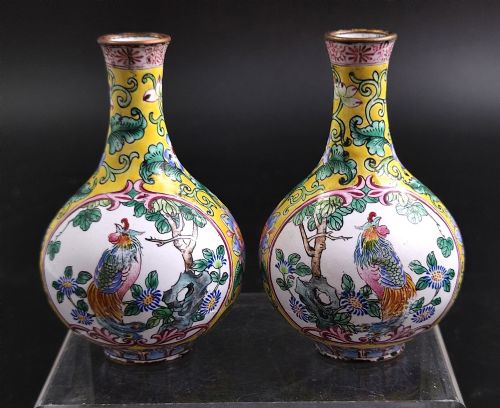
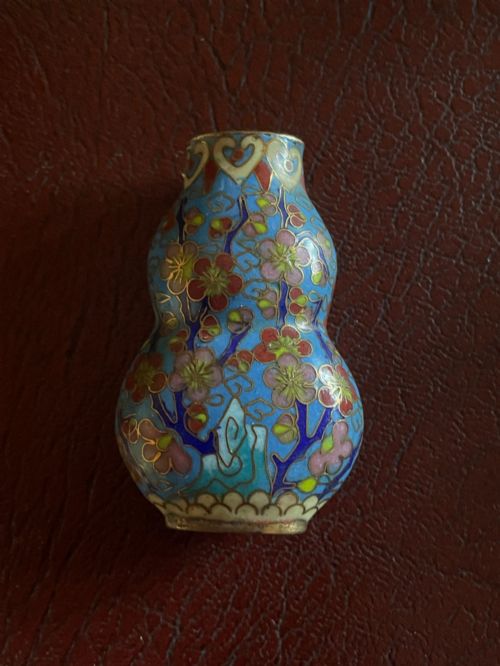
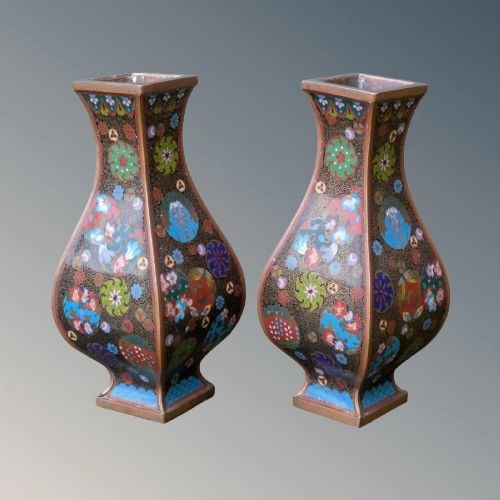
The most common forms on this page include pairs of cloisonne vases alongside miniature and large lidded examples. Makers and decorators produced these pieces using styles such as Chinese Export Decorative Art, Asian Antique and Chinese Qing Dynasty style.
How they were made
Makers formed the core structure of these vases using copper, brass, bronze or gilt metal. Artisans then applied enamel to the metal bodies using distinct techniques.
The primary method recorded is cloisonne enamel, where thin metal wires create cells filled with coloured pastes before firing, alongside champleve enamel where troughs are carved into the bronze to hold the enamel.
Chinese Enamelware Vases Retail Price Guide 2026
Typical asking prices for chinese enamelware vases among the pieces listed under this phrase on Sellingantiques today, from the lower quarter to the upper quarter. They describe what is for sale here now, not the wider market.
Some industrious Victorian decorator decided a lovely cloisonne vase made a splendid table lamp, wiring it up for modern illumination.
What varies in quality
The distinction between ordinary and finer examples rests on the precision of the wirework and the depth of the enamel palette. Superior pieces display crisp, uniform cell boundaries and rich, evenly fired colours.
Gilt bronze mounts and heavier metal foundations separate robust decorative items from simpler miniature or lighter vessels.
The Chinese Enamelware Vases Glossary
- Cloisonne enamel
- A decorative metalwork technique where flat wires are soldered to a metal base to form compartments filled with enamel paste. This method creates detailed patterns bounded by fine metal lines.
- Champleve enamel
- A technique where troughs or cells are carved directly into a metal surface and filled with enamel before firing. It differs from wire-based methods by utilising a heavier, excavated metal ground.
- Gilt bronze
- Bronze treated with a thin layer of gold to give a lustrous metallic finish. This material enhances the decorative appeal of vase mounts and fittings.
- Qing Dynasty
- The final imperial dynasty of China, spanning from sixteen forty-four to nineteen twelve. Pieces from this period often inform later decorative export styles.
Chinese Enamelware Vases: Frequently Asked Questions
Are these vases purely decorative?
Most examples function primarily as decorative objects or ornamental jars rather than utilitarian vessels for holding water.
Several pieces also appear converted into table lamps while retaining their original enamel bodies.
How do I date a piece?
Dating relies on stylistic markers, metal patination and construction methods associated with nineteenth-century and early twentieth-century production.
Evidence on this page spans from eighteen fifty through the nineteen thirties and the Edwardian period.
What metals are used beneath the enamel?
The underlying metal body typically consists of copper, brass, bronze or gilt metal.
These metals provide the rigid structural support necessary for the fired enamel and wire cells.
Do they come in pairs?
Symmetric pairs frequently appear alongside single miniature and large lidded vases.
Pairs were often created together for display on mantelpieces or tables.