
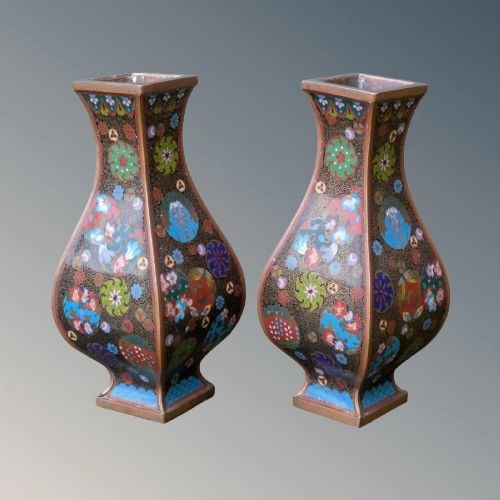


Black Cloisonne Vase
These black cloisonne vase examples offer striking contrast and intricate metalwork, bringing centuries of decorative tradition straight to your mantelpiece.
What black cloisonne vase pieces are
When you search for a black cloisonne vase, you encounter refined metal vessels decorated with dark enamel grounds. These pieces range from substantial nineteenth-century Chinese decorative items to delicate Japanese Meiji period creations.
You are most likely to meet Meiji period Japanese examples featuring birds and flowers alongside large nineteenth-century vessels decorated with koi fish. Lidded variants also appear among these listings.
The dark background makes the coloured enamel motifs stand out sharply. Such items serve as dramatic focal points in traditional and modern interiors alike.
How they were made
Artisans constructed these vessels using copper, brass, or silver as a base metal. They soldered thin metal wires, known as cloisons, onto the surface to outline the desired patterns.
The compartments formed by these wires were filled with enamel pastes before firing. Subsequent polishing created a smooth surface where the metallic outlines frame the vibrant designs.
Listings feature items utilising enamel, copper, brass, and silver across the Meiji period and nineteenth century.
What varies in quality
The finesse of the wirework largely determines the distinction between ordinary production and superior craftsmanship. Finer, more even lines indicate greater skill in rendering complex subjects like birds, flowers, and koi.
The choice of base metal also influences the character of the piece, with silver wire adding an extra layer of refinement to Japanese Meiji period examples.
Ando Jubei
The Black Cloisonne Vase Glossary
- Cloisonne Enamel
- An ancient decorative technique where enamel is applied within compartments created by soldered metal wires on a metal base. This method produces intricate patterns defined by thin metallic outlines.
- Meiji Period
- The era in Japanese history spanning from 1868 to 1912, noted for significant artistic output and international trade in fine metalwork. Pieces from this time often exhibit exceptional technical mastery.
- Koi
- A type of carp frequently depicted in Asian art, symbolising perseverance and fortune. These fish appear prominently on larger nineteenth-century vessels.
- Ando Jubei
- A prominent Japanese manufacturer known for producing high-quality cloisonne wares during the late nineteenth and early twentieth centuries. Marked pieces by this maker are particularly sought after by collectors.
Frequently Asked Questions
How do I care for my vase?
Dust the surface gently with a soft, dry cloth to prevent the accumulation of dirt within the wire crevices. Avoid using liquid cleaners or abrasive materials that might scratch the enamel.
Keep the vessel away from direct sunlight and dramatic temperature fluctuations. Proper placement protects both the metal base and the delicate vitreous infills.
Are these pieces Chinese or Japanese?
The evidence includes items originating from both traditions. Chinese decorative pieces often feature nineteenth-century origins with bold forms.
Japanese items frequently date from the Meiji period and showcase meticulous silver wirework. Examining the motifs and wire structure helps clarify the specific geographic origin.
What metals are used underneath?
Maker workshops utilised copper, brass, and silver as the foundational structures for these enamel vessels. The choice of metal often correlates with the period and the overall refinement of the item.
Silver wire was specifically chosen for finer Japanese Meiji period pieces to elevate the aesthetic quality. The underlying metal also dictates the weight and stability of the vase.
How can I identify Meiji period pieces?
Meiji period items frequently incorporate precise silver wirework alongside naturalistic motifs like birds and flowers. Engraved marks sometimes provide further clues regarding the workshop.
Comparing the subject matter against known historical styles helps confirm the date. These works reflect the intense standard of craftsmanship demanded during that specific era.