
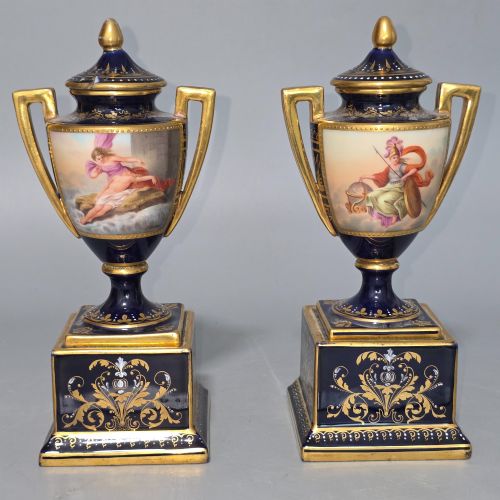
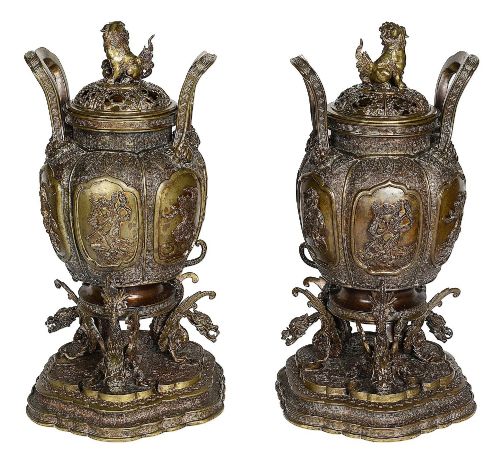
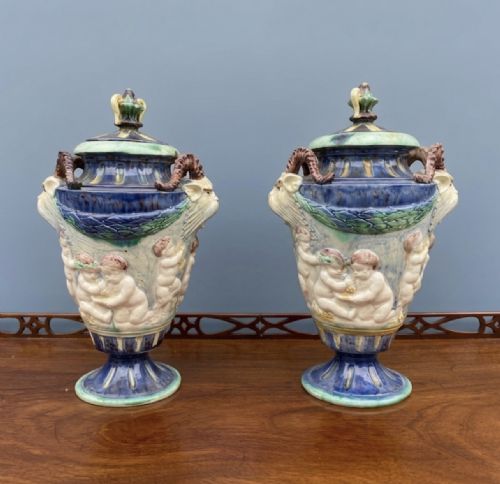
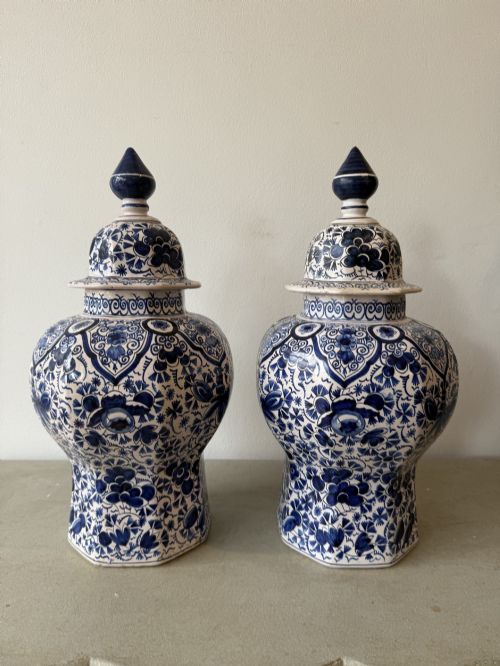




Pair of Lidded Urns
A pair of lidded urns brings symmetry and formal presence to a room, delivered through matched vessels shaped for display and utility.
Pair of Lidded Urns
A pair of lidded urns combines decorative impact with balanced proportion, designed to sit symmetrically upon mantels, sideboards or pedestals. When searching for this phrase, you encounter matched vessels spanning centuries of European and Asian manufacture, created to serve as focal points in formal interiors.
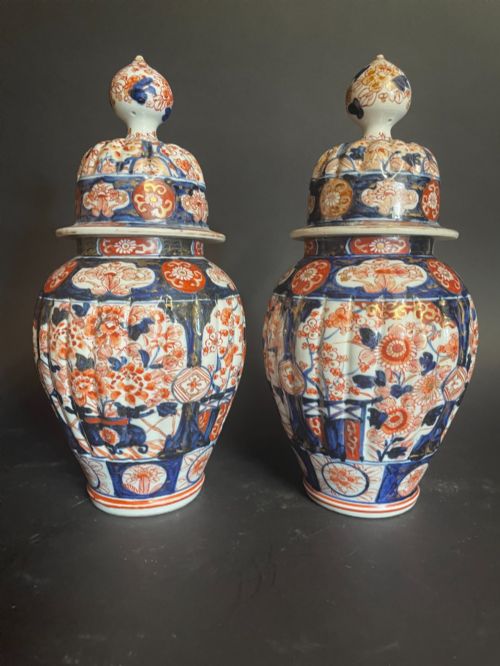
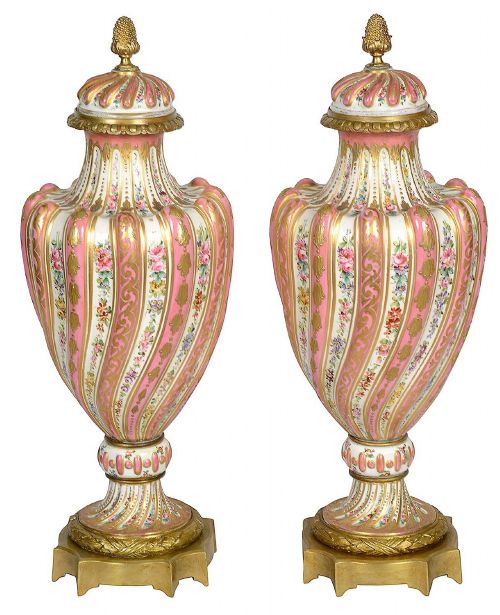
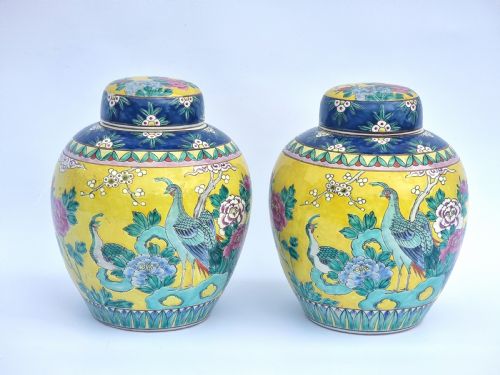
The selections available here lean heavily toward nineteenth-century production, though pieces stretch from earlier periods into the twentieth century. Common forms range from porcelain ginger jars and majolica containers to bronze and marble campana shapes, reflecting both classical revival and export traditions.
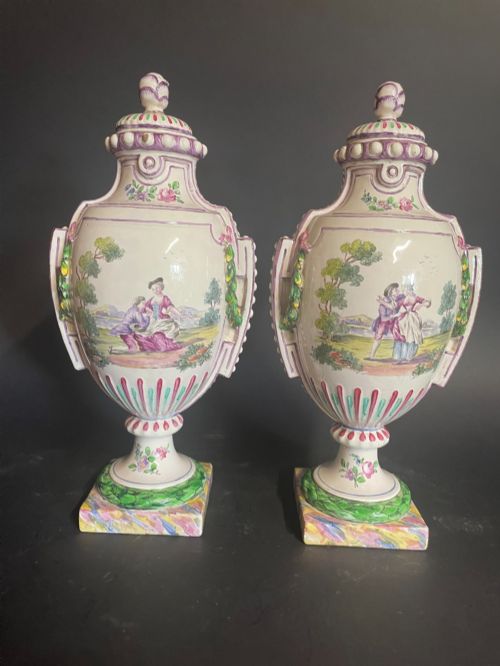
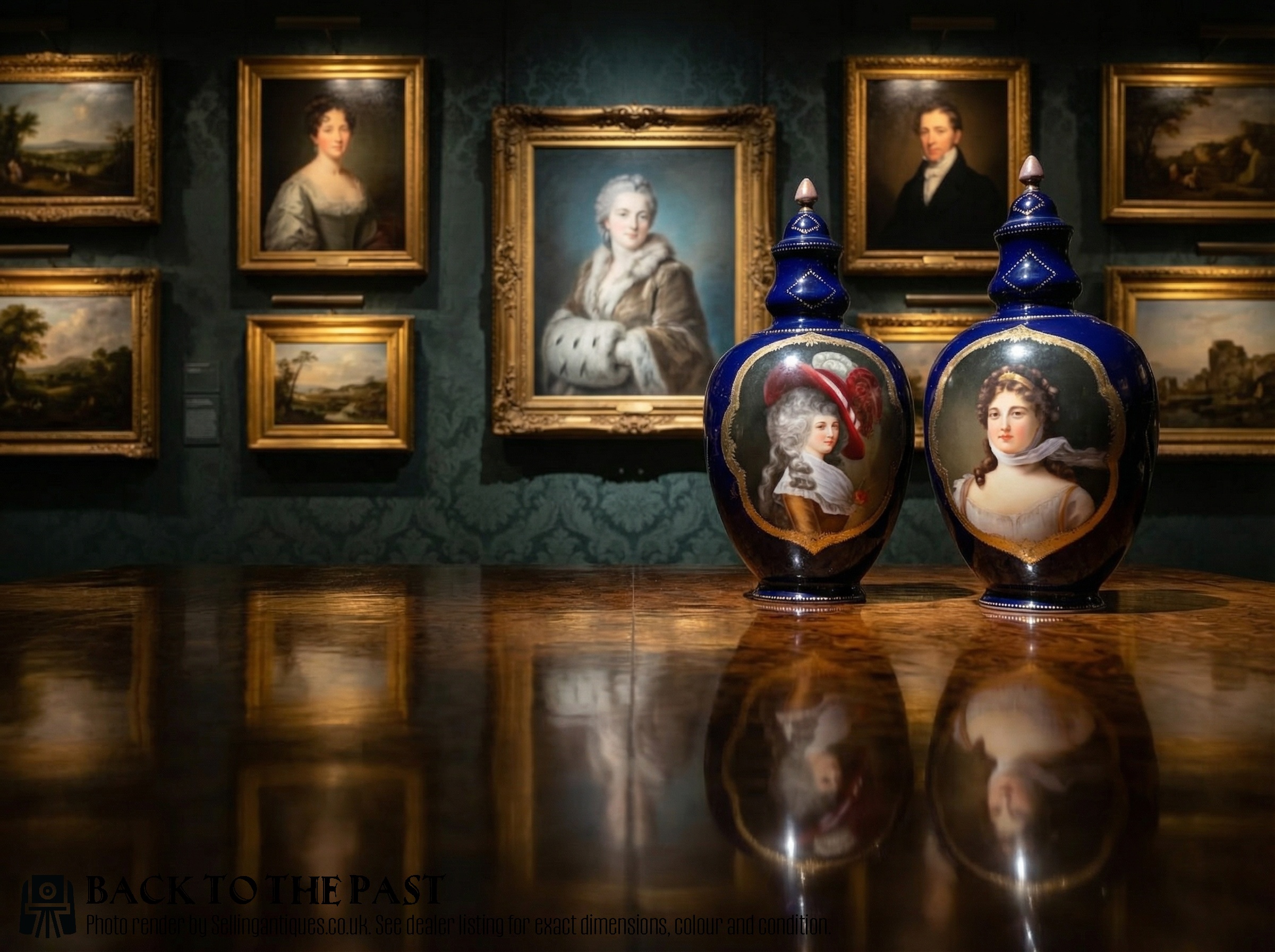
Many examples utilise ceramic bodies decorated with hand-painted scenes, floral motifs, or rich glazes, while others rely on cast metals, treen, or cut glass. Their matching lids complete the silhouette, maintaining the closed, monumental profile characteristic of traditional decorative urns.
Materials and construction methods
Ceramic pieces involve shaping clay on the wheel or in moulds, followed by hand painting and high-temperature firing to set glazes, enamels, and gilt details. Ironstone, porcelain, faience, and earthenware form the rigid bodies for much of the earthenware and porcelain output.
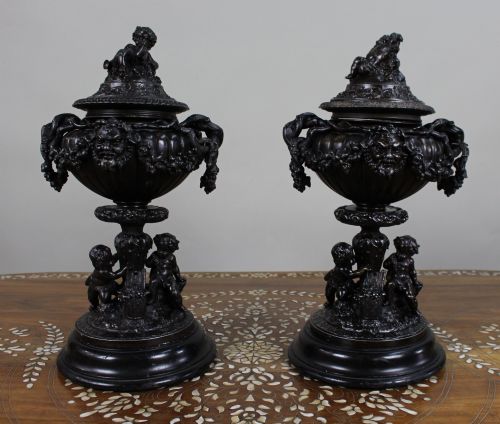
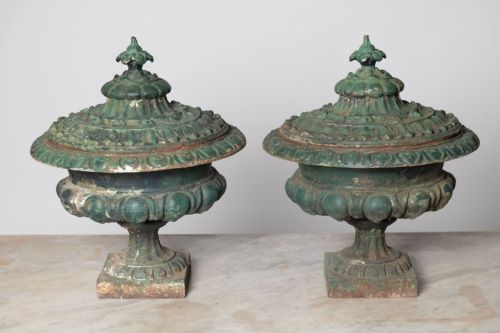
Metal vessels rely on bronze casting, ormolu mounting, and spelter work, often incorporating chased details, patination, and mounts shaped as masks or foliage. Wooden examples employ turning on a lathe, utilising dense timbers like mahogany and fruitwood paired with brass or ivory fittings.
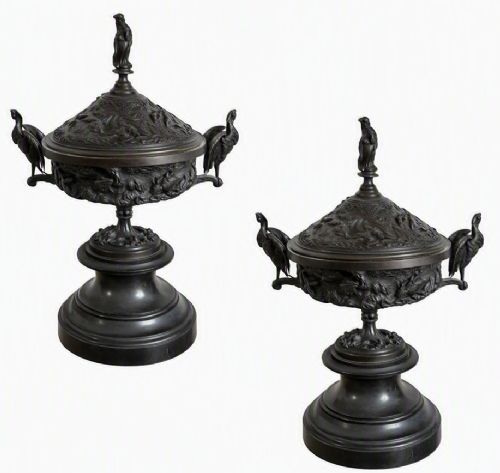
Storks dance across one nineteenth-century French bronze pairing, capturing motion frozen in heavy metal.
Distinctions in quality
Quality rests upon the crispness of the modelling, the precision of the hand painting, and the fidelity of the matching between the two vessels. Superior ceramic pieces show detailed brushwork without blurring, while metal castings display sharp relief in chased ornamentation rather than soft, muddy edges.
The integrity of the original lids matters greatly, as matching covers that fit the collar exactly preserve the intended silhouette. Heavier gilding, superior clay bodies, and signed or attributed works elevate certain specimens above standard production wares.
Jules Moigniez·F. Koller
The Pair of Lidded Urns Glossary
- Campana
- A bell-shaped vessel with a flared lip and foot, commonly associated with classical garden and table urns. This silhouette forms the basis for many nineteenth-century decorative pieces.
- Ormolu
- Gilding technique involving the application of finely ground gold-mercury amalgam to bronze. It creates a rich, matte yellow finish on decorative mounts.
- Imari
- Japanese export porcelain style featuring underglaze blue combined with iron red, green, and gilt overglaze highlights. These wares gained massive popularity in European domestic interiors.
- Spelter
- A zinc alloy used as a cheaper substitute for bronze in decorative figures and urns. It is typically given a bronze-like patination to mimic heavier metalwork.
Pair of Lidded Urns: Frequently Asked Questions
Where should I place a pair of lidded urns?
These vessels demand symmetrical placement to fully capture their architectural character. Common locations include mantelpieces, flanking a central mirror, or atop matching console tables and pedestals.
Because they arrive as matched pairs, they create visual bookends that anchor a room's composition. Ensure the surface supports their weight, particularly with bronze, marble, or large ceramic examples.
How were lidded urns originally used?
Historically, large lidded vessels served varied functions ranging from decorative display to storing dry goods, potpourri, or cutlery. Porcelain and majolica jars often held tea or spices in elite households.
Over time, many shifted into purely ornamental objects designed to display artistic mastery, historical themes, or classical motifs in formal reception rooms.
How do I identify the period of an urn?
Dating relies on examining the material composition, glaze characteristics, factory marks, and stylistic revival cues. Nineteenth-century pieces frequently emulate eighteenth-century neoclassical or Rococo forms but show distinct manufacturing traits.
Factory stamps, handwritten signatures, and baseline wear provide additional clues. Comparing the body paste and gilding style against known production eras clarifies the timeline.
Are the lids original to the urns?
Verifying original lids requires inspecting the fit, glaze consistency, and wear patterns inside the collar and rim. Matched pairs should share the exact clay body, decorative palette, and ageing signs.
Replacement covers often show slight discrepancies in colour temperature or fit. Closely inspecting the interior contact points reveals whether the cover has belonged to the vessel since its creation.