


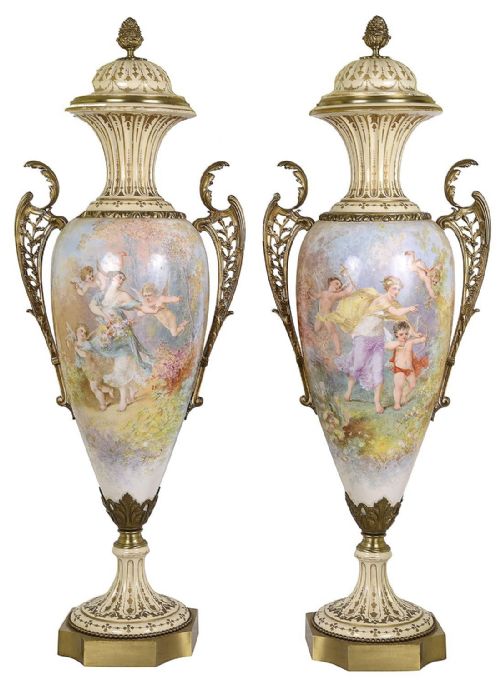


Sevres Style Porcelain Vases
Sevres style porcelain vases bring opulent French decorative flair to an interior, combining painted porcelain with elaborate metal mounts.
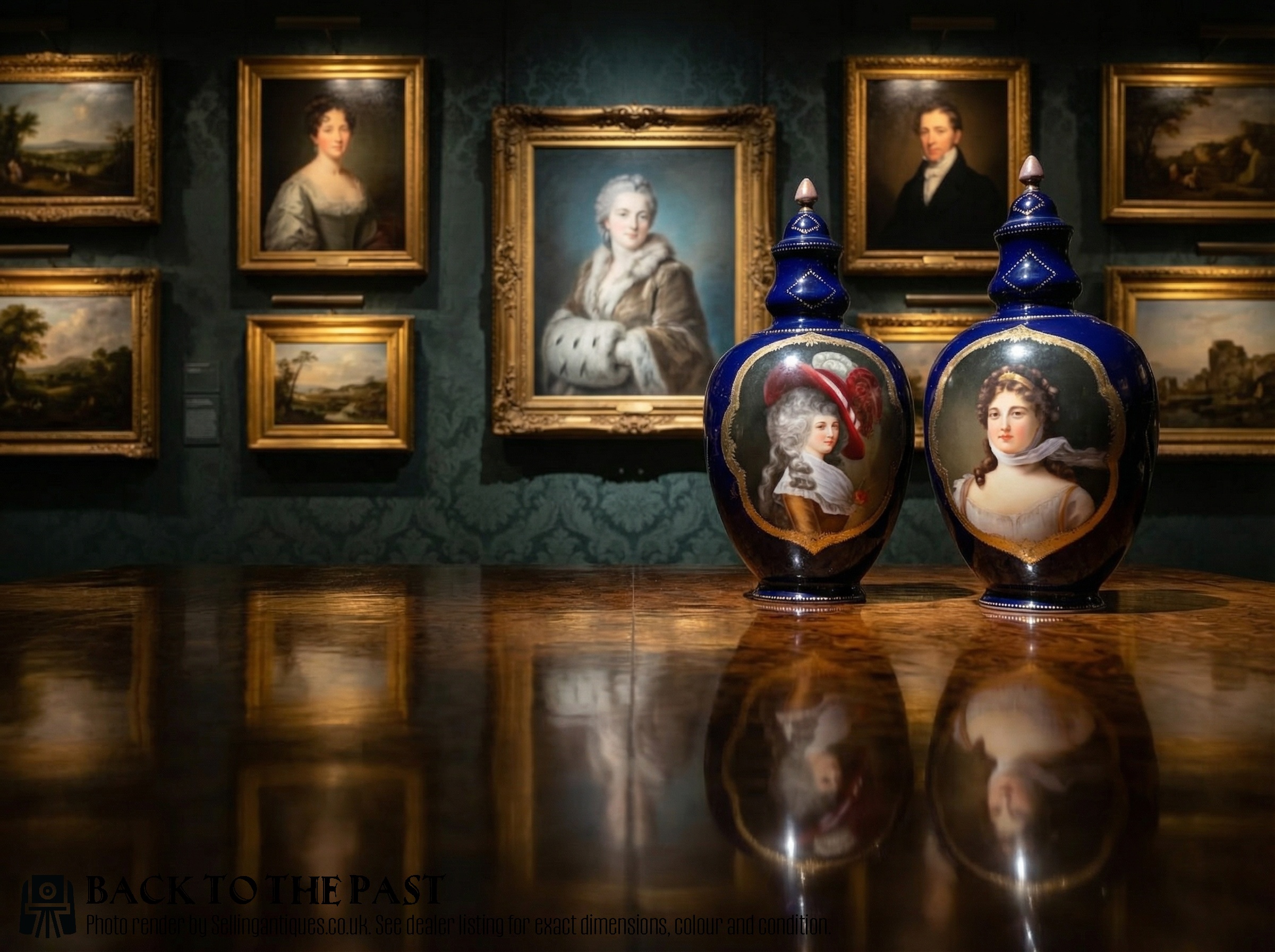
Sevres Style Porcelain Vases
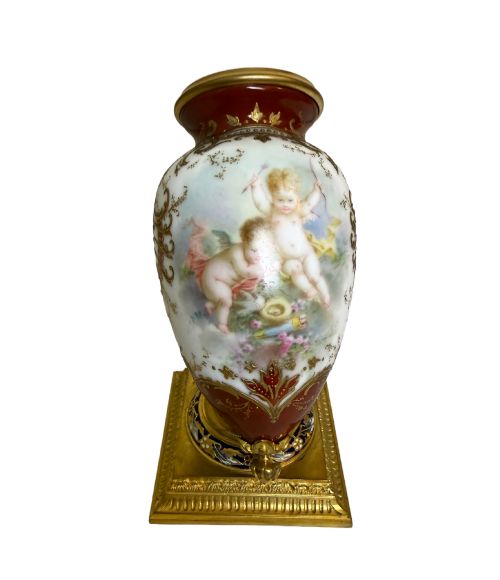
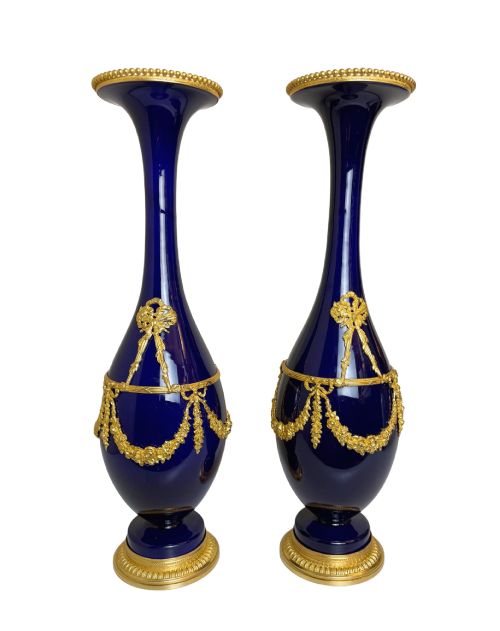
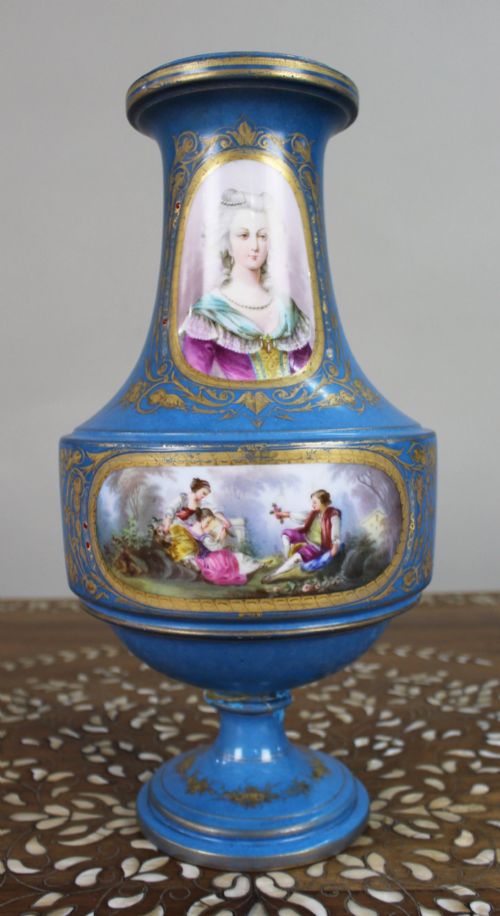
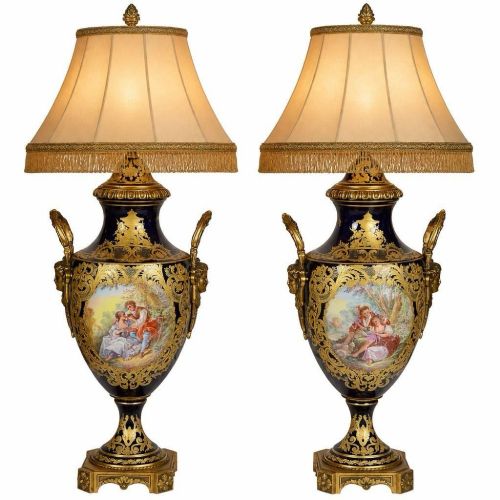
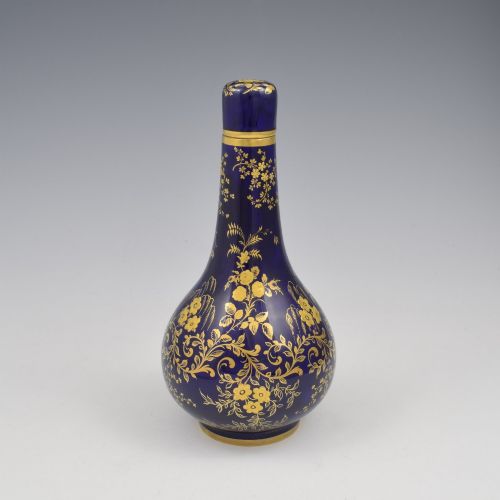
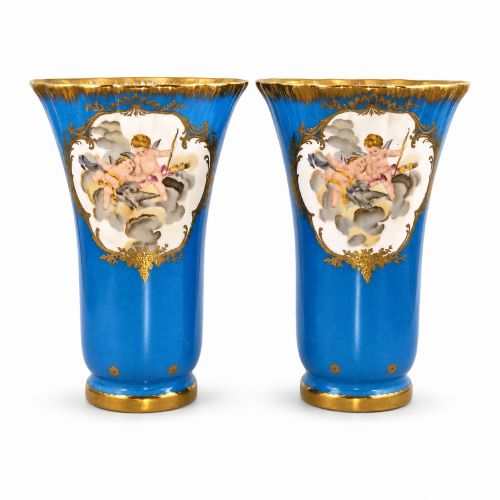
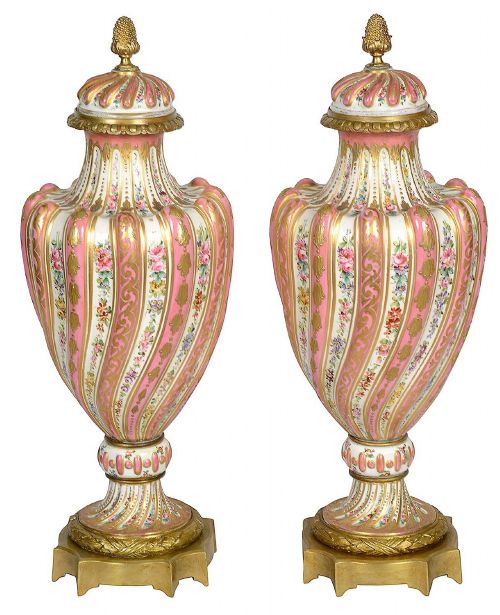
These pieces are decorative vessels that emulate the prestigious output of the royal French factory, predominantly produced during the nineteenth century. When exploring sevres style porcelain vases, a buyer frequently encounters tall lidded urns, garniture sets, and table lamps adorned with rich ground colours like bleu celeste or cobalt blue. Forms often draw on French Rococo Revival, Louis XVI, and Neoclassical styles, frequently incorporating classical figures, putti, and gallant scenes.
The selection ranges from cabinet-sized bottle vases to monumental pairs standing over a metre tall. Many examples feature robust handles, pedestal bases, and distinct covers, while others have been adapted into mantel clocks or lamps.
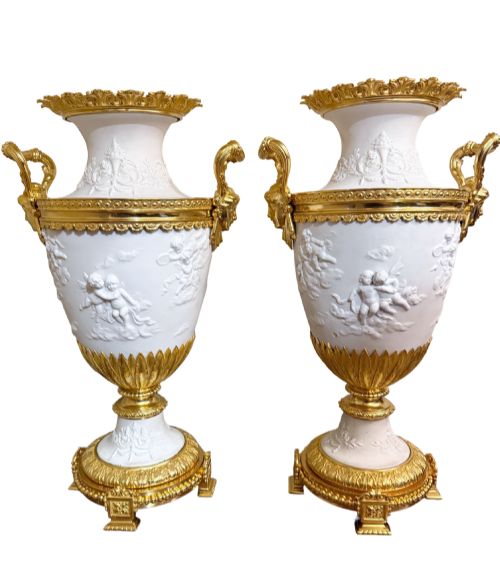
Makers such as Samson of Paris also produced notable interpretations in the nineteenth century, sometimes working in the Sèvres taste to satisfy demand for high-status French aesthetics.
Materials and construction
The foundation of each piece is fired porcelain, frequently hand-painted with figural panels or floral motifs against coloured grounds. This ceramic body is combined with metal components, predominantly ormolu and gilt bronze, which frame the rims, bases, and handles.
Makers applied gold leaf and enamel details to enrich the surface, securing the porcelain bodies within cast mounts using pinned or screwed construction.
The listings span from 1830 to 1920, with the 19th Century representing the vast majority of available porcelain and ormolu pieces.
Assessing craftsmanship and finish
Quality varies significantly in the crispness of the bronze or ormolu casting and the fineness of the hand-painted ceramic decoration. Superior examples display detailed brushwork in the pastoral scenes and precise chasing on the metal mounts, whereas simpler versions rely on standard transfer prints and basic gilt metal trim.
The weight and integration of the metal mounts relative to the porcelain body also dictate the overall standard of the piece.
Samson Paris·Derby Porcelain
The Sevres Style Porcelain Vases Glossary
- Bleu Celeste
- A bright sky-blue porcelain ground colour popular in French nineteenth-century decorative ceramics. It provides a vivid backdrop for gilt accents and painted panels.
- Ormolu
- Gilt bronze mounts applied to the handles, bases, and rims of decorative porcelain vessels. This technique adds structural weight and visual splendour to the composition.
- Garniture set
- A matching group of three or more vases or urns designed to be displayed together on a mantelpiece or sideboard. They typically feature a central larger vessel flanked by smaller matching pieces.
- Putti
- Depictions of plump, winged infant figures, often found frolicking in the hand-painted reserves of nineteenth-century decorative urns.
Sevres Style Porcelain Vases: Frequently Asked Questions
How do I spot a reproduction?
Examine the weight and detail of the metal mounts alongside the precision of the painted surface. Nineteenth-century pieces typically show hand-mixed pigments and heavy cast bronze rather than lightweight modern alloys.
Look closely at the underside and the method of assembly for signs of age, such as oxidised metal pins or traditional kiln marks.
Where should I display large urns?
Large urns and garniture sets work best as focal points on sturdy surfaces like mantelpieces, console tables, or dedicated pedestals. Their substantial height and gilded mounts demand a setting with adequate clearance to be fully appreciated.
Keep them away from direct sunlight to protect the vibrant enamel colours and delicate gilt leaf details over time.
Can these vases hold water?
Most nineteenth-century decorative urns and mounted pieces are intended strictly for display rather than functional use. The presence of metal mounts, gilt bronze bases, and complex internal construction means they are not designed to hold water or fresh flowers.
Using them as dry decorative vessels or table lamps preserves the delicate porcelain and prevents damage to the adhesives and internal wiring.
What styles complement these pieces?
These ornate vessels pair naturally with traditional period interiors, French Rococo Revival furnishings, and classical Neoclassical decor. They also create a striking contrast when placed against minimalist or contemporary backdrops.
Matching the gilt metal tones with other metallic accents in the room helps integrate the pieces into a cohesive scheme.