
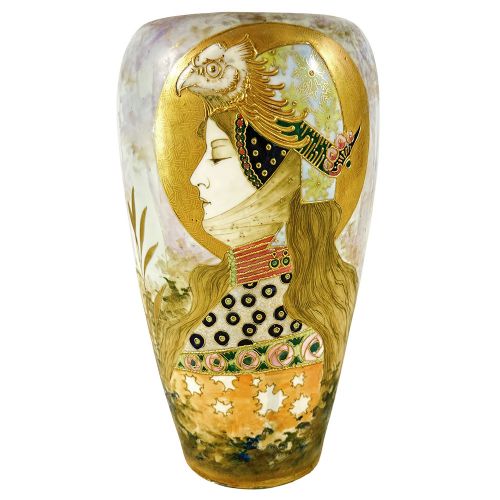


Antique Portrait Urns
These antique portrait urns bring hand-painted faces and classical forms into a room, offering the finest porcelain and glass craftsmanship from past centuries.
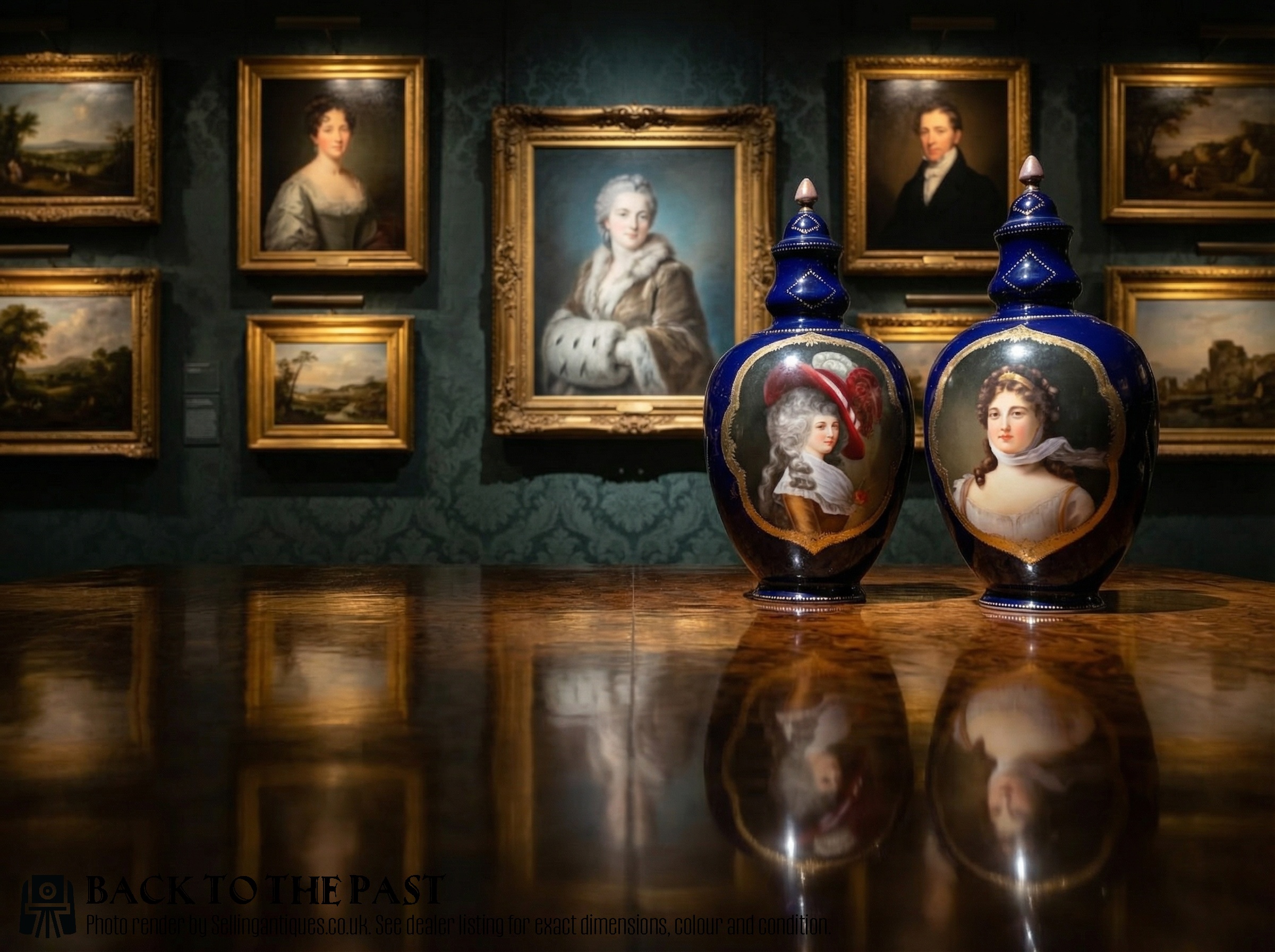
Antique Portrait Urns
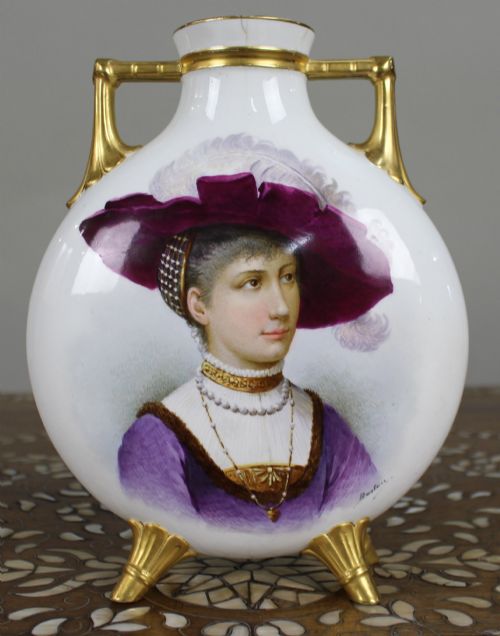
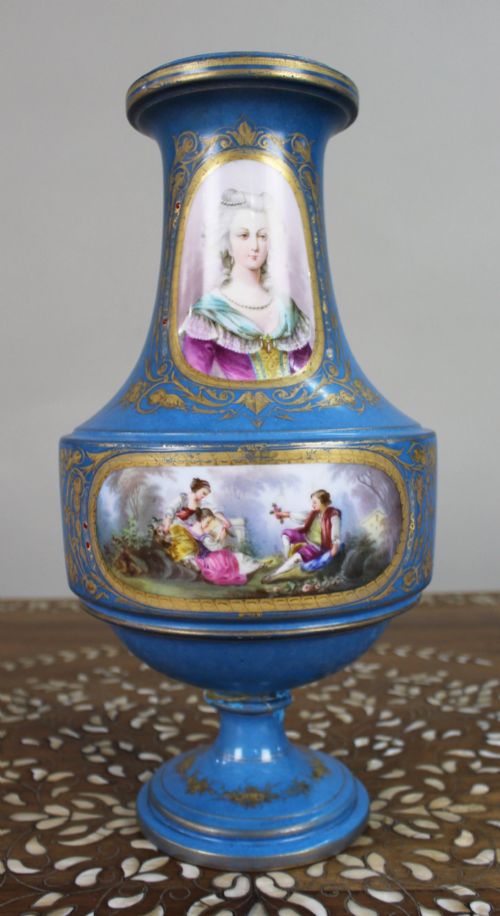
When you search for antique portrait urns, you encounter a distinct gathering of decorative vessels and vases featuring hand-painted human likenesses. The pieces on this page span the eighteenth and nineteenth centuries, taking forms such as lidded vases, moon flasks, and garniture sets.
You are most likely to meet nineteenth-century porcelain and earthenware vessels adorned with neoclassical or Victorian ornamentation. These items range from Austrian and Continental works to Bohemian glass trios and Italian maiolica polychrome vases.
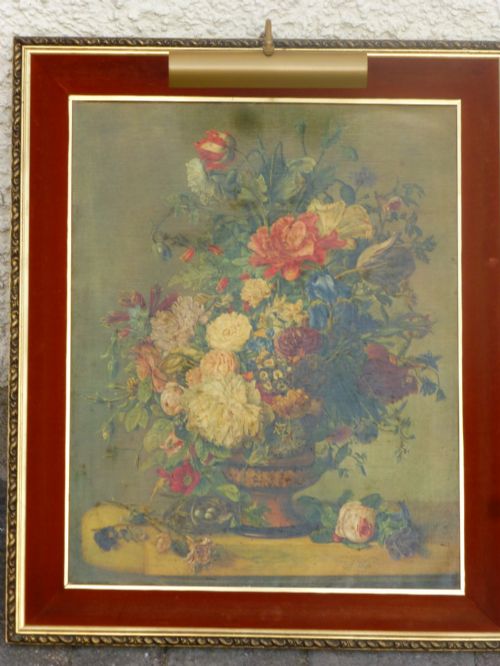
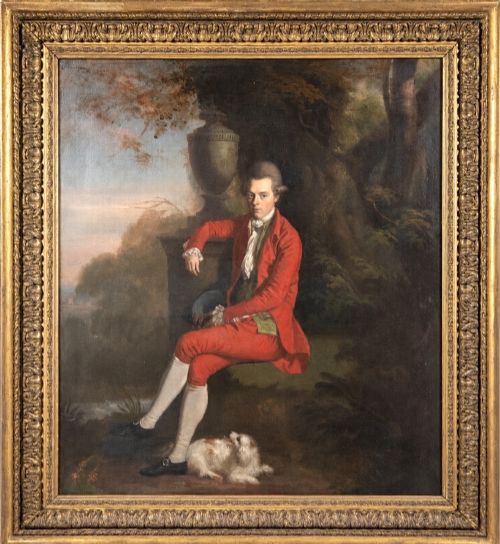
Alongside ceramic vessels, the selection occasionally encompasses canvas paintings and marble torchere stands that share the portrait theme. Each object demonstrates the historical preference for combining figurative art with ornamental urn and vase forms.
How they were made
The makers utilised high-grade porcelain, earthenware, and glass as the primary surfaces for detailed oil and enamel painting. Artisans applied fine brushwork to depict human portraits, often accentuating the ceramic contours with gold leaf and gilt highlights.
Potteries and glasshouses shaped these pieces through meticulous moulding, casting, and blowing techniques before subjecting them to multiple kiln firings. Skilled hands then added intricate polychrome glazes and hand-painted scenes, finishing the vessels with gilded borders.
The listings span the eighteenth and nineteenth centuries, featuring periods such as the Georgian, Victorian, and Neoclassical eras.
What varies in quality
Quality rests primarily in the precision of the portrait painting and the crispness of the surrounding gilding. Finer works display realistic facial detailing and delicate brushwork, whereas simpler pieces rely on heavier, less refined applications of paint.
The sophistication of the ceramic body and the depth of the glaze also separate standard production from superior examples. Well-preserved surfaces with intact gold leaf and rich enamel colours indicate careful historic manufacture.
Reissner, Stellmacher and Kessel
The Antique Portrait Urns Glossary
- Gilt
- A thin layer of gold applied to the surface of porcelain, wood, or metal. It highlights decorative borders and frames the central portraits.
- Moon Flask
- A flattened circular flask with a short neck and two handles, often resting on a fixed base. This form provides a wide, flat canvas for portrait painting.
- Maiolica
- Tin-glazed Italian earthenware decorated with opaque colours. It offers a smooth white background suited to polychrome figurative scenes.
- Garniture
- A set of three or more matching ornamental vases or urns designed to be displayed together on a mantelpiece or sideboard.
Antique Portrait Urns: Frequently Asked Questions
How were these urns used?
Historically, such urns served as high-status decorative objects displayed on mantelpieces, tables, or specialised stands within domestic interiors. They were meant to be admired for their artistic merit rather than utilised for holding liquids.
Wealthy households often arranged them in matching pairs or larger garniture sets to balance the decor of formal reception rooms.
How do I date an antique portrait urn?
Dating relies on examining the ceramic body, the style of the painted portrait, and any visible factory marks or signatures. Neoclassical and Victorian motifs provide clear chronological markers for nineteenth-century production.
Materials such as blue celestial porcelain or overlaid bohemian glass also help narrow down the decade of manufacture.
How should I clean my portrait urn?
Dust the surface gently with a soft, dry brush or a microfiber cloth to prevent any buildup. Avoid using water, chemical cleaners, or abrasive cloths, as these can damage delicate enamel and gold leaf.
Professional conservation advice should be sought if the painted surface requires more than light dusting.