


Gilt Cobalt Urn Pair
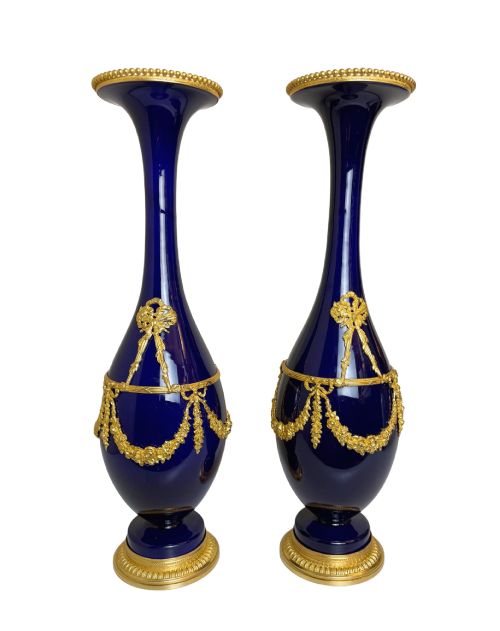
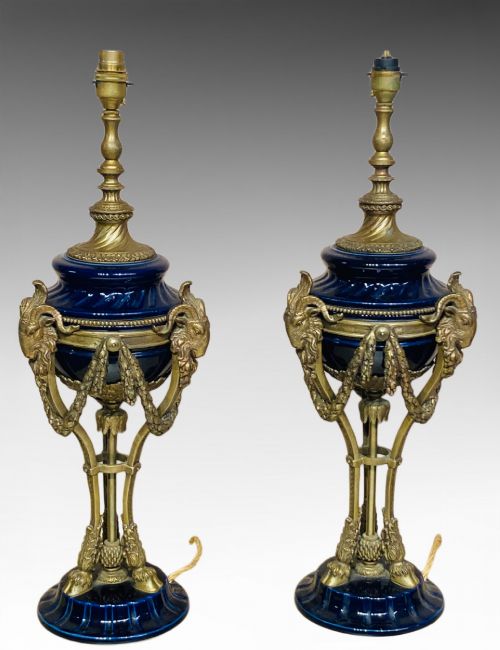
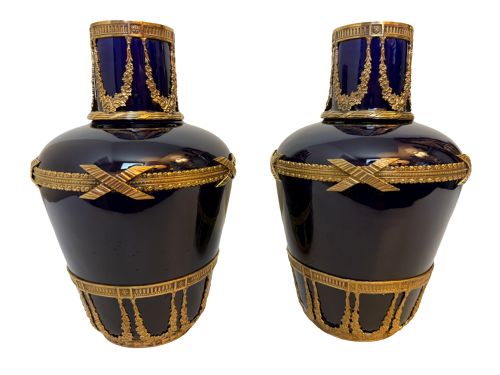
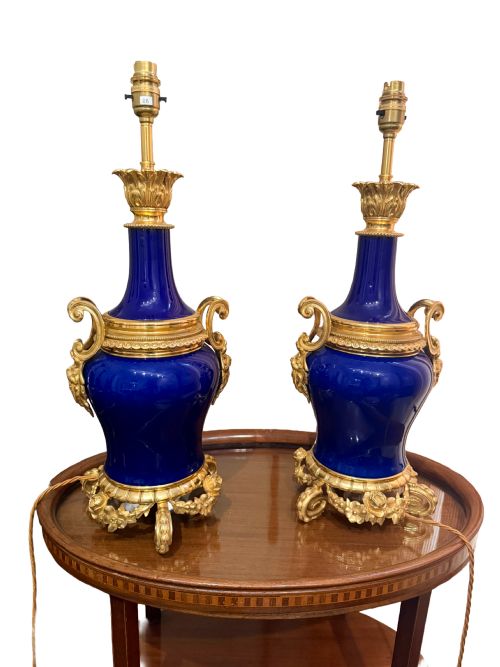
When you search for a gilt cobalt urn pair, you find deep blue glazed ceramics elevated by metallic mountings.
Gilt Cobalt Urn Pair
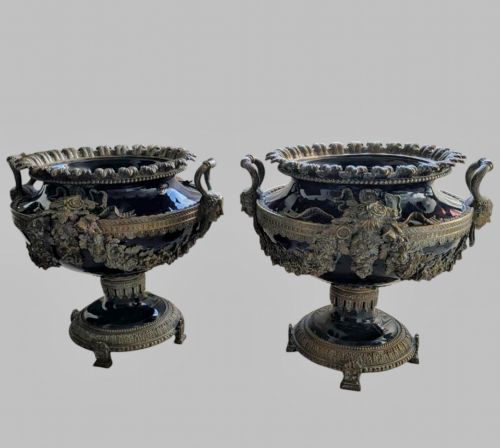
A gilt cobalt urn pair comprises matching symmetrical vessels glazed in intense blue and finished with metallic highlights, often taking the form of lidded vases or jardinieres. These pieces emerge predominantly from nineteenth century European workshops and Japanese kilns, spanning styles from French Rococo Revival to Meiji period designs.
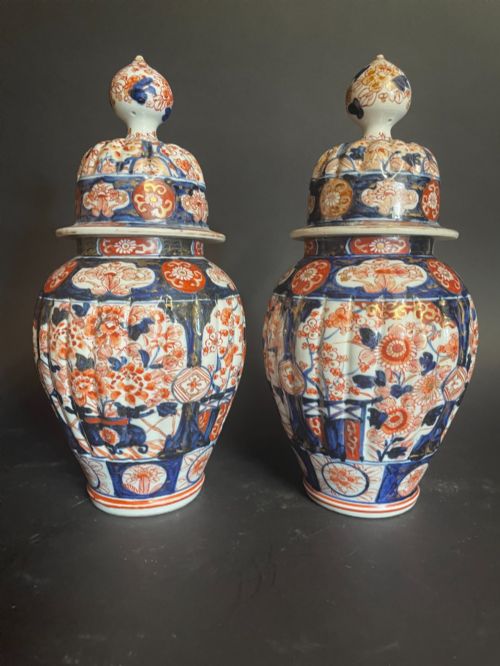
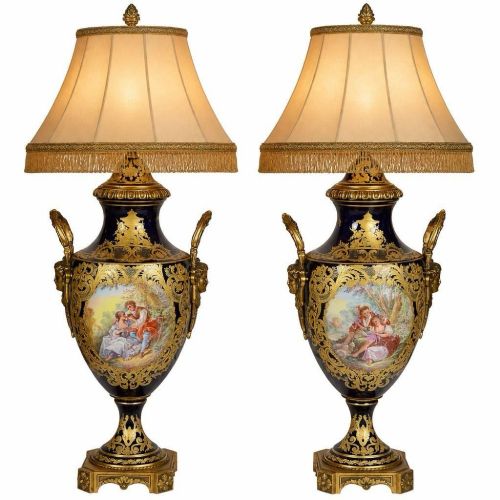
The version most commonly met on this page is the French Sevres style porcelain vase mounted with ormolu or gilt bronze trim. Alongside these, buyers encounter Japanese Satsuma and Imari works featuring cobalt grounds enriched with gold leaf, as well as earthenware and ceramic table lamps.
What varies in quality
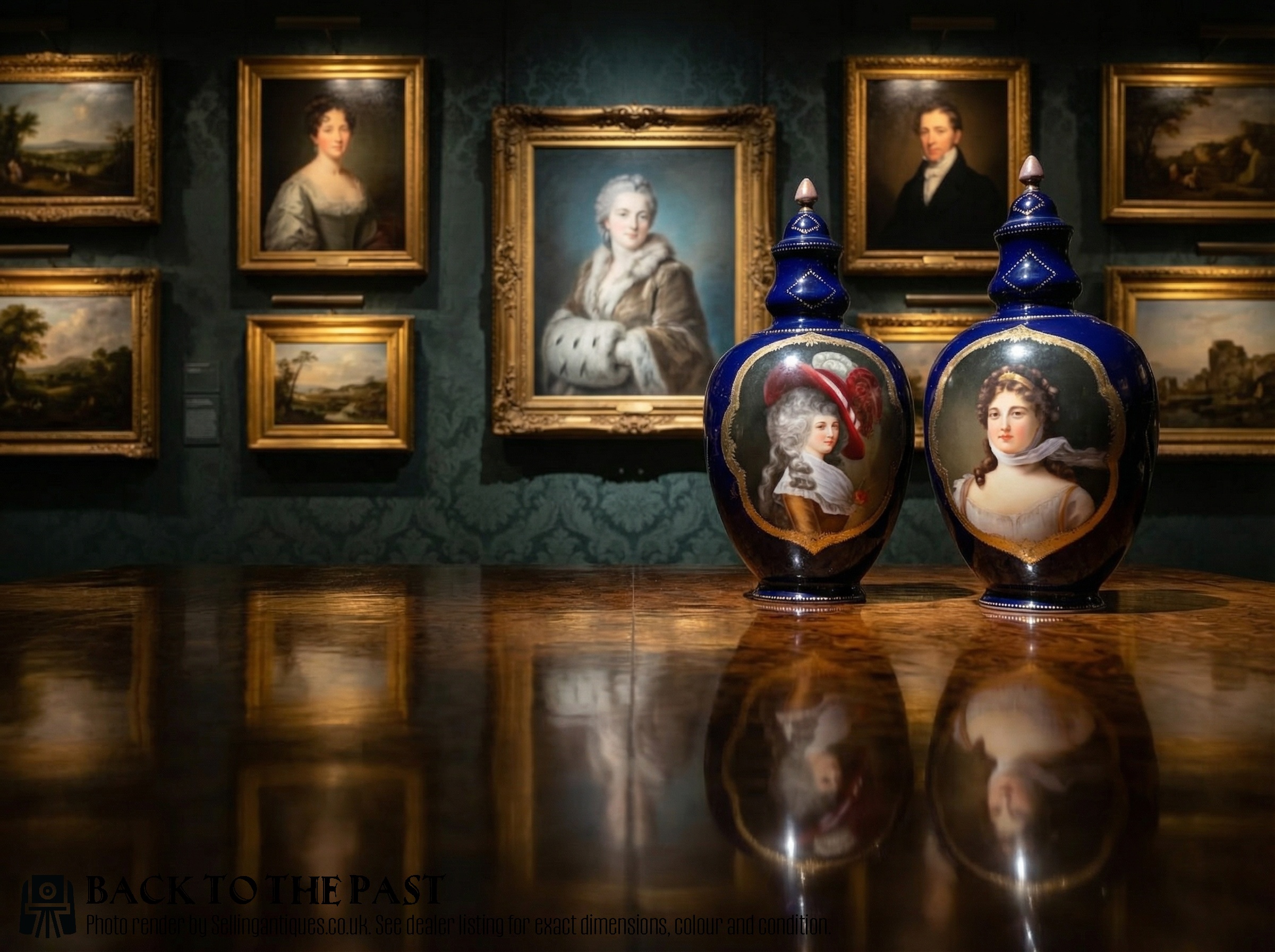
The refinement of hand-painted details and the precision of the gilding set individual pieces apart. Master painters executed intricate figural or landscape panels with fine brushwork, whereas lesser examples relied on simpler stencilled or transfer-printed patterns.
The weight and crispness of the ormolu or gilt bronze mounts also distinguish the range. Finely chased metal mounts show sharp relief and fit the contours of the porcelain precisely, while simpler pairs carry lighter, cast brass trims with minimal hand-finishing.
Materials recorded across these items include porcelain, earthenware, ceramic, glass, ormolu, gilt bronze, gold leaf and enamel.
Ernst Wahliss·Kinkozan·Moorcroft Macintyre·Mason's Ironstone·Doulton
The Gilt Cobalt Urn Pair Glossary
- Cobalt
- A mineral oxide used by potters to produce a rich, stable blue glaze under high temperatures. It forms the distinct background colour found on these pieces.
- Ormolu
- Finely ground high-carat gold amalgamated with mercury and applied to a bronze base, creating a durable golden finish. The term also describes the cast brass or bronze mounts themselves.
- Satsuma
- Earthenware originating from the Satsuma domain in Japan, typically characterised by a ivory craquelure glaze decorated with heavy gold and enamel. Meiji period makers produced notable examples for export.
- Moriage
- A Japanese ceramic technique using clay piped from a tube to build up raised decorative patterns before glazing and firing. It creates a textured, three-dimensional surface.
- Garniture
- A set of three or more matching ornamental vases or urns designed to be displayed together on a mantelpiece or cabinet.
Gilt Cobalt Urn Pair: Frequently Asked Questions
How are these urns powered as lamps?
Converted table lamps retain their original ceramic bodies while incorporating electrical wiring routed through the base or mounts.
Rewiring is typically integrated carefully to preserve the structural integrity of the antique porcelain or glass.
Where were these pairs displayed historically?
Owners placed these matching vessels on drawing room mantelpieces, sideboards or as part of three-piece garnitures on prominent furniture.
Their symmetrical design made them ideal for creating formal balance in nineteenth century interiors.
How do I distinguish Sevres style from Japanese Satsuma?
Sevres style pieces utilise European porcelain bodies with French ormolu mounts and hand-painted classical or landscape panels. Satsuma pieces display Japanese earthenware with distinctive craquelure glazes and elaborate gold decoration.