


English Glass Vase
An English glass vase brings colour and light to a room, ranging from vibrant ruby lustres to delicate cameo pieces.
English Glass Vase
When you search for an English glass vase, you encounter a variety of decorative vessels originating from the nineteenth century onward. The selection spans distinct eras including the Regency period, Victorian era, and later movements such as Arts and Crafts and Art Nouveau.
Origins trace to notable manufacturing centres and makers, employing techniques that developed across the decades. Pieces range from early nineteenth-century cut crystal to later satin glass, cameo glass, and decalcomania designs.
Materials and production techniques
Makers utilised clear glass, lead crystal, milk glass, and vaseline glass, often applying enamelling, gold leaf, paint, or paper decoration to the surface. Double-walled construction and layered coloured glass, such as cranberry over crystal, added depth to the vessels.
Decoration relied on skilled hand work, including wheel engraving, cameo carving, and the application of white cane or pink trails. Specific firms marked their output, while others relied on distinctive regional techniques associated with Stourbridge and Birmingham.
Recorded styles include Victorian, Art Deco, Regency, Arts and Crafts, Neoclassical, and Art Nouveau across various decades.
Distinctions in craftsmanship
The refinement of the glass body and the precision of the surface decoration separate standard production from exceptional work. Hand wheel engraving and cameo carving demand advanced skill, visible in the crispness of the classical scenes and floral motifs.
The complexity of the form also dictates quality, such as double-walled vessels, applied enamel detailing, or integrated silver overlay. Signed examples from established glasshouses demonstrate superior design integrity and finishing.
Thomas Webb and Sons·Stuart for Liberty·Richardson·Powell·Nazeing·Varnish·W.D.B and S
The English Glass Vase Glossary
- Lustre
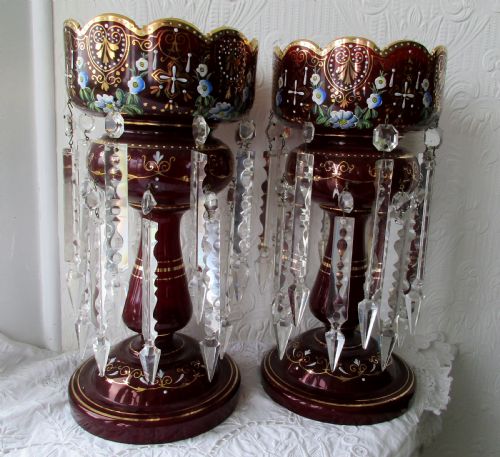
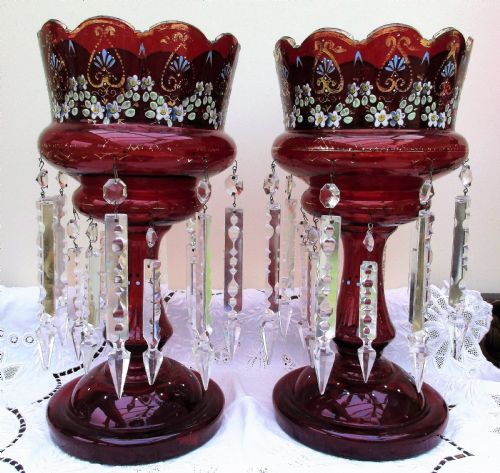
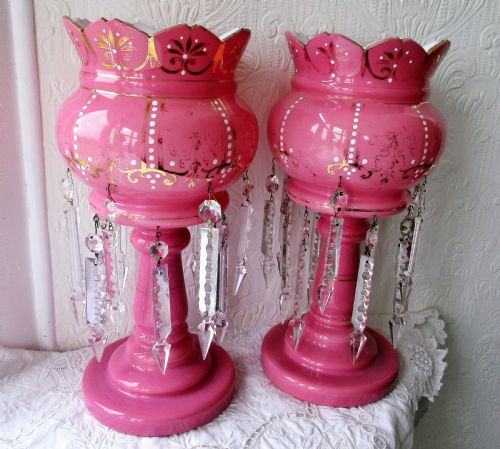
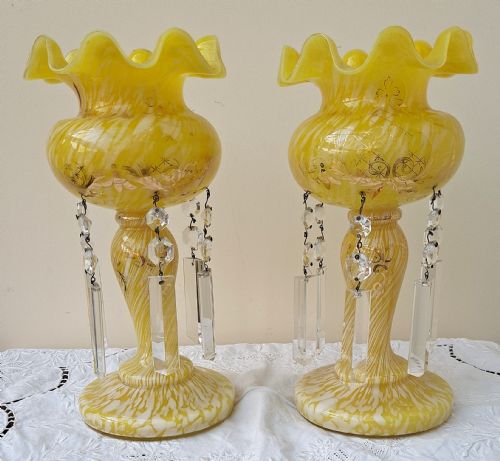
- A decorative vase fitted with hanging glass prisms designed to reflect candlelight. These items were often produced in pairs for mantelpieces during the Victorian period.
- Epergne
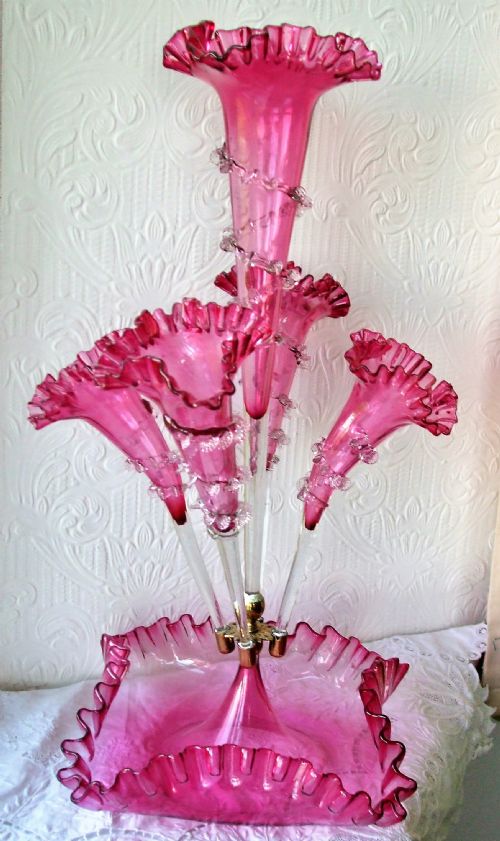
- A large multicoloured centrepiece featuring a central trumpet vase surrounded by smaller hanging baskets or lily vases. They are frequently found in Vaseline or cranberry glass.
- Cameo glass
- A vessel formed from layers of different coloured glass carved away to create a raised relief design. This demanding technique is associated with master nineteenth-century makers.
- Decalcomania
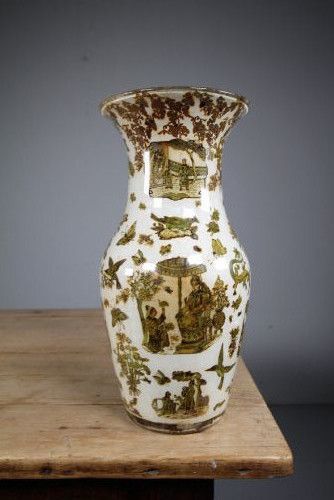
- A process of transferring printed paper designs onto the interior of glass vessels and sealing them. This technique produced ornate decorative patterns popular in the nineteenth century.
- Celery vase
- A tall vessel originally utilised on dining tables to hold stalks of celery in iced water. Early examples feature Regency cut crystal or ribbed Victorian designs.
English Glass Vase: Frequently Asked Questions
What is a mantel lustre?
A mantel lustre is a decorative vase adorned with cut glass pendants suspended from the rim. They were placed on mantelpieces to catch and multiply the flickering light of candles.
Pairs of these vessels were popular throughout the nineteenth century in various coloured glass finishes.
How should I clean antique glass?
Clean antique glass gently using lukewarm water and mild soap, avoiding harsh chemicals or abrasive cloths. Hand washing protects delicate additions such as enamel, gold leaf, and applied trails.
Dry the vessel thoroughly with a soft lint-free cloth to preserve the finish.
Are signed glass vases marked?
Some pieces bear acid-etched signatures, paper labels, or painted marks indicating the maker or retailer. Signatures often appear near the base or on the underside of the vessel.
Unsigned pieces are frequently attributed through distinctive decorative techniques, materials, and registered design shapes.