
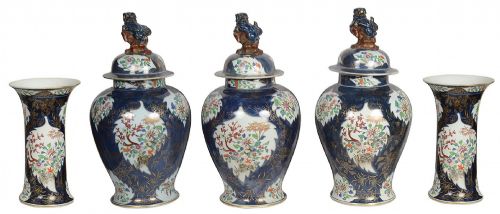


19th Century Chinoiserie Vases
These 19th century chinoiserie vases bring decorative colour, hand-painted narratives and gilt mounts to an interior.
19th Century Chinoiserie Vases
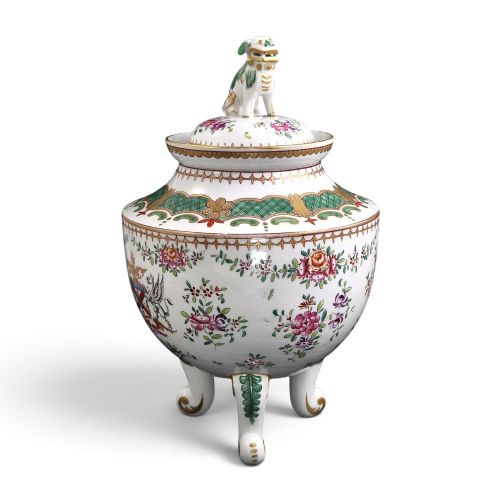
These 19th century chinoiserie vases encompass porcelain, ironstone, glass, and ceramic vessels created across the nineteenth century in European and Asian workshops. Many examples survive as table lamps or retain their original covers, urn forms, and beaker shapes.
The selection spans continental factories, English potteries, and Chinese export wares reflecting Regency, Victorian, and Qing period aesthetics. Buyers frequently encounter pieces transformed into lamps alongside traditional display vases and garniture sets.
Materials and technique
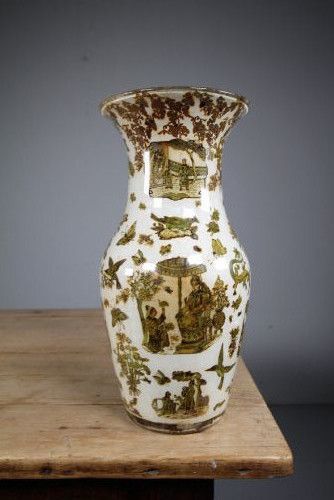
Makers utilised porcelain, ceramic, ironstone, and glass, applying enamels, gold leaf, and decalcomania transfers to build complex decorative surfaces. Skilled hands painted famille rose, famille verte, and blue and white motifs directly onto the clay body.
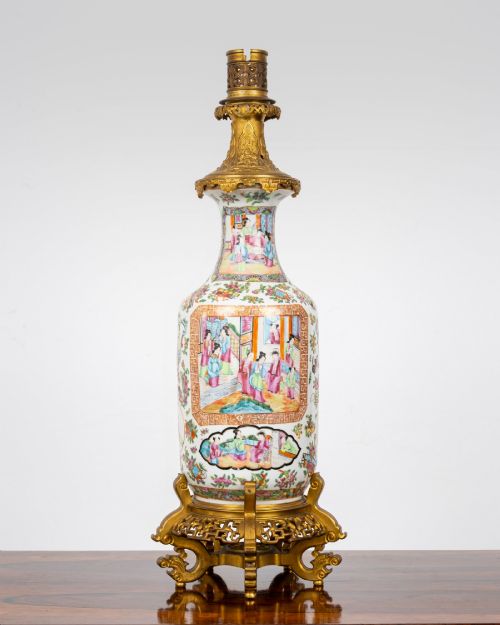
Metalworkers integrated ormolu, gilt bronze, and brass mounts to frame the ceramic bodies, particularly on European and continental conversions. Cloisonne examples required intricate wirework cells filled with vibrant enamel pastes before firing and polishing.
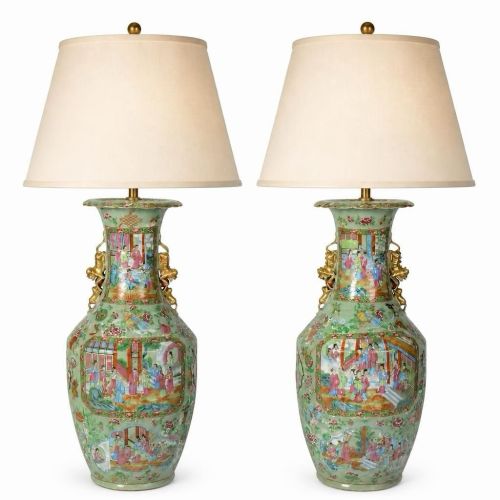
Several vases moonlight as lamps, shedding new light on nineteenth-century export art.
Assessing the execution
The distinction between tiers rests upon the precision of the hand-painting, the richness of the enamel palette, and the weight of the metal mounts. Superior vessels exhibit crisp detailing in the figurative scenes and botanical borders.
Another factor involves the integration of ormolu or gilt bronze mounts, where custom-cast fittings complement the form rather than overwhelm the ceramic body. The depth of the glaze, whether powder blue, mazarine, or crackleware, defines the visual impact of the piece.
Samson Paris·Miles Mason
The 19th Century Chinoiserie Vases Glossary
- Famille rose
- A palette of opaque enamels dominated by pink or rose colours, introduced in Chinese export porcelain during the Qing dynasty. It allowed for subtle shading and intricate floral depictions.
- Decalcomania
- A technique where printed designs are transferred onto glass or ceramic surfaces, popular in nineteenth-century English interior decoration. It created layered decorative effects resembling hand painting.
- Ormolu
- Finely ground gold applied in a mercury amalgam to bronze mounts, frequently found on nineteenth-century vase lamps. It provides a bright, durable golden finish.
- Cloisonne
- An enamelwork method using thin metal wires soldered to a metal base to create compartments for coloured pastes. These pieces are fired and polished to a smooth finish.
- Ironstone
- A heavy, durable type of ceramic patented in the nineteenth century as an affordable alternative to porcelain. It readily accepted rich blue and gilt chinoiserie patterns.
19th Century Chinoiserie Vases: Frequently Asked Questions
Were these always used as lamps?
Many vessels served originally as decorative mantel vases, garniture sets, or potpourri containers before conversion into electric table lamps during later decades.
Wiring additions often utilise existing drilled bases or secure collar mounts to preserve the integrity of the antique ceramic body.
How do I identify a Regency period piece?
Regency examples often display refined blue and white porcelain forms, such as gu-shaped beaker vases inspired by earlier Kangxi designs.
They reflect the clean classical proportions and early nineteenth-century interpretations of oriental aesthetics favoured in British interiors.
How do I care for gilt bronze mounts?
Dust the ormolu and brass fittings gently with a dry, soft cloth to prevent accumulation without disturbing the historical surface.
Avoid chemical polishes that strip the original mercury gilding or damage adjacent porcelain and enamel elements.