




Pair Green Chinoiserie Vases
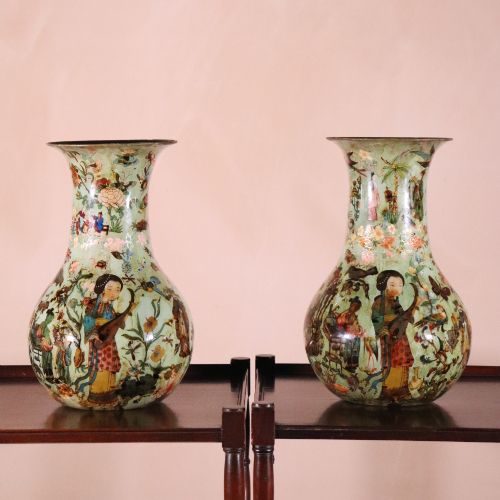
These pair green chinoiserie vases bring hand-painted narrative scenes and vibrant colour to a room.
Pair Green Chinoiserie Vases
A buyer seeking pair green chinoiserie vases will find decorative vessels and adapted lamps spanning the eighteenth, nineteenth, and early twentieth centuries. These objects display European interpretations of East Asian motifs alongside Chinese export wares.
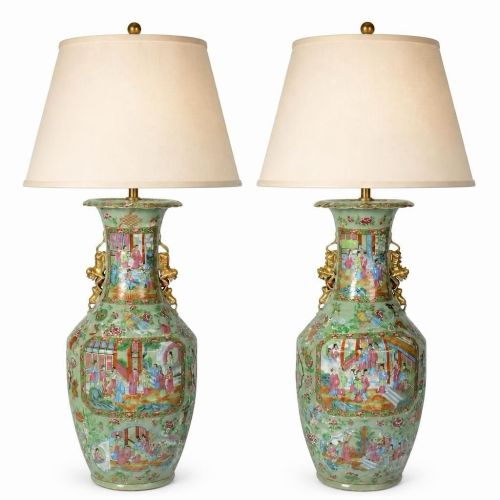
The selections on this page lean heavily towards nineteenth-century production, particularly nineteenth-century Chinese pieces and Victorian adaptations. Many examples function as table lamps mounted on brass or ormolu bases.
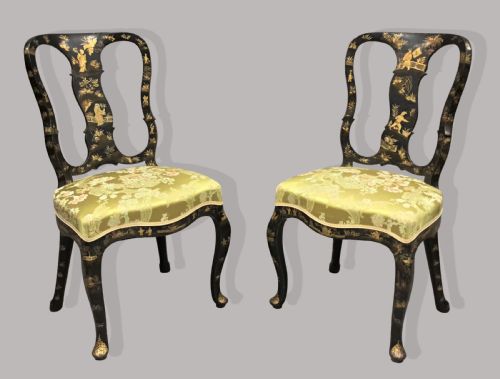
Forms extend beyond traditional vessels to include ceramic lamps and lacquered side chairs sharing the same decorative vocabulary. Green grounds feature prominently across the varied material offerings.
How they were made
Construction relies upon ceramic, porcelain, and ironstone bodies finished with intricate enamel work or decalcomania. Artisans applied hand-painted pigments directly onto the glazed surfaces to depict figurative and botanical scenes.
Metal mounts in brass and ormolu provide structural support and decorative framing for the porcelain bodies. Lacquered woodwork appears on complementary furniture pieces finished with gilt decoration.
Pair Green Chinoiserie Vases Retail Price Guide 2026
Typical asking prices for pair green chinoiserie vases among the pieces listed under this phrase on Sellingantiques today, from the lower quarter to the upper quarter. They describe what is for sale here now, not the wider market.
Listings feature porcelain, ceramic, and ironstone bodies mounted on brass and ormolu.
What varies in quality
Quality rests upon the precision of the hand-painted enamel work and the crispness of the gilt details. Finer pieces demonstrate careful brushwork in the figures and foliage that populate the green ground.
The sophistication of the metal mounts, whether cast ormolu or turned brass, distinguishes standard production from finer decorative examples. Original surface preservation remains paramount in determining the character of each piece.
The Pair Green Chinoiserie Vases Glossary
- Chinoiserie
- European decorative style reflecting Chinese artistic influences. This aesthetic dominated various periods through painted scenes and whimsical motifs.
- Decalcomania
- Transfer decoration technique popular in the nineteenth century. Artisans applied printed designs onto glass or ceramic surfaces before sealing them.
- Famille Verte
- Green palette porcelain enamel classification originating in China. This grouping utilises translucent green hues alongside contrasting pigments.
- Ormolu
- Gilt bronze ornamentation applied to furniture and ceramics. This technique adds metallic lustre and decorative structure to decorative objects.
- Ironstone
- Heavy durable ceramic developed in the nineteenth century. Manufacturers used this dense material as a robust alternative to porcelain.
Pair Green Chinoiserie Vases: Frequently Asked Questions
What periods do these vases come from?
The pieces span from the eighteenth century through to the early twentieth century. Nineteenth-century examples form the majority of the current selection.
Production encompasses both Qing Dynasty export wares and subsequent European revival styles.
Are these vases wired as lamps?
Several vessels have been converted into table lamps mounted on brass or ormolu bases. This adaptation often occurred later in the lifespan of the object.
Other items remain in their original vessel format without electrical fittings.
What materials are used?
Construction materials include porcelain, ceramic, ironstone, and glass. Metal elements utilise brass and ormolu for mounting and support.
Certain furniture items incorporate wood finished with lacquer and gilt decoration.
How do Rose Medallion vases differ?
Rose Medallion wares feature distinct compartmentalised panels filled with figures and birds. They contrast with green ground pieces through their specific palette.
Both styles emerged from nineteenth-century Chinese export workshops.