








Turquoise Asian Urns
These turquoise asian urns bring vibrant colour and intricate metalwork into a room, offering a striking focal point for any interior.
Turquoise Asian Urns
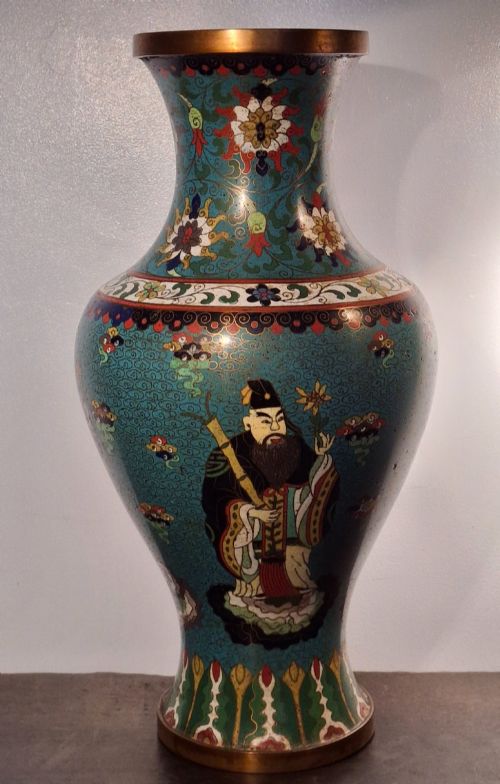
When you search for turquoise asian urns, you encounter a selection of vessels that bridge decorative and ritual objects from the nineteenth and twentieth centuries. These pieces encompass Chinese Qing Dynasty wares, Japanese Meiji period creations, and Tibetan or Himalayan metalwork.
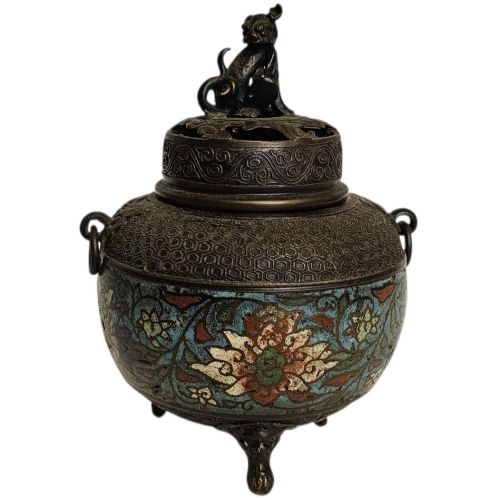
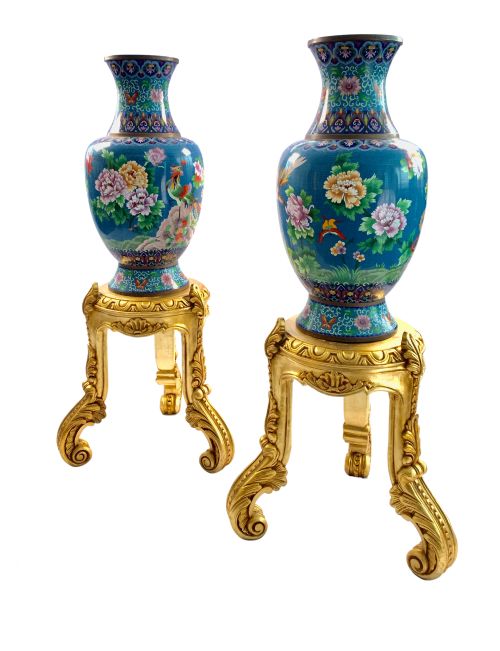
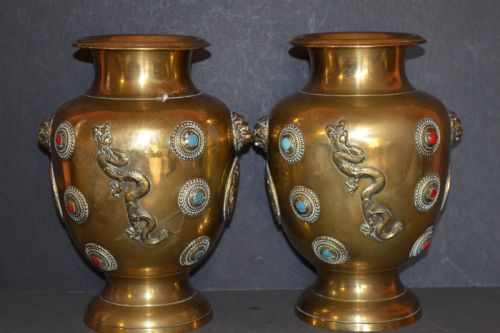
The objects appearing on this page most frequently take the form of cloisonné enamel vases, censers, bowls, and table lamps. You are likely to meet both single statement pieces and matched pairs featuring prominent turquoise grounds alongside bronze, brass, and gilt metal elements.
How they were made
Craftsmen built these vessels using copper, bronze, and brass as the foundational structural base for subsequent metalworking techniques. Artisans applied thin wire partitions, known as cloisons, to create complex cellular designs across the surface.
Makers filled these created compartments with coloured enamel pastes before firing and polishing the exterior to a smooth finish. Gilt bronze and champlevé techniques also appear, adding relief work and recessed enamel fields to the finished bodies.
Turquoise Asian Urns Retail Price Guide 2026
Typical asking prices for turquoise asian urns among the pieces listed under this phrase on Sellingantiques today, from the lower quarter to the upper quarter. They describe what is for sale here now, not the wider market.
Listings feature items spanning the nineteenth century up to nineteen forty, primarily utilising bronze, copper, and enamel.
What varies in quality
Quality rests upon the precision of the wirework and the evenness of the enamel filling across the body of the vessel. Finer examples display rigorous control in the alignment of cellular patterns and the depth of the metal casting.
The weight of the bronze or copper armature and the complexity of archaic motifs or animal figures, such as qilin lions, distinguish superior studio output from standard decorative production.
The Turquoise Asian Urns Glossary
- Cloisonné enamel
- A metalwork technique where wires are soldered to a base to form compartments filled with enamel paste. This method creates distinctive coloured patterns bounded by thin metal lines.
- Champlevé
- An enamelling technique where troughs or cells are carved directly into the metal surface to hold the coloured paste. It produces deeper recessed fields than standard wire cloisonné.
- Qilin
- A mythical hooved Chinese creature often depicted in metalwork and sculpture. These figures frequently adorn the lids or handles of censers and tripods.
- Meiji Period
- The era of Japanese history spanning from eighteen sixty-eight to nineteen twelve, noted for elaborate decorative arts exported to Western markets. Pieces from this era often feature precise bronze and enamel work.
Turquoise Asian Urns: Frequently Asked Questions
How do I clean these enamel vases?
Dust the surface gently with a soft, dry cloth to prevent any accumulation of dirt within the wire partitions.
Avoid using liquid cleaners, chemical polishes, or water, as these substances can damage the delicate enamel and exposed metal.
Are these pieces waterproof?
Most of these vessels were created for decorative display or ritual use rather than functional flower holding.
Pouring water directly inside risks damaging the historical metal interior and the enamel base layers.
How do I identify Chinese versus Japanese pieces?
Chinese pieces often incorporate archaic motifs, tripod supports, and distinct turquoise or blue enamel backgrounds associated with Qing Dynasty traditions.
Japanese Meiji period items typically display naturalistic flora and fauna rendered with extreme technical precision in bronze and wirework.
Where should I place an urn in a room?
Position the vessel on a sturdy surface where adequate lighting can highlight the reflective qualities of the enamel and gilt bronze.
Keep the object away from direct sunlight to preserve the vibrancy of the turquoise and coloured pastes.