

Pair of Ceramic Ornaments
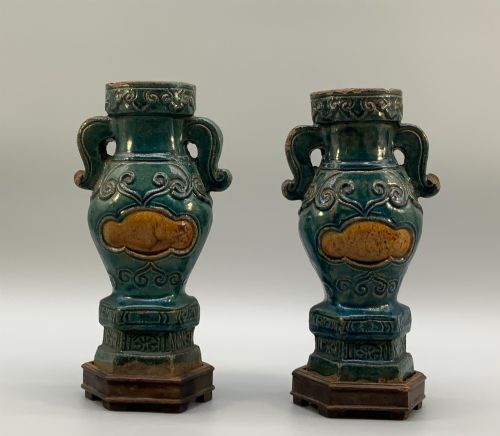
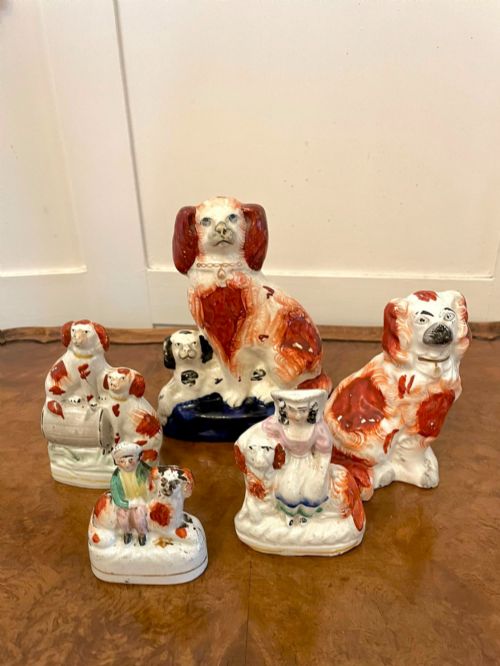
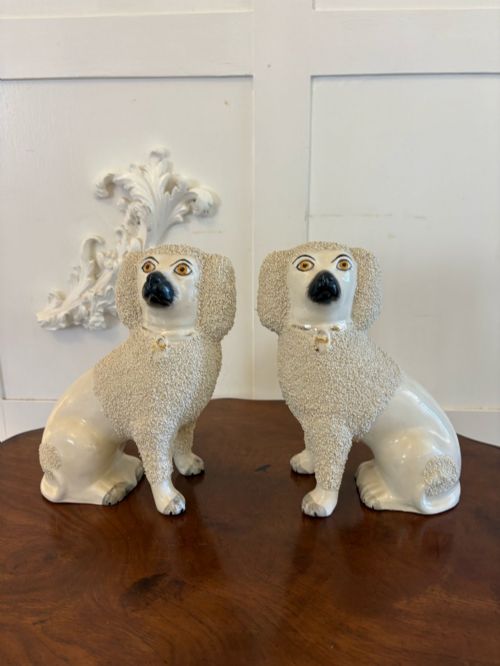
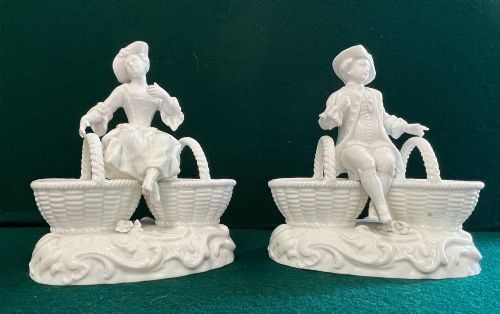
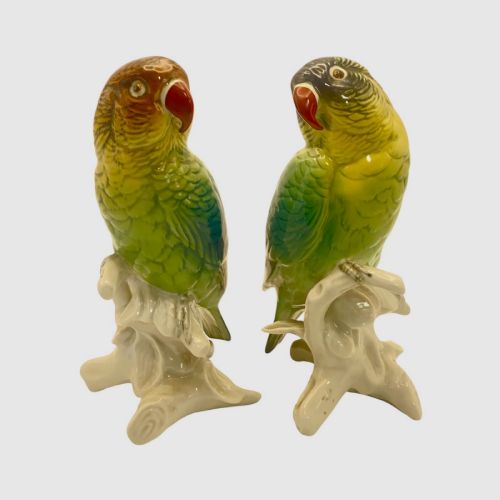
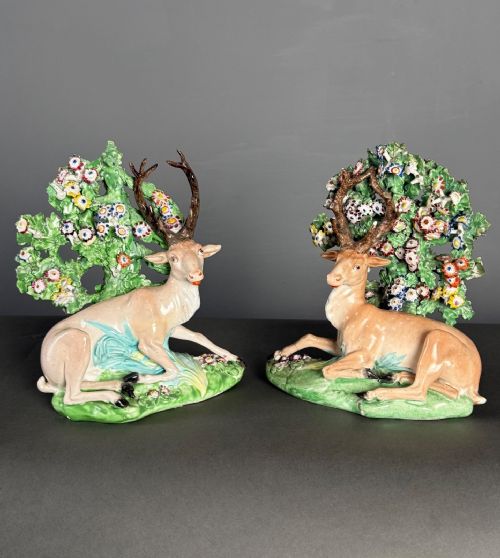
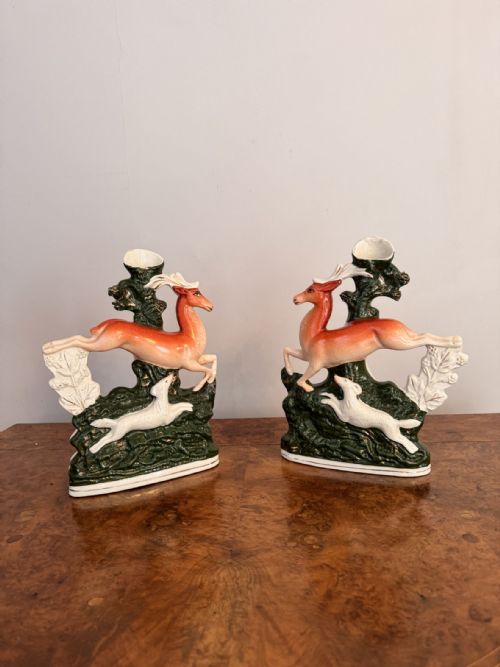
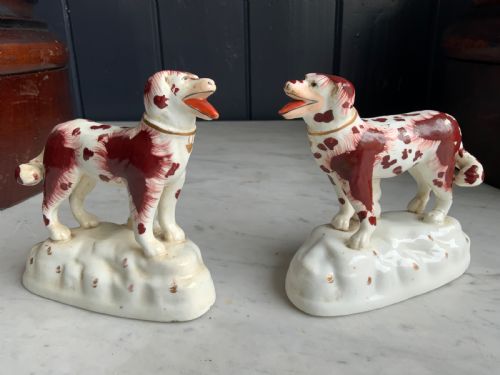
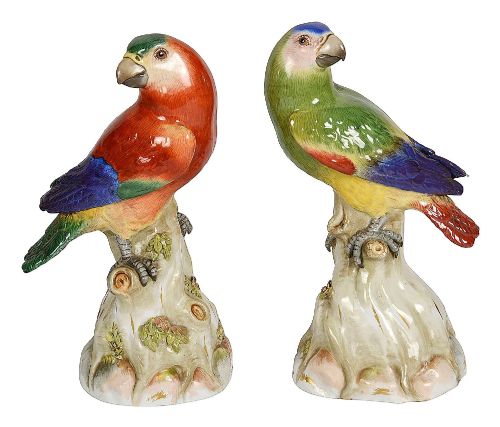
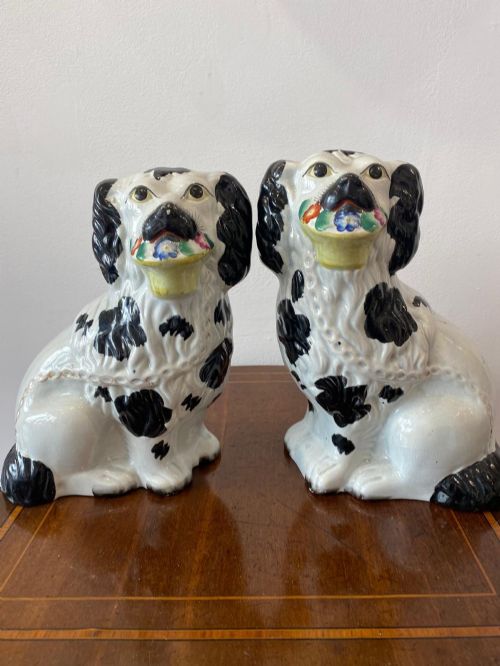
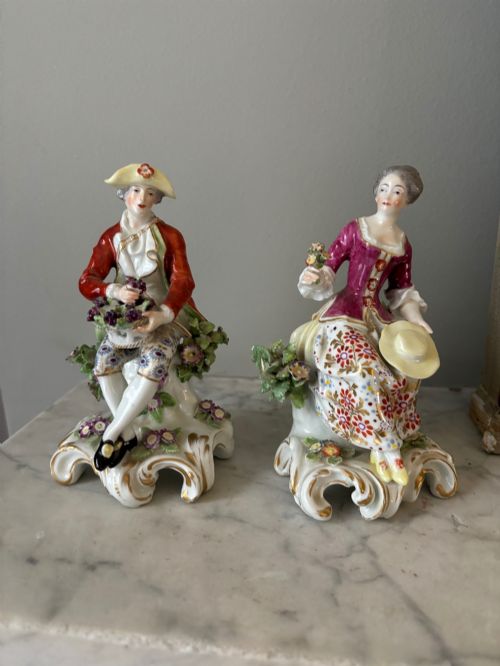
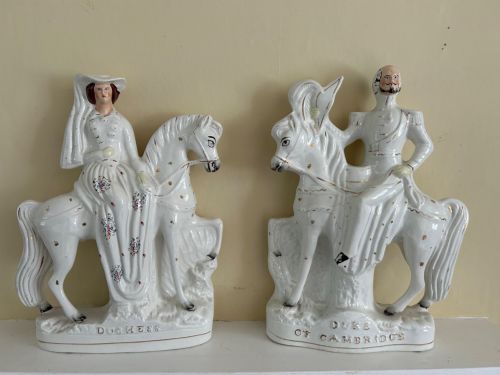
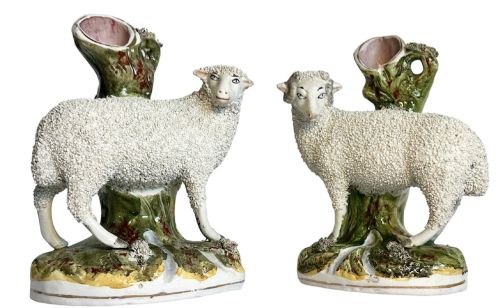
These twin pieces are a pair of ceramic ornaments designed to balance a mantelpiece or anchor a cabinet with symmetrical charm.

Pair of Ceramic Ornaments
A pair of ceramic ornaments brings matching symmetry to a room, functioning as symmetrical bookends, flanking mantelpiece figures, or companion animal depictions. When searching for a pair of ceramic ornaments, collectors frequently encounter Victorian Staffordshire figures, ranging from spaniels and poodles to portrait groups and spill vases.
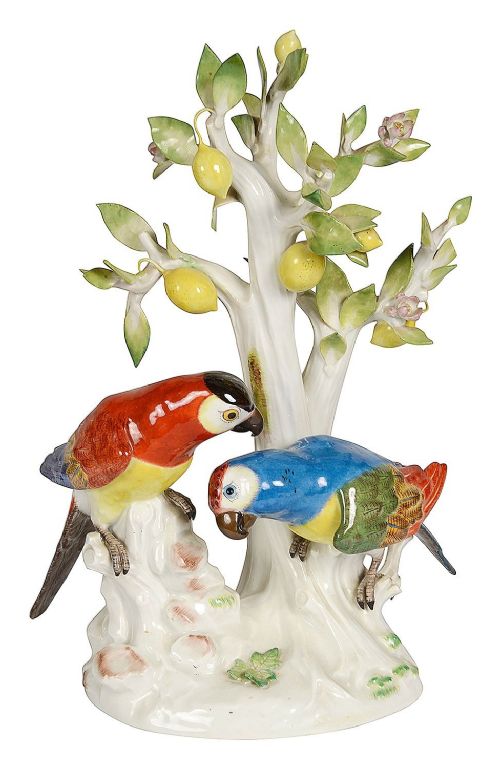
Beyond earthenware animals, the options span Meissen porcelain parrots, French earthenware figures, and Chinese turquoise and amber vases from the Ming dynasty. These creations serve purely decorative purposes while recording historical personalities, theatrical characters, and exotic fauna in clay and porcelain.
The material breadth includes hard paste porcelain from Derby and Bow alongside Italian terracotta lions and Royal Worcester blush ivory water carriers. Each matching set preserves the dual arrangement intended by the modeller, whether depicting a gallant and his lady or recumbent stags.
Materials and methods of construction
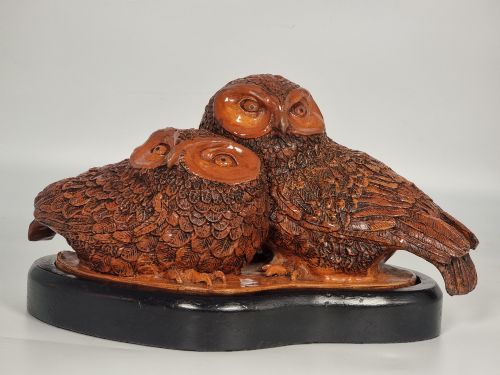
Potters shaped these figures using earthenware, terracotta, and hard paste porcelain, frequently finishing surfaces with lead glaze, enamel, or gold leaf accents. Many nineteenth-century Staffordshire works rely on slip-casting or pressing into moulds before receiving hand-painted detailing in underglaze blue, enamels, and gilt.
Fine porcelain pieces by factories like Meissen, Bow, and Royal Worcester involve intricate hand-sculpting and high-temperature firing, often enhanced by delicate biscuit or glazed finishes. Ebonised timber bases and applied elements such as lemons, trees, and spill vase tubes provide structural support and botanical context to the main subjects.
Staffordshire poodles wearing tiny ceramic curls look remarkably like well-groomed Victorian dowagers.
Distinctions in craftsmanship and finish
Original matching status heavily influences the standing of a pair, as matched sets assembled later lack the uniform shrinkage and consistent palette of items fired side by side in the kiln. The nuance in facial expression, the delicacy of applied foliage, and the stability of the base dictate the standing of the work.
Karl Ens·Edme Sampson·James Hadley·Meissen·Royal Worcester·Bow
The Pair of Ceramic Ornaments Glossary
- Spill vase
- A hollow cylindrical container attached to a figure, designed to hold taper spills for lighting fires or candles. These often take the form of tree trunks beside animals.
- Flatback
- A Staffordshire pottery figure moulded with a flat, unpainted rear designed to stand against a wall or mantelpiece. This economical production method saved clay and kiln space.
- Hard paste porcelain
- A dense, vitrified ceramic composition fired at very high temperatures, composed of kaolin and petuntse. It yields a ringing tone when struck and resists scratching.
- Faience
- European tin-glazed earthenware decorated with coloured metal oxides over an opaque white glaze. The technique originated in Italy before spreading to France and the Netherlands.
- Blanc de Chine
- A white porcelain produced in Dehua, China, featuring a smooth glaze that melts into the body. European factories frequently imitated this pristine monochrome finish.
Pair of Ceramic Ornaments: Frequently Asked Questions
What are Staffordshire flatbacks?
Staffordshire flatbacks are earthenware figures produced primarily during the nineteenth century with decorated fronts and unglazed, flat backs meant to face a wall.
Potters made these to adorn cottage mantelpieces, depicting royalty, theatrical performers, and domestic animals.
How do you display a pair?
Pairs of ceramic ornaments work best when placed symmetrically to frame a central mirror, clock, or fireplace opening.
Keeping companion figures facing inward toward one another preserves the original compositional balance intended by the maker.
What is a spill vase?
A spill vase combines a decorative figurine with an integrated cylindrical holder designed to store wooden spills.
These tapers were pulled out and lit from the hearth fire to carry flame to candles and lamps before the invention of safety matches.
How do I date porcelain figures?
Dating relies on examining factory marks, glaze characteristics, painting styles, and the specific clay body underneath.
Stylistic cues such as Victorian costume details or Georgian forms provide a reliable baseline for narrowing the production era.