
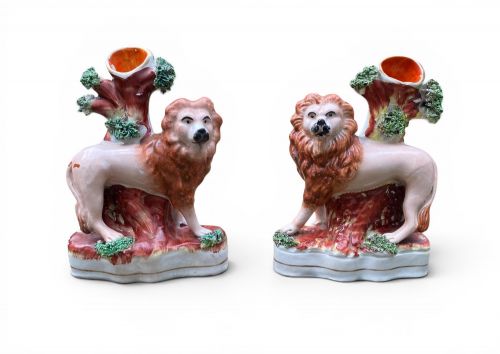


Pair Ceramic Spill Vases
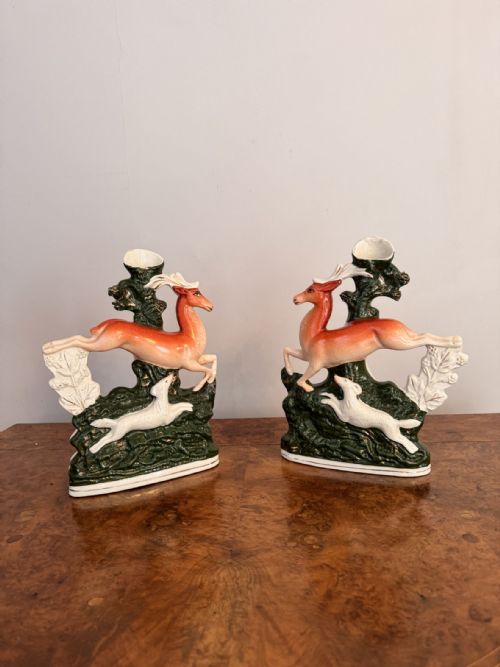
These pair ceramic spill vases are functional Victorian and later mantel ornaments designed to hold wooden tapers for lighting fires and pipes.
Pair Ceramic Spill Vases
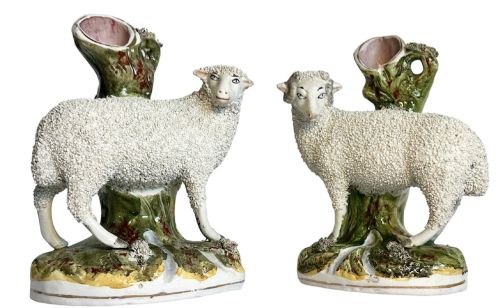
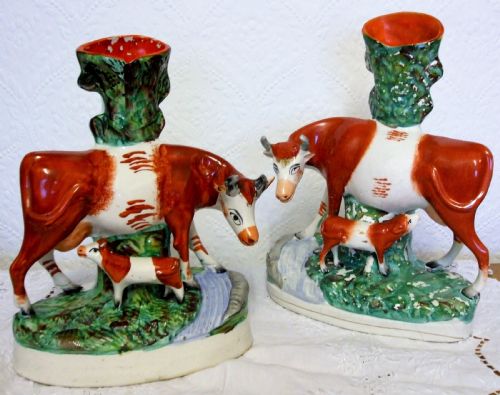
When you search for pair ceramic spill vases, you encounter hollow earthenware and porcelain cylinders designed alongside animal figures, human subjects, and classical reliefs. The 19th Century provides the greatest number of Staffordshire pottery examples depicting deer, sheep, cows, lions, and figures such as Scots harvesters or milkmaids.
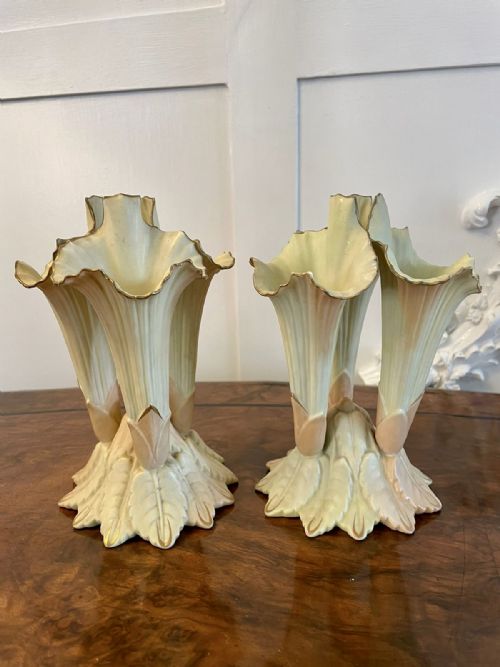
Beyond earthenware figures, the selection includes blush ivory porcelain and blue jasper vessels from makers like Locke & Co. and Wedgwood. These pieces often take the form of cornucopia or standard cylindrical holders flanked by sculptural elements to serve both decorative and practical purposes on the hearth.
How they were made
Potters shaped these vessels using earthenware and porcelain bodies, frequently applying white glazes as a ground for hand-painted enamel decoration. Many examples incorporate gilding, gold leaf, and raised classical relief details to accent the porcelain surface.
Staffordshire pottery figures and spill holders relied on slip-casting or pressing clay into moulds before kiln firing and hand painting. Later porcelain pieces from the early 20th Century utilised refined ceramic bodies decorated with pastoral scenes.
The materials recorded across these listings include earthenware, porcelain, glaze, enamel, gold leaf, and gilt.
What varies in quality
The standard of painting on the ceramic surface dictates much of the distinction between ordinary production pieces and superior examples. Artisans who painted detailed cattle scenes or delicate floral motifs achieved greater naturalism than those working with simple monochrome glazes.
Locke & Co.·Wedgwood·Royal Worcester
The Pair Ceramic Spill Vases Glossary
- Spill
- A thin strip of wood or rolled paper used for transferring a flame from a fireplace to a candle or pipe. These vases sat on mantelpieces to keep spills within easy reach.
- Staffordshire pottery
- Earthenware produced in the industrial region of England known as the Potteries during the 19th Century. Figures and spill holders from this area frequently depict animals and rustic characters.
- Blush ivory
- A delicate cream-coloured porcelain finish developed by English potteries around 1920. It provided a soft background for floral enamel painting.
- Imari
- A style of Japanese export porcelain characterised by underglaze blue and iron red combined with gold. Nineteenth-century examples often took large vase forms.
Pair Ceramic Spill Vases: Frequently Asked Questions
What were pair ceramic spill vases used for?
These vessels held wooden spills on the mantelpiece near a fireplace. People used the spills to carry flames from the hearth to lamps and candles.
They also served as decorative ornaments when not in use for lighting fires.
How do I identify Victorian Staffordshire spill vases?
Victorian Staffordshire pieces are typically earthenware featuring moulded animal or human subjects with hollow backs. Look for earthenware bodies and hand-painted enamel colours typical of the 19th Century.
Flat back versions were designed to stand directly against a wall on a shelf or mantel.
What is blush ivory porcelain?
Blush ivory is a soft cream-coloured ceramic finish used on porcelain wares during the late 19th and early 20th Centuries. It provides a warm background for hand-painted floral decorations.
This finish is frequently associated with English porcelain makers from that period.
How should I clean antique ceramic spill vases?
Dust these decorative pieces gently with a dry, soft brush to remove surface particles. Avoid submerging antique earthenware in water, as moisture can penetrate old ceramic bodies and crack the glaze.
Keep them away from direct heat sources and strong sunlight to protect the enamel colours.