


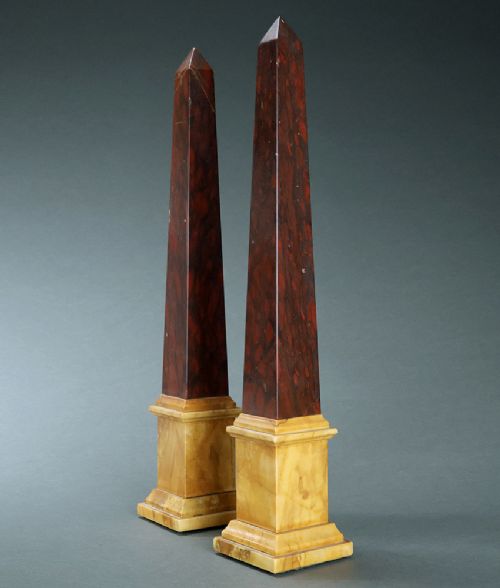


Pair Marble Columns
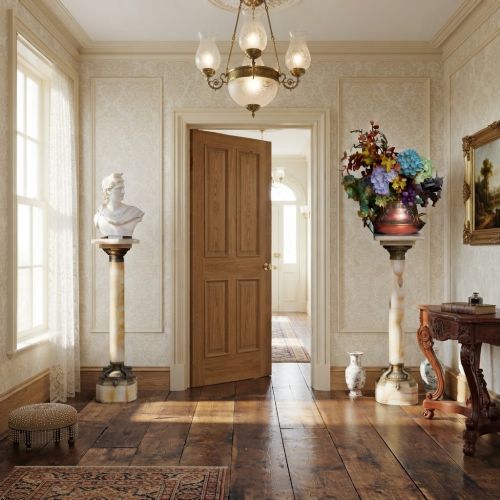
These pair marble columns bring classical proportion and solid geological weight into an interior, offering a grounded display space for sculpture, lighting, or plants.
Pair Marble Columns
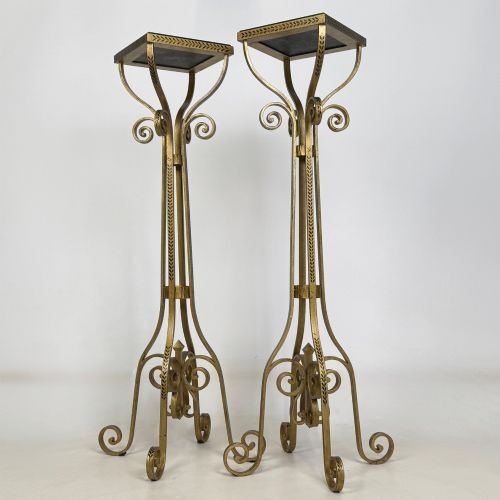
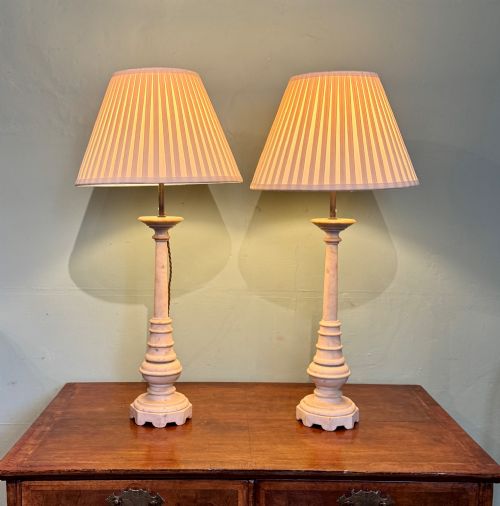
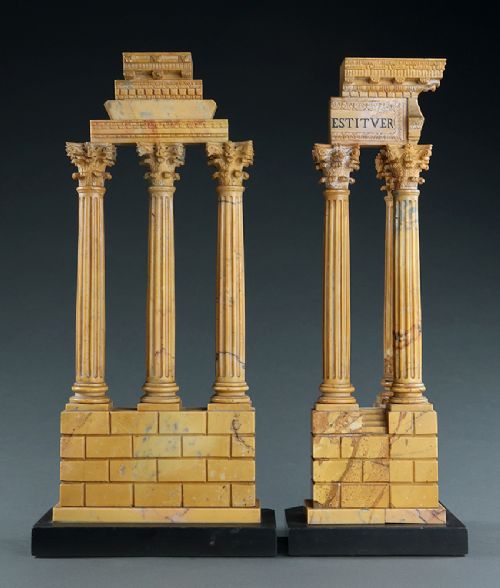
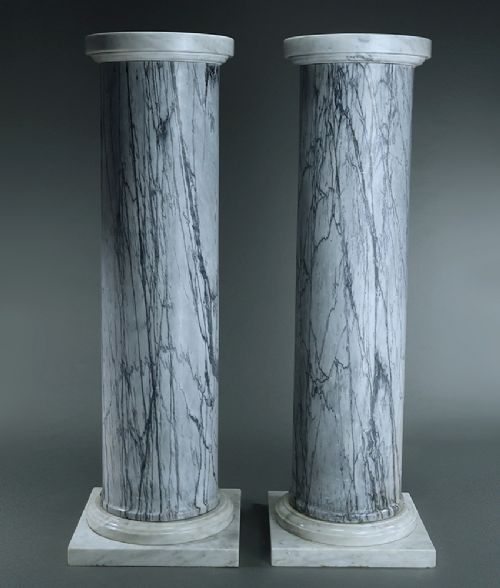
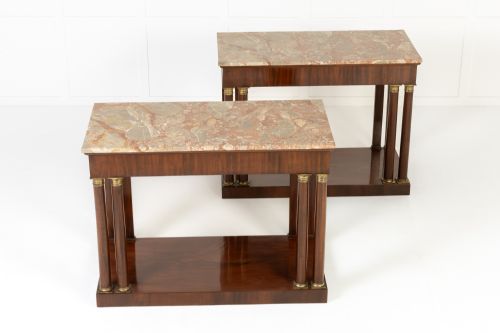
Pair marble columns encompass architectural supports, display pedestals, torchere stands, and decorative table lamps drawn mainly from the nineteenth century and the early twentieth century. You will frequently encounter tall floor-standing pedestals designed to elevate urns, busts, or plant pots within a room.
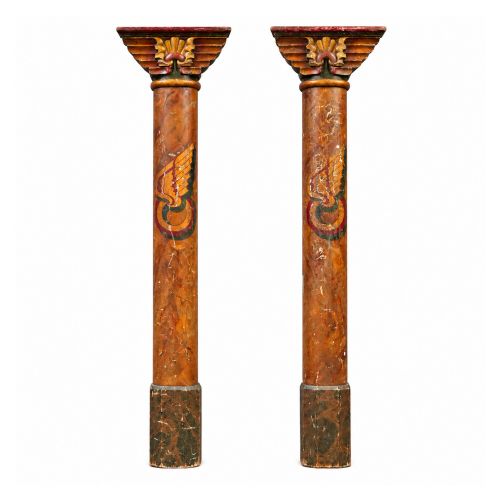
The aesthetic leans heavily toward Neoclassical and Grand Tour influences, reflecting classical antiquity through Italian and French workshop traditions. Alongside solid stone examples, the selection includes simulated stone, plaster, and carved wood treated to mimic the mineral depth of natural rock.
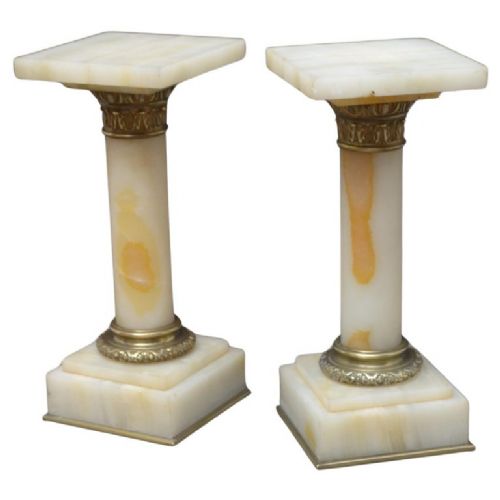
Forms vary from straightforward cylindrical shafts to fluted designs fitted with metal capitals and bases. They function practically as surface space or vertically as architectural statements within a hallway, drawing room, or study.
Materials and Construction
Makers utilised a range of geological specimens, including white Carrara, red Rouge, variegated, and green Serpentine marble, alongside onyx, alabaster, and scagliola. Scagliola involves a composite of pigment, glue, and selenite plaster mixed to imitate true stone figure and veining.
Metal components such as ormolu, gilt bronze, brass, and silver-plated mounts are frequently incorporated as collars, Corinthian capitals, and bases. Wood forms an internal structural core in many tall stands, while simulated finishes rely on painted plaster or decorated timber to project weight and grain.
Materials appearing across the inventory include Carrara marble, Rouge marble, Bardiglio, alabaster, onyx, scagliola, ormolu, and painted plaster.
Quality and Execution
The distinction rests in the geological choice and the crispness of the carving, where solid native stone and well-executed scagliola outrank simple painted timber. Natural mineral variation creates depth that painted simulation struggles to replicate under close light.
Metal mounts reveal differences in casting quality and chasing detail, distinguishing sharp, tactile ormolu collars from simpler pressed brass elements. Structural integrity also dictates worth, as tall columns require sound internal weighting and stable bases to support heavy loads safely.
The Pair Marble Columns Glossary
- Ormolu
- Gilt bronze mounted on decorative objects, created by applying a mercury and gold amalgam to cast bronze. This technique produces a warm, durable golden surface.
- Scagliola
- A composite material made from pigmented selenite, glue, and plaster, applied and polished to imitate natural marble and hardstones. It allows craftsmen to create complex veining.
- Torchere
- A tall stand or pedestal originally designed to hold a torch or candle, later adapted for lamps and floral arrangements. They often feature slender shafts.
- Grand Tour
- A cultural journey of Europe undertaken by wealthy young men in the eighteenth and nineteenth centuries to study classical art. This travel generated demand for specimen marble items.
Pair Marble Columns: Frequently Asked Questions
How do I style pair marble columns at home?
Place them symmetrically flanking a fireplace, doorway, or large mirror to establish formal balance and draw the eye upward. They work effectively as independent display points for bronze sculptures, ceramics, or trailing plants.
Ensure the surrounding floor space is stable and clear so the vertical lines of the columns remain the primary focus. Avoid overcrowding them with small objects; a single substantial piece on top lets the stone grain register properly.
How do I tell real marble from scagliola?
Real marble feels cold to the touch and displays natural mineral fissures that run entirely through the material depth. Scagliola, while hard and polished, often reveals a slightly warmer surface temperature and may show a plaster matrix under magnification at joints.
Tap the surface gently to listen for density, or examine the underside of the top to check for a plaster or wood backing typical of composite work. Both methods were used in period pieces and command respect for their craftsmanship.
What is the difference between a column and a pedestal?
A column follows classical architectural orders with a defined capital, shaft, and base, often appearing fluted or cylindrical. A pedestal is typically designed specifically as a support, featuring a broader flat top and a boxier or columnar body intended for display.
In marketplace terminology, the terms frequently overlap because many decorative columns function directly as plant or bust stands. Look at the capital and base design to determine its architectural lineage.