


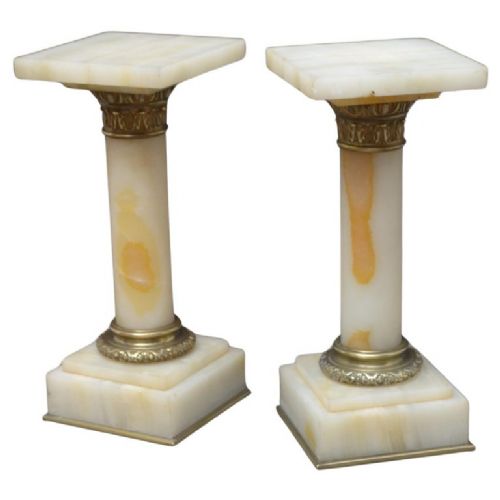


Ormolu Marble Column
An ormolu marble column brings structural height and gilded French classical detail to an interior through stone and cast bronze.
Ormolu Marble Column
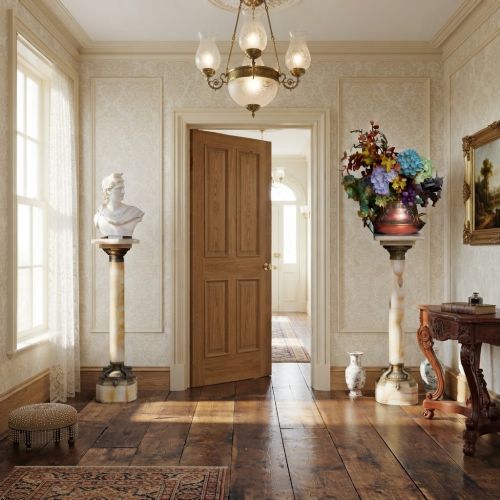
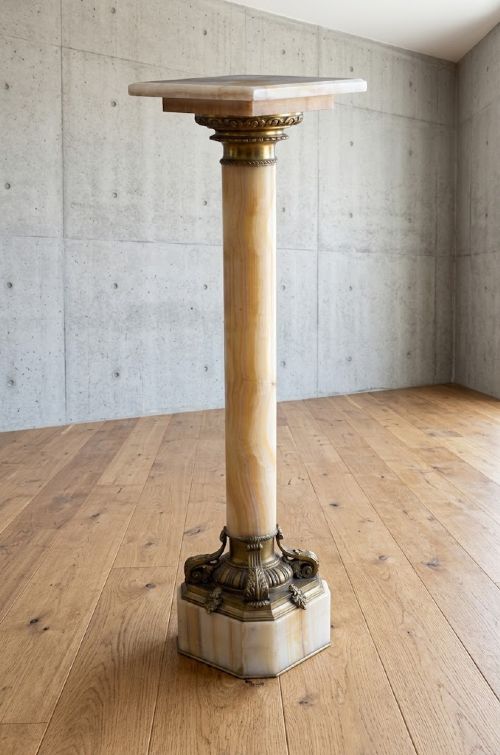
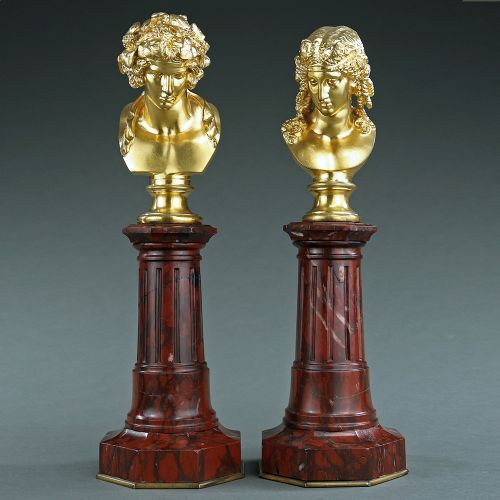
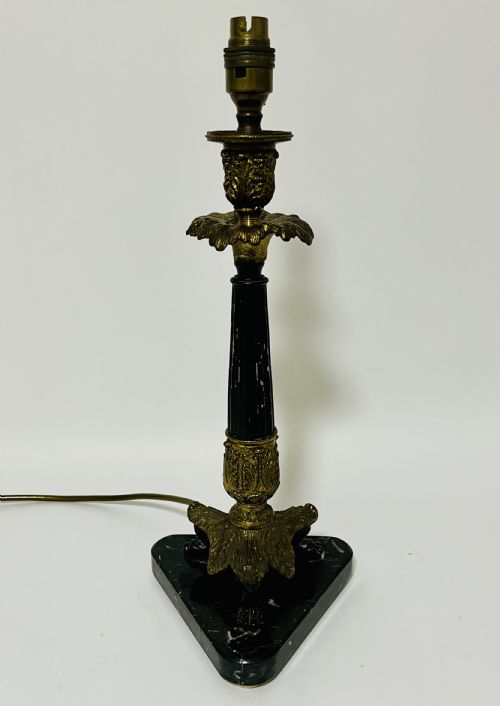
An ormolu marble column combines a carved stone shaft with gilt bronze mounts, typically taking the form of a tall pedestal, a torchere, or a table lamp base. These decorative supports serve to elevate busts, urns, and lamps, drawing on classical architectural proportions adapted for domestic display.
The versions most commonly met in these listings date from the nineteenth century, reflecting periods such as the Victorian era and French Empire revivals. Makers frequently paired white, cream, pink, or green varieties of marble and onyx with cast ormolu collars, capitals, and bases.
Beyond standalone columns, the form appears integrated into portico clocks, mantel garnitures, and rotating display stands. Neoclassical and Louis XVI revival designs dominate the selection, bringing symmetrical lines and applied metal ornamentation to each piece.
Materials and Technique
The construction relies on turning stone on a lathe to form the cylindrical column shaft, paired with hand-carved bases and capitals. Masons selected compact stones such as alabaster, onyx, and dense marbles to bear the weight of the structure.
Ormolu mounts, executed in gilt bronze or brass, were cast using the lost-wax method or sand-casting, then chased with fine chisels to sharpen the surface detail. Artisans applied gold amalgam or gold leaf to the bronze surface to achieve the characteristic rich lustre.
Ormolu Marble Column Retail Price Guide 2026
Typical asking prices for ormolu marble column among the pieces listed under this phrase on Sellingantiques today, from the lower quarter to the upper quarter. They describe what is for sale here now, not the wider market.
Distinctions in Quality
The refinement of the ormolu chasing separates standard production pieces from exceptional examples, as sharper hand-tooled leaf and scrollwork demands greater skill than smooth, cast-only brass. The weight and purity of the stone shaft, along with the precise fit of metal collars to marble, indicate the level of workshop care.
Proportion and architectural fidelity dictate visual success, with superior pieces adhering strictly to classical orders like Corinthian or Doric. The depth of the mercury gilding on the bronze mounts retains a warmer, more durable glow over time compared to thinner electroplated finishes.
The Ormolu Marble Column Glossary
- Ormolu
- Gilt bronze produced by applying a mercury and gold amalgam to cast bronze before heating. This historical technique creates a durable, golden surface finish found on nineteenth-century mounts.
- Torcheere
- A tall stand or pedestal designed to hold a light source or decorative object. In these listings, they take the form of slim stone columns.
- Portico clock
- A clock housed within a architectural frame supported by columns. They frequently incorporate marble and ormolu mounts in the neoclassical manner.
- Garniture
- A set of matching decorative ornaments, such as a clock accompanied by side vases or candlesticks. These sets often share marble bases and ormolu collars.
- Capital
- The uppermost member of a column that mediates between the shaft and the load. They are often cast in ormolu with acanthus leaf details.
Ormolu Marble Column: Frequently Asked Questions
How do I clean ormolu and marble?
Dust marble gently with a dry or slightly damp cloth, avoiding acidic cleaners that etch the polished surface. Clean ormolu mounts with a soft brush only, as harsh metal polishes strip away the historic gold layer.
Allow the stone to dry completely before handling, and protect the gilded bronze from moisture to preserve the finish.
Where should I place a column?
Position freestanding columns in corners, entrance halls, or flanking doorways to add height and architectural interest to a room. Ensure the floor surface is level and sturdy enough to support the combined weight of stone and bronze.
Smaller column forms and table lamps suit side tables, desks, and mantelpieces where they draw the eye upward.
What periods do these columns represent?
The pieces span the eighteenth, nineteenth, and early twentieth centuries, with a strong concentration of nineteenth-century French and Victorian manufacturing. Styles draw heavily on Neoclassical, Empire, and Louis XVI revival vocabularies.
Datings range from late eighteenth-century portico clocks to Edwardian onyx torchere stands.
Can these columns support heavy objects?
Solid stone shafts possess natural weight-bearing capacity suited for heavy bronze busts, marble urns, and large decorative figures. The structural integrity depends primarily on the stability of the base and the secure fit of the capital.
Verify that the top plate and internal threaded rods, where present, remain firm before mounting heavy items.