

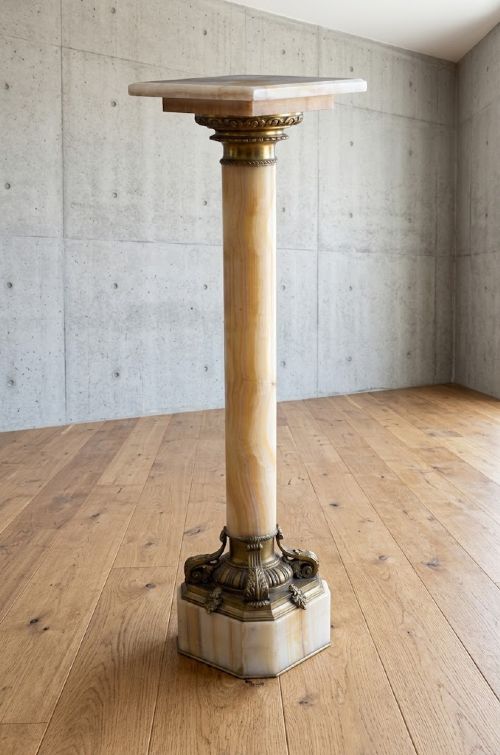


Ormolu Bust Stand
An ormolu bust stand raises a sculpture or urn on a classical column, bringing weight and presence to a room.
Ormolu Bust Stand
When you search for an ormolu bust stand, you are looking at tall display columns, pedestals, and small stands designed to elevate sculpture, busts, and urns. These pieces combine stone or wood shafts with cast gilt metal mounts, serving as architectural elements within domestic interiors.
The versions you are most likely to meet on this page date from the nineteenth century, including the Victorian and Edwardian eras. They take the form of slender columns, rotating stands, and low plinths rooted in neoclassical, French Empire, Louis XVI, and French Rococo styles.
The selection ranges from tall marble and onyx columns fitted with ornate collars to substantial walnut and mahogany pedestals. Alongside these columns, the category occasionally includes related desk furniture, such as inkstands incorporating portrait busts.
Materials and construction
Makers built the shafts of these stands from turned natural stones and dense timbers, specifically white and coloured marble, variegated onyx, walnut, kingwood, mahogany, and occasional gilt bronze. These heavy materials provided the structural stability required to support solid stone or metal sculpture safely.
The decorative highlights rely on ormolu and gilt bronze, which involved casting brass or bronze alloys and applying fine gold gilding to the surface. These mounts were then secured around the capitals, collars, and bases of the stone columns and wood pedestals to add classical detail.
Ormolu Bust Stand Retail Price Guide 2026
Typical asking prices for ormolu bust stand among the pieces listed under this phrase on Sellingantiques today, from the lower quarter to the upper quarter. They describe what is for sale here now, not the wider market.
The listings show nineteenth-century pieces spanning the Victorian and Edwardian periods, constructed from marble, onyx, bronze, and various hardwoods.
The measure of quality
Quality in these stands rests upon the crispness of the metal casting and the selection of the primary materials. Finer examples display deeply chased ormolu mounts with sharp leaf and scroll work, rather than soft, flat castings that lack definition.
The stone and timber components also dictate the standard of the piece. Solid, well-turned columns of high-grade marble or figured onyx with precise joints and substantial weight sit at the top of the range, showing careful hand-finishing across every visible surface.
The Ormolu Bust Stand Glossary
- Ormolu
- A gilded bronze or brass mount applied for decorative effect. It gained widespread use during the eighteenth and nineteenth centuries on French and English furniture and display stands.
- Neoclassical
- A design style inspired by classical Greece and Rome, characterised by symmetry, straight columns, and restrained ornamentation. It dominates many nineteenth-century architectural pedestals.
- Pedestal
- A structural support or base for a statue, urn, or column. In this context, it functions to raise display objects to eye level.
- Rococo
- An elaborate decorative style featuring asymmetrical curves, C-scrolls, and naturalistic foliage. It contrasts with the strict geometry of neoclassical columns.
- Onyx
- A banded variety of chalcedony stone prized for its translucency and varied natural patterns. It was frequently turned into smooth cylindrical columns for display.
Ormolu Bust Stand: Frequently Asked Questions
What holds an ormolu bust stand steady?
The stability of these stands comes from their heavy materials, including solid marble, dense onyx, and thick hardwoods like mahogany and walnut. Their wide bases distribute the weight of heavy sculptures evenly across the floor.
Many of these columns also feature internal metal or wooden threading that binds the capital, shaft, and base securely together into a single rigid unit.
How do I place an ormolu bust stand at home?
These tall columns work best in corners, hallways, or reception rooms where they can frame a view or hold a bronze or marble sculpture at eye level. Ensure they stand on level flooring so heavy top pieces remain secure.
Keep them away from direct foot traffic where the column might be knocked, as their heavy stone or timber construction makes them top-heavy when loaded.
How do I identify nineteenth-century styles?
Nineteenth-century stands often blend historical revivals, using Louis XVI or French Empire motifs alongside Victorian classical revival elements. Look at the mounts for clues, as crisp neoclassical swags and acanthus leaves point to specific historical revivals of the period.
Turned onyx and marble columns from this era frequently exhibit hand-finished turning marks and patinated bronze components that distinguish them from later reproductions.