


Pair Japanese Vases
These pair japanese vases offer matching symmetry and decorative brilliance, bringing historic craftsmanship and balanced design straight into a room.

Pair Japanese Vases
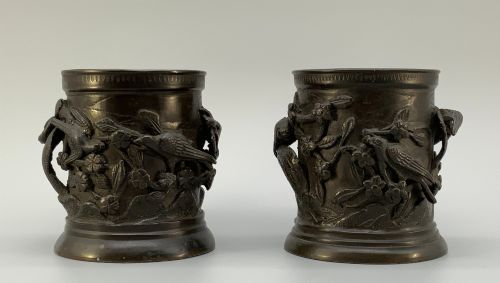
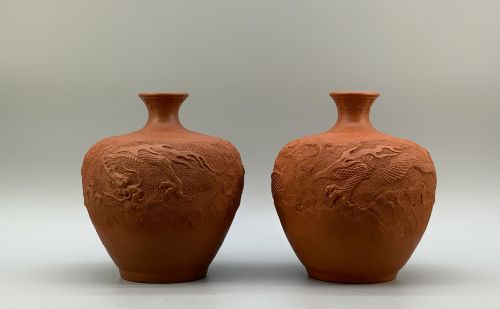
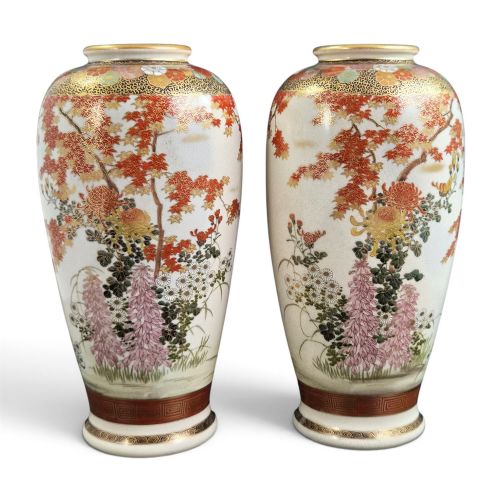
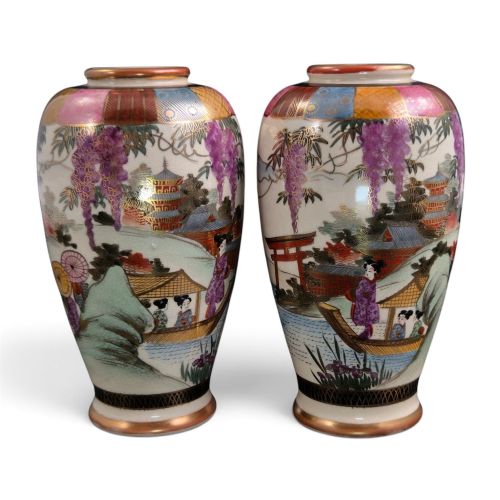
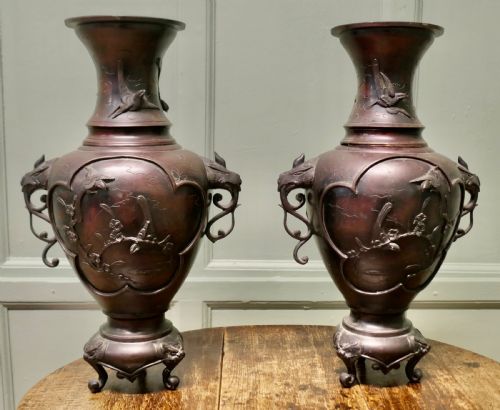
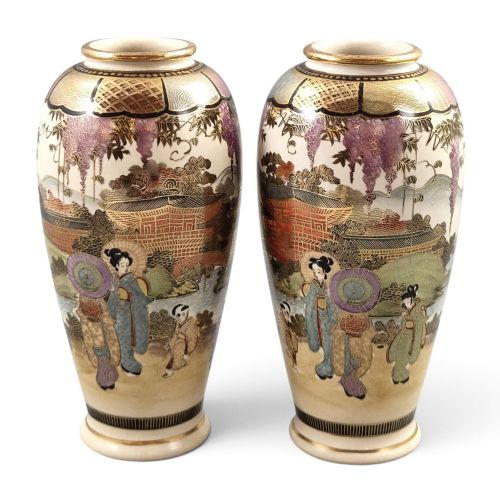
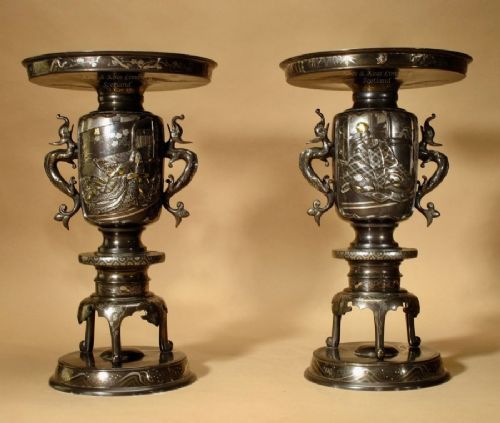
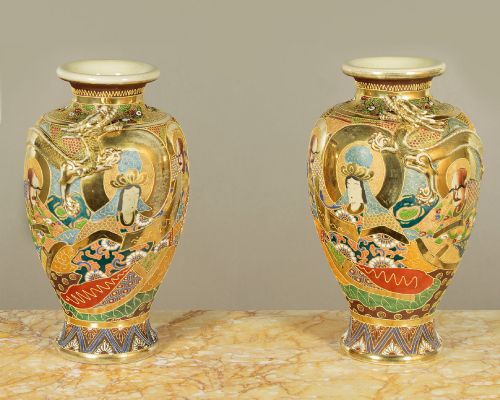
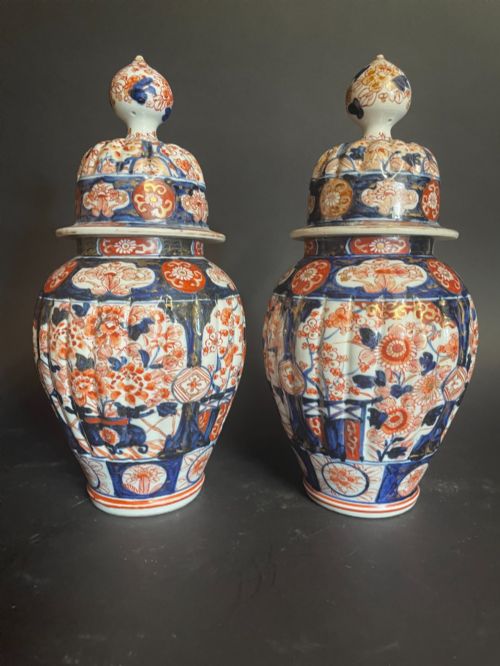
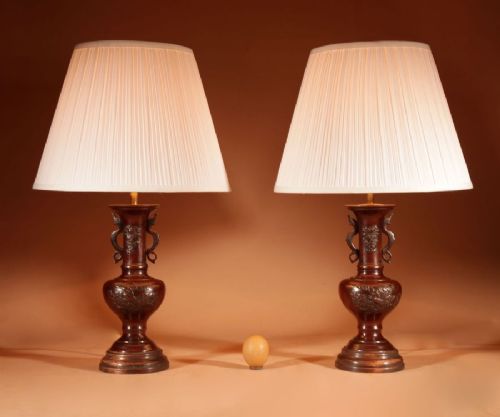
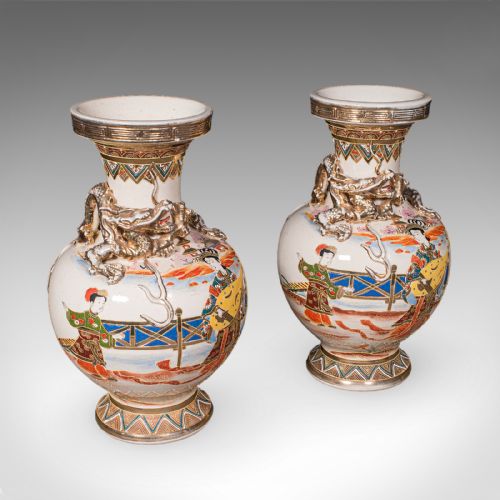
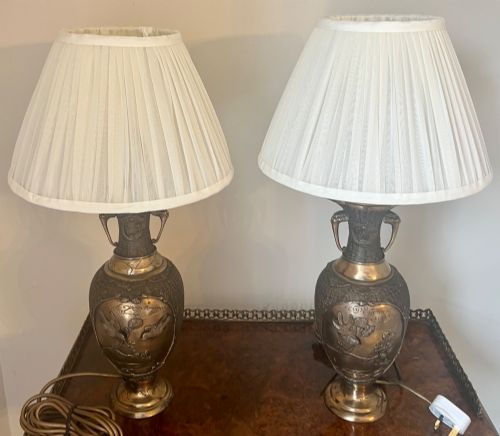
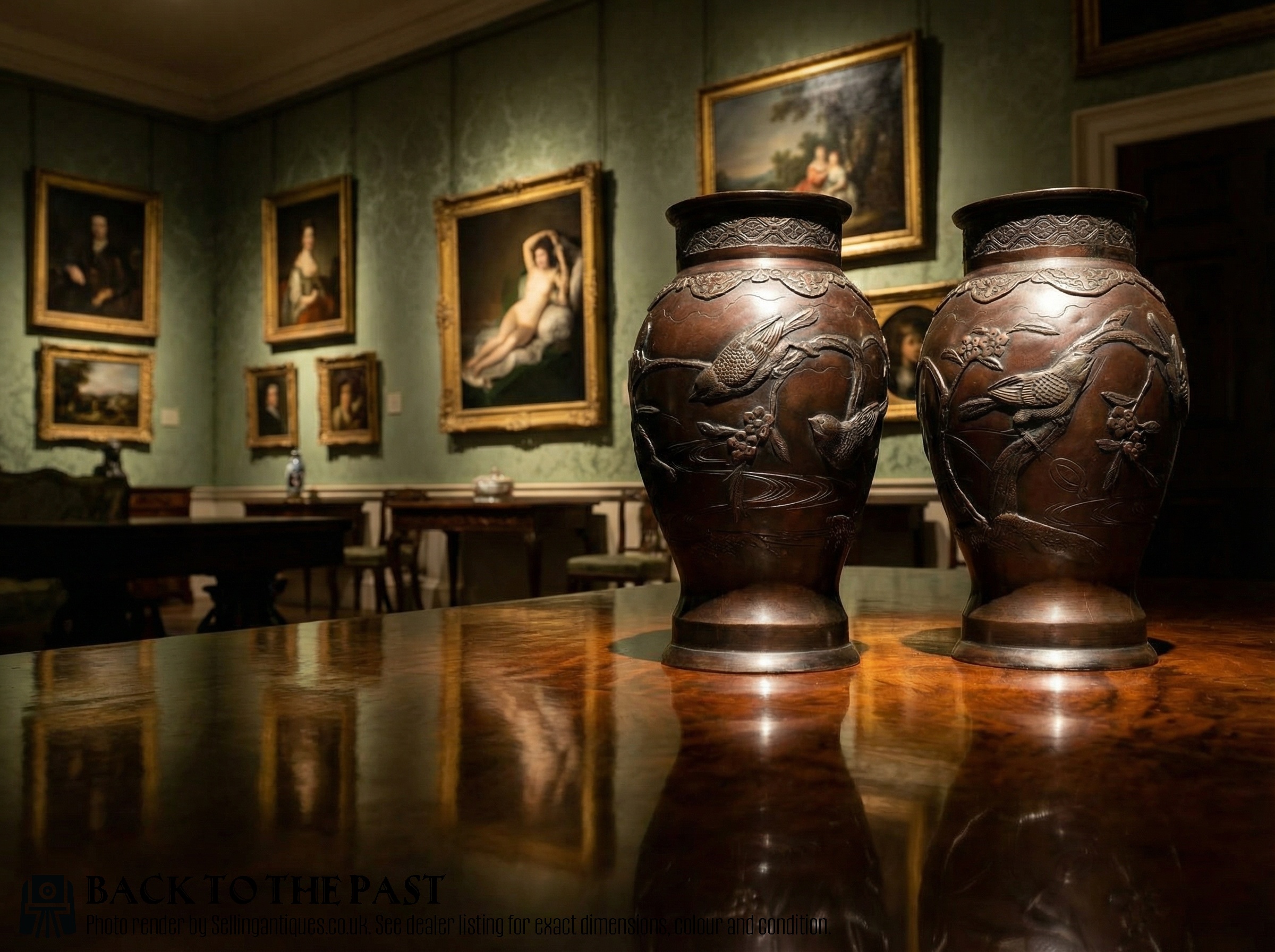
When searching for pair japanese vases, a buyer encounters matching dual vessels designed for symmetrical display, most frequently encountered in Imari porcelain, Satsuma pottery, and bronze from the Meiji period and early twentieth century. The selection spans robust temple jars with lids, delicate moon-flasks, and slender bronze forms.
The historical span reaches from late seventeenth century Genroku wares through nineteenth century Meiji examples up to early twentieth century Showa and Taizan period productions. Buyers regularly find both compact decorative table pieces and monumental tall floor vessels showing high relief figures, dragon handles, or intricate pictorial panels.
Assessing Quality
The upper tier of these vessels reveals itself through precision of hand painting, crispness of metal casting, and the complexity of decorative programmes such as high relief figures or fine silver wire cloisonne work. Lesser examples rely on simplified surface patterns and heavier, less refined bodies.
Artisanal signatures and recorded maker attributions elevate certain pieces above standard decorative items, reflecting the status of historic workshops and named artists. Proportions, symmetry between the two items in a set, and the preservation of delicate gilding and enamel details dictate overall distinction.
Retail Price Guide 2026
Typical UK retail prices for pair japanese vases, calculated from the Sellingantiques database of over a million retail prices indexed since 2003. This retail price guide relies exclusively on Sellingantiques data; no external sources or auction records are used, so the figures do not describe the wider market.
Materials recorded across the archive include bronze, porcelain, earthenware, cloisonne enamel, brass, copper, gold leaf, and lacquered ox horn.
Takahara Komajiro·Hodota Shoten·Tomimoto Kenkichi
The Pair Japanese Vases Glossary
- Meiji
- A historic period in Japan spanning from 1868 to 1912, noted for opening trade with the West and producing highly detailed decorative arts. Pieces from this era often feature elaborate ornamentation and bronze or Satsuma work.
- Imari
- A traditional style of Japanese porcelain featuring a distinct palette of cobalt blue, iron red, and gold. These wares originated from the port town of Imari and were widely exported.
- Satsuma
- An earthenware type from Japan featuring a crackle-glaze ivory body decorated with rich enamel colours and gilt. Satsuma vases frequently depict figures, deities, and natural scenes.
- Cloisonné
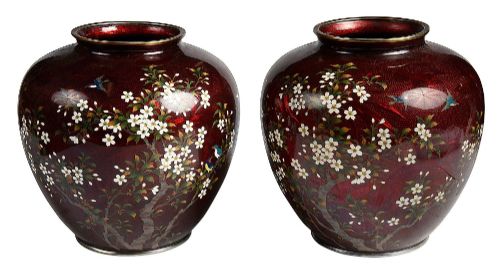
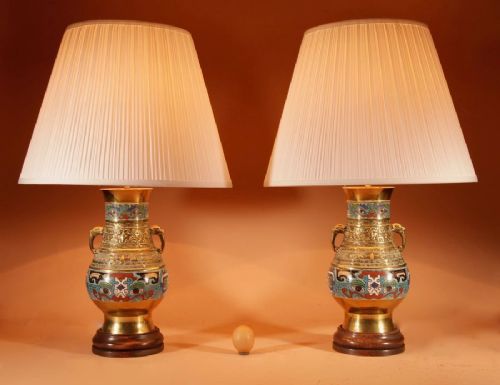
- A metalworking technique where enamel paste is applied within compartments created by soldered flat wires on a bronze or copper base. The surface is then fired and polished smooth.
- Moriage
- A decorative ceramic technique using piped clay slips to create raised, textured patterns on the surface of vases. This method adds a tangible, three-dimensional element to floral and figural designs.
Frequently Asked Questions
How do I identify Meiji period vases?
Meiji period vases typically display dense ornamentation, fine bronze casting, or intricate Satsuma earthenware painting created between 1868 and 1912. Look for stylistic indicators such as high relief figures and signed artist panels.
Examining the base and the weight of the bronze or porcelain helps confirm the manufacturing era and regional origin.
What is the difference between Imari and Satsuma?
Imari wares are hard porcelain decorated in blue, red, and gold palettes with strong geometric and floral motifs. Satsuma pieces consist of ivory-coloured earthenware with a fine crackle glaze, usually painted with complex figural scenes.
Imari offers a glassy, ringing ceramic body, whereas Satsuma provides a warmer, chalkier surface texture.
How were antique Japanese vases displayed originally?
These vessels were created as decorative art objects, frequently placed symmetrically on tokonoma alcoves, mantelpieces, or prominent furniture surfaces. Matching pairs provided balanced visual harmony in traditional and Western interiors alike.
Some larger lidded jars functioned as focal points in grand reception rooms.
Are these vases watertight for flowers?
Many antique bronze, porcelain, and cloisonne vessels can hold water safely, though older earthenware such as Satsuma may be porous due to the historic body composition. Collectors usually insert discreet modern liners to protect delicate interior surfaces from moisture damage.
Using metal or glass inserts prevents staining on valuable historic pieces.