


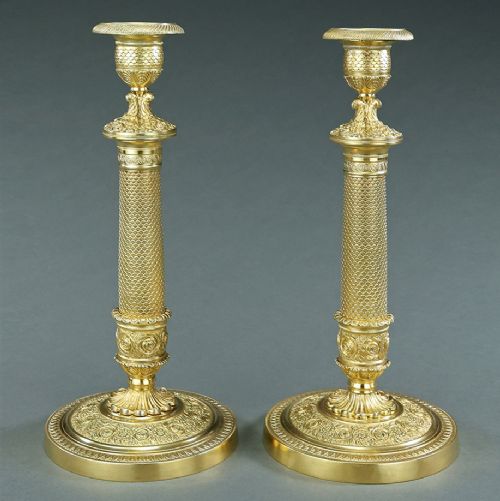
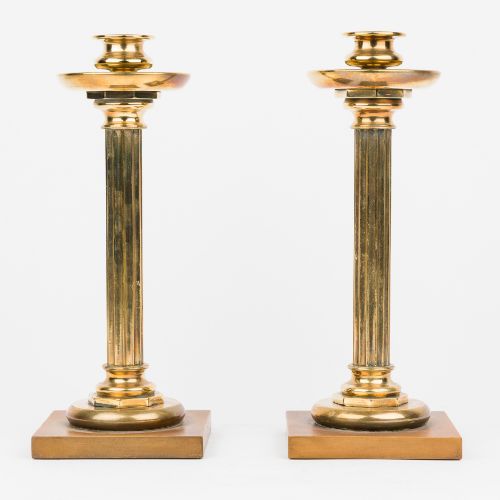
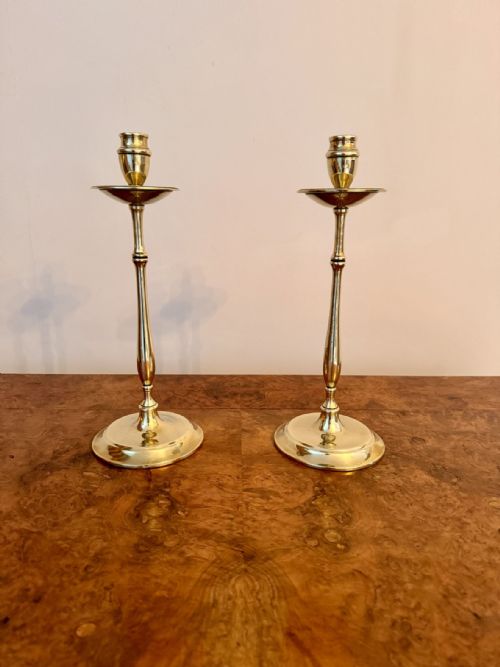
Pair Brass Candle Holders
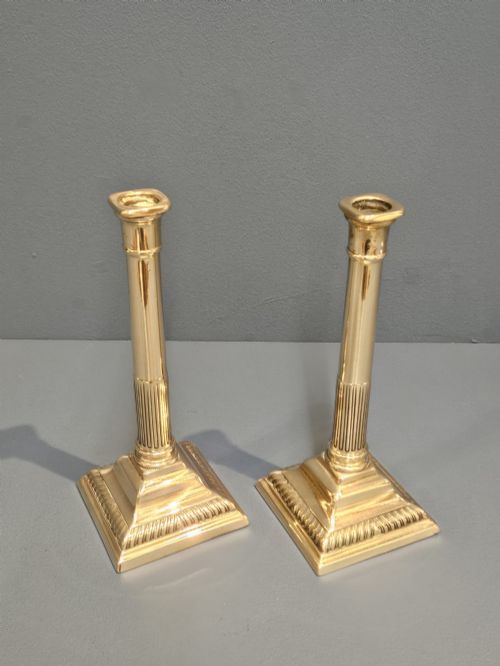
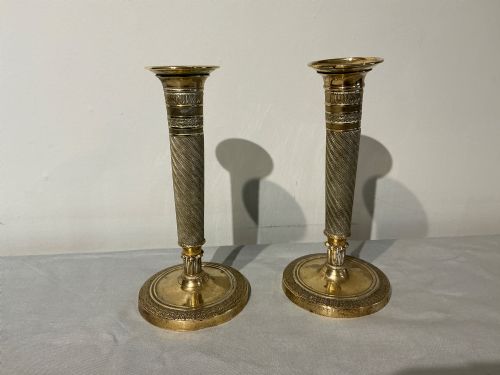
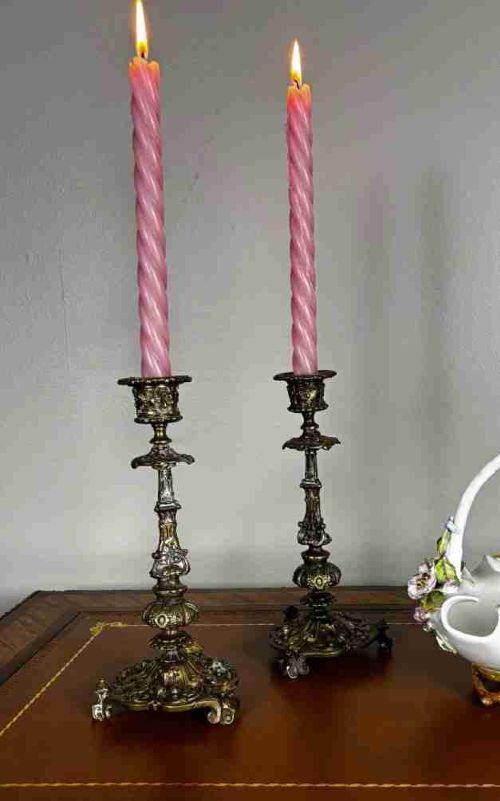
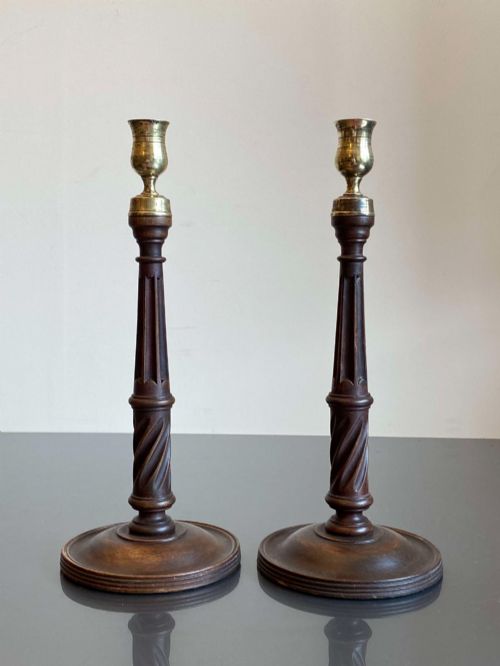
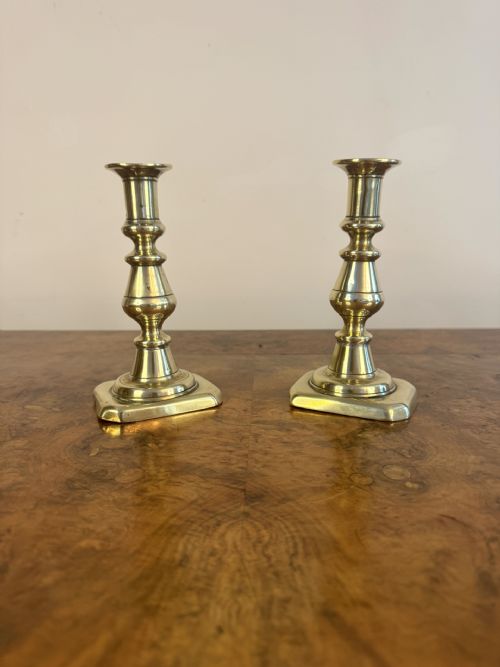
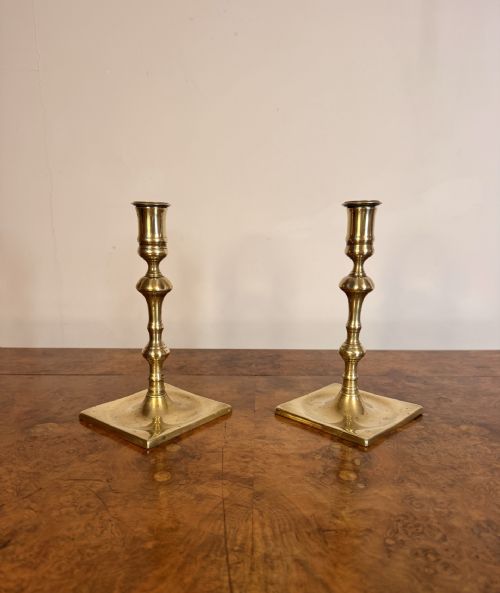
These pair brass candle holders bring functional illumination and period design together, offering enduring decorative appeal for any interior.
Pair Brass Candle Holders
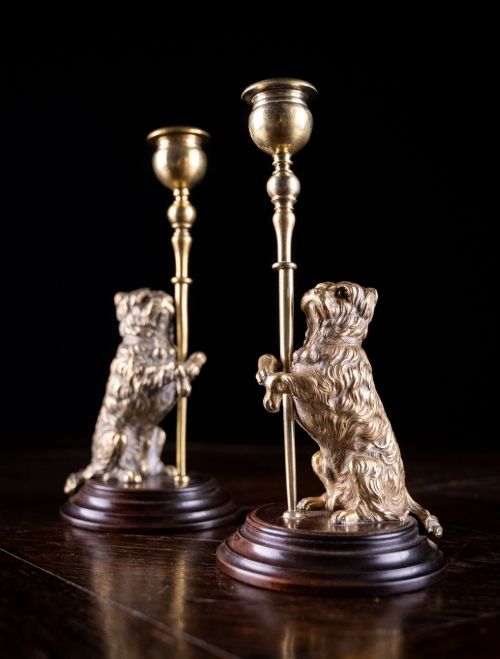
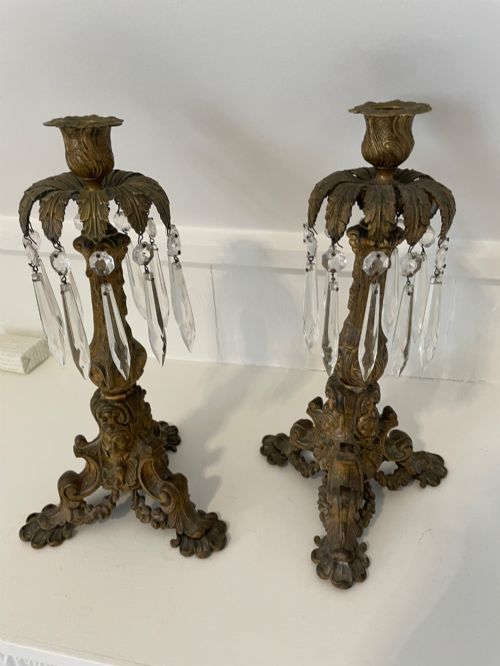
When you search for pair brass candle holders, you encounter dual lighting fixtures spanning the Georgian, Regency, Victorian, and French Second Empire periods. The selections include standard candlesticks alongside more specialised forms such as ecclesiastic Gothic style candlestands, swing out piano holders, and candle lamps equipped with shades.
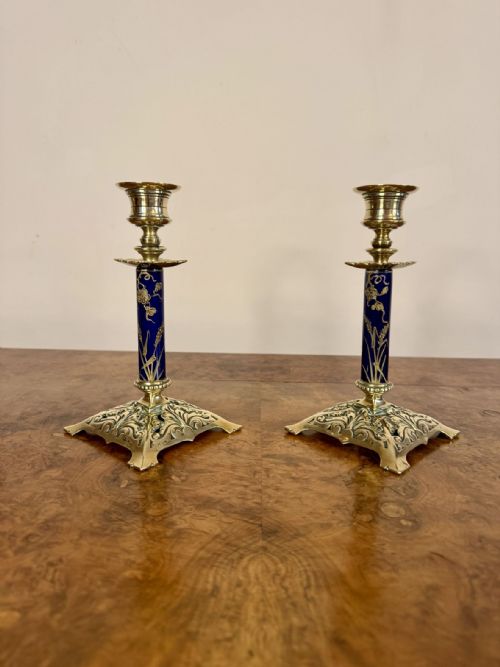
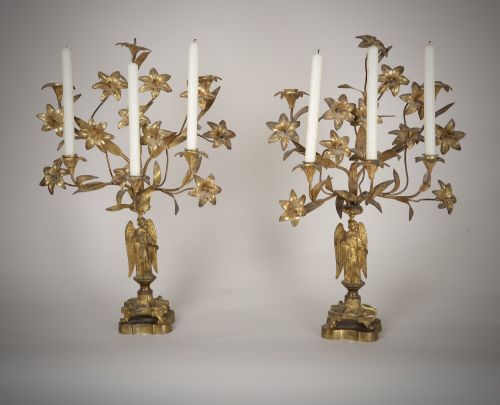
You are most likely to meet Victorian and nineteenth-century examples on this page, often cast in plain brass or embellished with materials like onyx, gilt bronze, and champleve enamel. These objects served practical lighting needs in homes and institutions before transitioning into purely decorative mantel and tabletop accessories.
How they were made
Makers utilised casting techniques to shape base metals, combining brass with gilt bronze, carved wood such as oak, and hand-applied champleve enamel details. Certain designs incorporated fitted fabric elements or specialised swivel mechanisms for piano mounting.
Surface treatments varied from polished metal finishes to painted oriental decorative accents and intricate incised patterns, reflecting the specific aesthetic demands of Regency, Gothic Revival, and Victorian styles.
Pair Brass Candle Holders Retail Price Guide 2026
Typical asking prices for pair brass candle holders among the pieces listed under this phrase on Sellingantiques today, from the lower quarter to the upper quarter. They describe what is for sale here now, not the wider market.
Swing out piano holders ensure your sheet music is illuminated by nineteenth-century ingenuity.
What varies in quality
The distinction between standard production and superior craftsmanship rests upon the intricacy of the metal casting and the integration of secondary materials. Pieces featuring champleve enamel, onyx sections, or complex architectural Gothic detailing demonstrate a higher tier of workmanship than plain cast examples.
Proportion, weight, and the crispness of surface chasing also dictate value, with heavier, more solidly constructed pairs maintaining sharper decorative definition across their stems and bases.
J.T. & Co
The Pair Brass Candle Holders Glossary
- Champleve Enamel
- A technique where troughs are dug into a metal surface and filled with vitreous enamel before firing. This colourful ornamentation appears on nineteenth-century decorative items.
- Gilt Bronze
- Bronze metal that has been treated with a thin layer of gold or gold-coloured alloy. It provides a rich, lustrous finish alongside brass components.
- Ecclesiastic Gothic Style
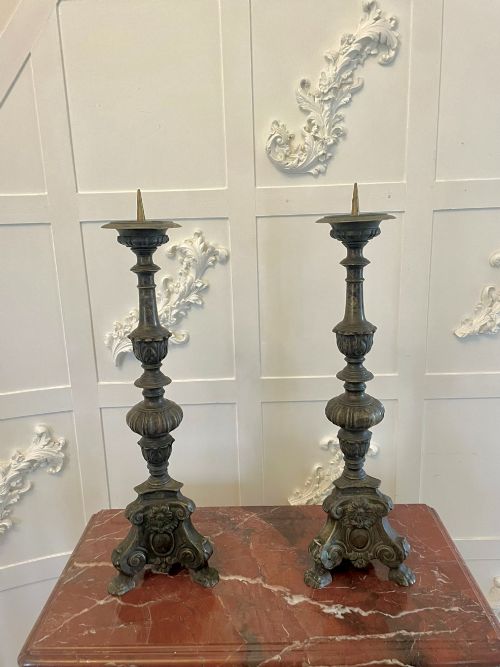
- A nineteenth-century design movement inspired by medieval architecture. Items in this style often feature pointed arches and heavy religious motifs.
- Regency
- A British design period spanning the early nineteenth century. Pieces from this era typically display classical restraint and clean geometric lines.
- Candlestand
- A raised support or small stand specifically designed to hold a candle. These functional pieces range from simple domestic holders to elaborate church furniture.
Pair Brass Candle Holders: Frequently Asked Questions
What periods do these holders represent?
The pieces span multiple eras, including Georgian, Regency, and Victorian periods, alongside nineteenth-century French Second Empire designs. Each era brings distinct stylistic flourishes to the metalwork.
You will find everything from simple domestic items to ornate Gothic Revival and champleve enamel examples dating from around eighteen hundred up to nineteen hundred.
How were piano candle holders used?
Swing out piano candle holders were attached directly to upright or grand pianos to provide direct illumination for the sheet music. Their pivoting arms allowed the user to adjust the light angle.
These functional fixtures folded back against the instrument body when not in use, combining practicality with domestic elegance.
What materials are combined with brass?
Maker workshops frequently paired brass with gilt bronze, carved oak, onyx, and champleve enamel. Some candle lamps also incorporated fabric elements for shades.
These mixed media combinations defined the aesthetic ambitions of nineteenth-century decorative arts.
How do I identify Gothic Revival styles?
Gothic Revival pieces draw heavily on medieval architectural forms, featuring pointed arches, quatrefoils, and ecclesiastical details. These items were often produced for church or solemn domestic settings.
Their heavy construction and pointed silhouettes separate them clearly from earlier Georgian or later Victorian domestic designs.