
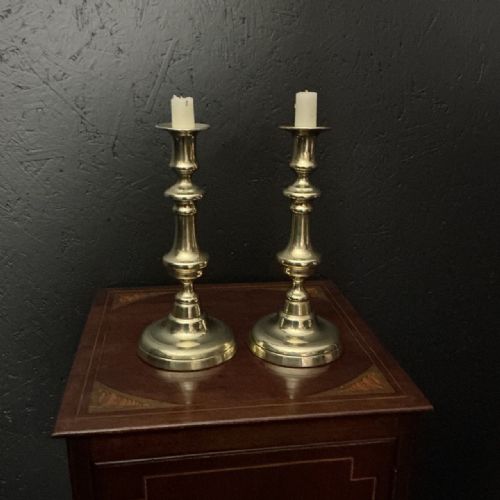
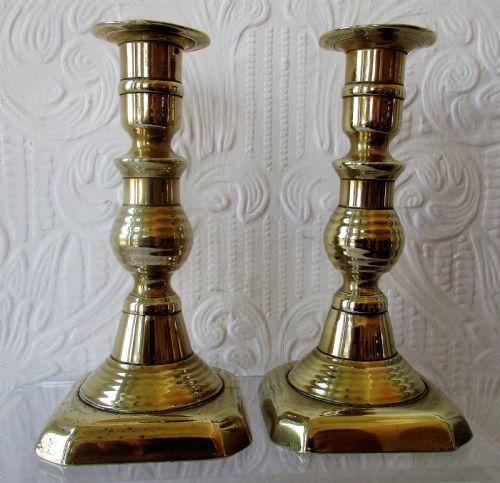
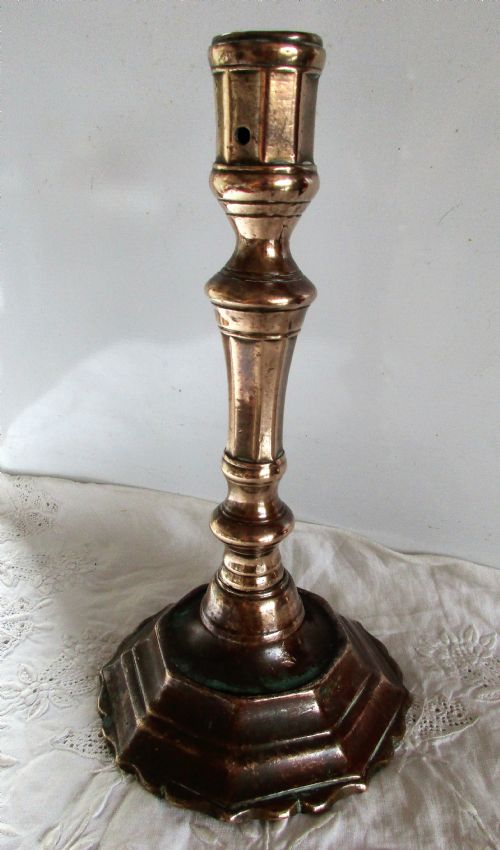
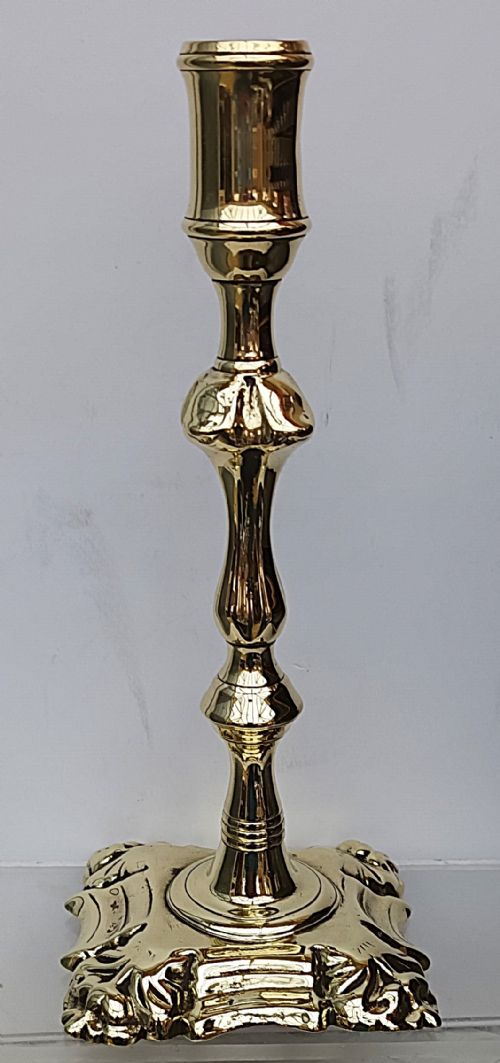
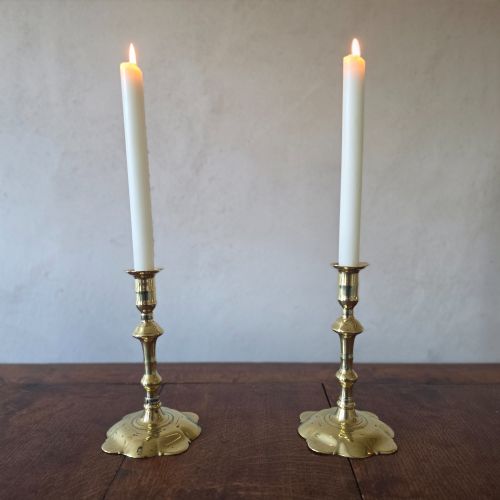
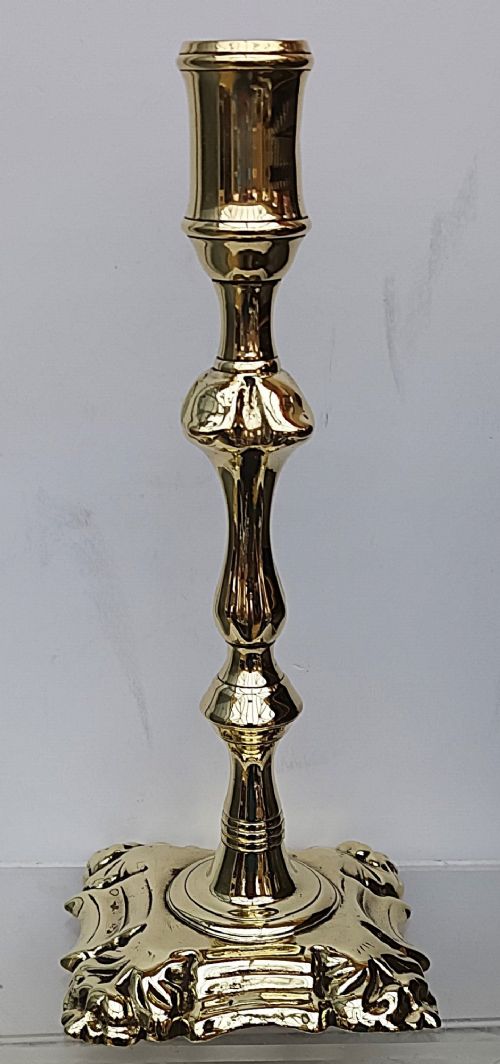
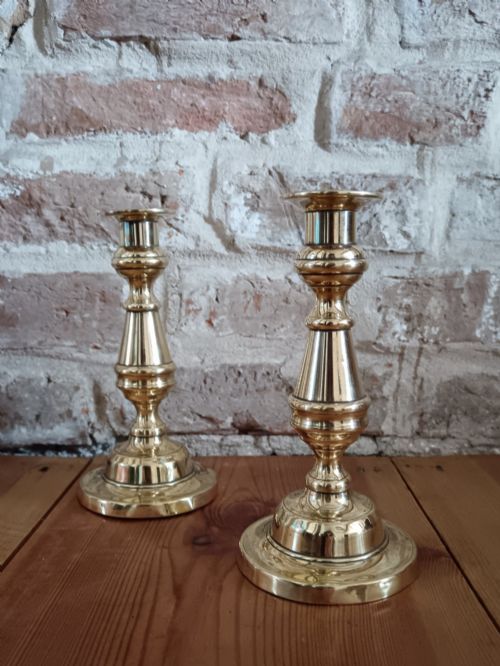


Brass Baluster Candlesticks
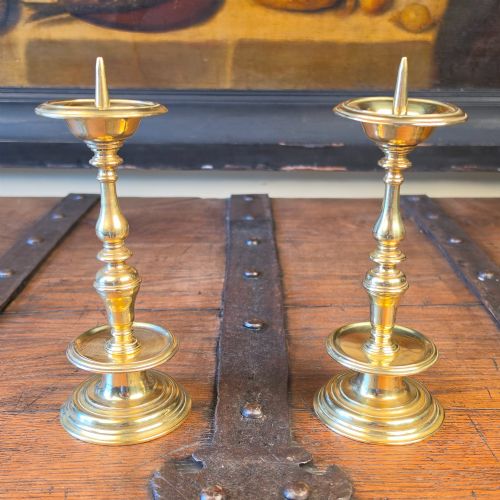
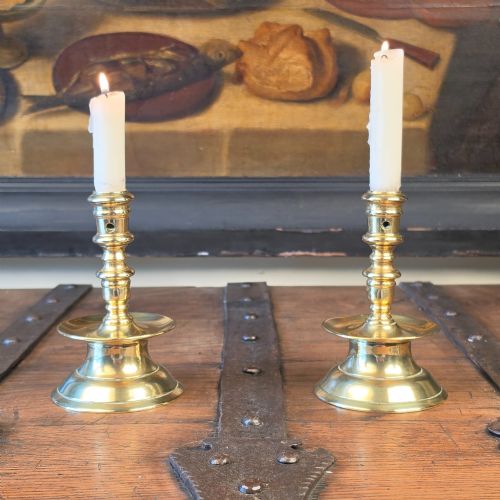
These brass baluster candlesticks offer the warm weight and clean lines of past centuries.
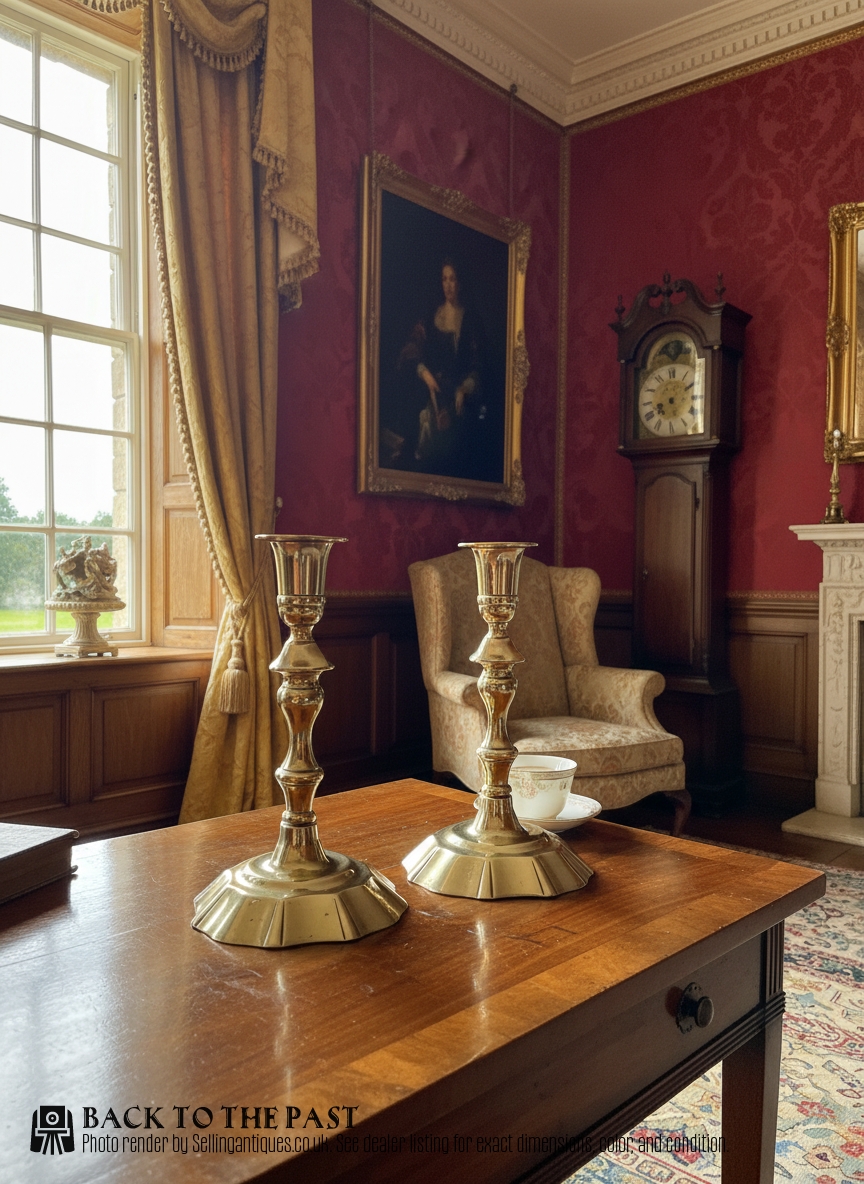
What They Are
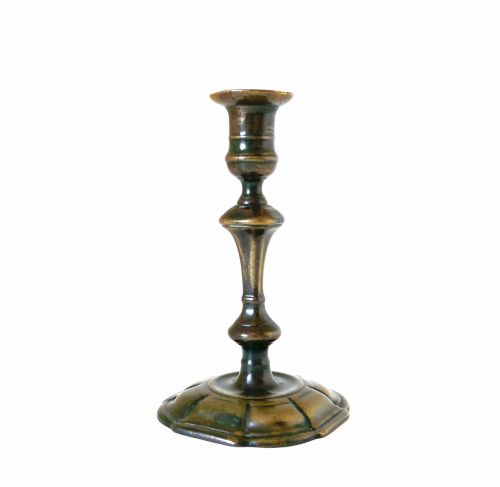
Brass baluster candlesticks combine practical domestic illumination with sturdy metal construction, forming a staple of period interiors. When you examine these pieces, you encounter forms shaped during the eighteenth and nineteenth centuries, including Georgian and Regency periods. Most examples appear as paired items, designed to balance a mantelpiece or sideboard.
How They Were Made
Foundry work in brass relies on casting molten metal into moulds, followed by lathe-turning to refine the shape and thickness. Craftsmen smoothed the surfaces and joined components such as sockets, stems, and bases to create stable domestic objects.
Later nineteenth-century examples incorporate mechanical innovations like ejector mechanisms, which use internal slides to lift remaining candle stubs. The metal itself displays the distinct golden hue of historic brass, shaped by traditional foundry methods.
Retail Price Guide 2026
Typical UK retail prices for brass baluster candlesticks, calculated from the Sellingantiques database of over a million retail prices indexed since 2003. This retail price guide relies exclusively on Sellingantiques data; no external sources or auction records are used, so the figures do not describe the wider market.
Current listings span the eighteenth and nineteenth centuries, featuring Georgian, Regency, and Queen Anne styles executed entirely in brass.
What Varies in Quality
Quality rests in the crispness of the casting and the balance of the proportions, where sharper mouldings and heavier metal denote superior work. Finer examples retain their original components without replacement parts, while lesser pieces may show clumsy repairs or excessive thinning from over-polishing.
The sophistication of the turning work on the stem and the stability of the base separate ordinary production from high-grade specimens. Surface patination also plays a role, with undisturbed age surfaces offering greater visual depth than aggressively cleaned metal.
J.T. & Co
The Brass Baluster Candlesticks Glossary
- Baluster
- A shaped architectural column, swelling in the lower portion, which forms the central stem of the candlestick.
- Ejector
- A built-in sliding mechanism within the socket designed to push out spent candle remnants.
- Knop
- A protruding rounded knob or moulding on the stem of a candlestick.
- Octagonal
- Having eight sides, often describing the geometric form of the candlestick base.
- Patina
- The surface sheen and colour developed by brass through age and handling.
Frequently Asked Questions
How do I date old brass?
Dating involves examining the manufacturing technique, base construction, and stylistic markers such as socket shapes and stem turnings. Earlier pieces often display coarser casting marks and simpler multi-component assemblies.
Later nineteenth-century items introduce mechanical additions like ejector levers, which help distinguish them from earlier Georgian and eighteenth-century examples.
Were these made in pairs?
Many surviving brass candlesticks were produced and kept as pairs to adorn mantelpieces, dining tables, and sideboards symmetrically. Matching pairs remained a standard requirement for formal household display.
Individual survival does occur, but matched sets reflect the original domestic arrangement of these lighting items.
How should I clean brass?
Historic brass benefits from gentle dusting and minimal intervention to preserve the accumulation of surface tone known as patina. Aggressive chemical polishing strips away the aged character accumulated over centuries.
If cleaning is necessary, mild soap and a soft cloth remove grime without erasing the subtle marks of manufacture and time.