



Period Brass Candlesticks
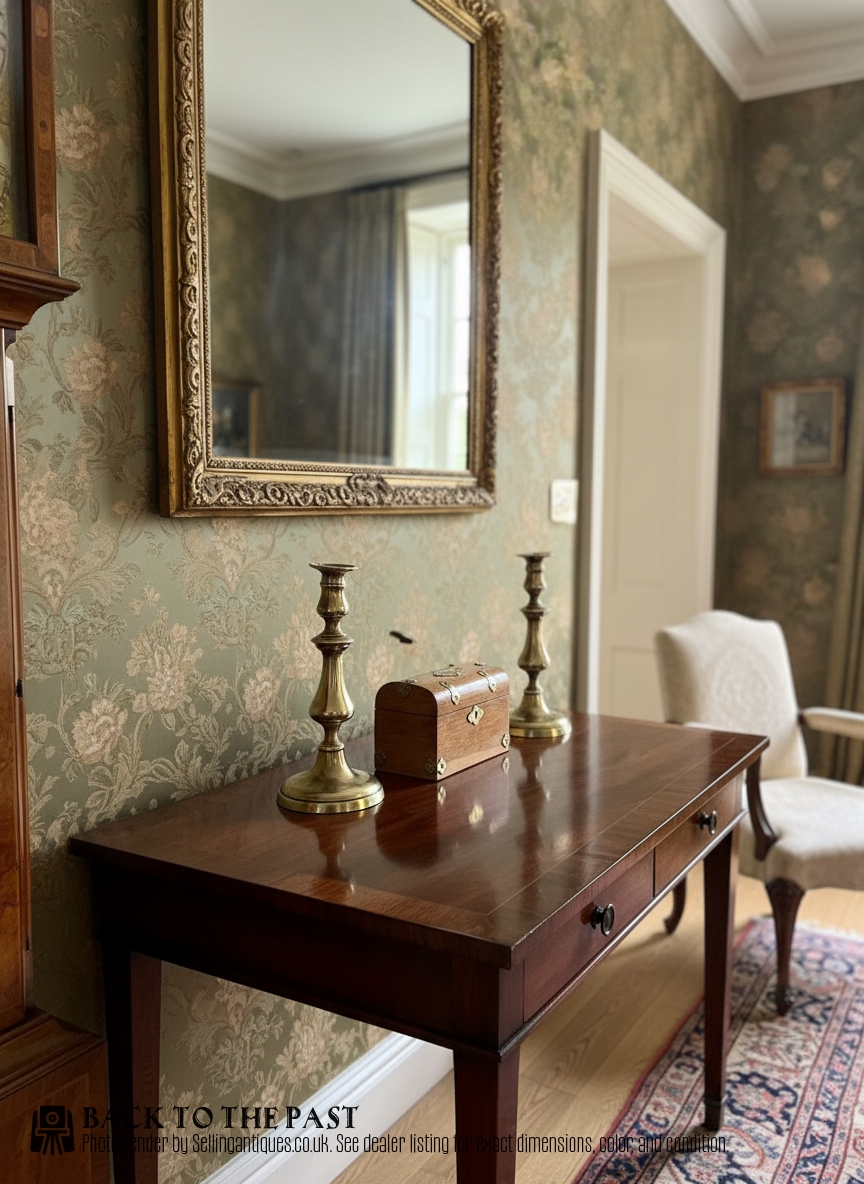
Period brass candlesticks bring solid weight and warm metal tones to a room, ranging from simple Georgian engineering to ornate Regency ormolu.
Period Brass Candlesticks
When you search for period brass candlesticks, you encounter lighting designed to hold wax candles safely on tables, desks, and altars. The selection spans utilitarian designs and decorative objects meant for display.
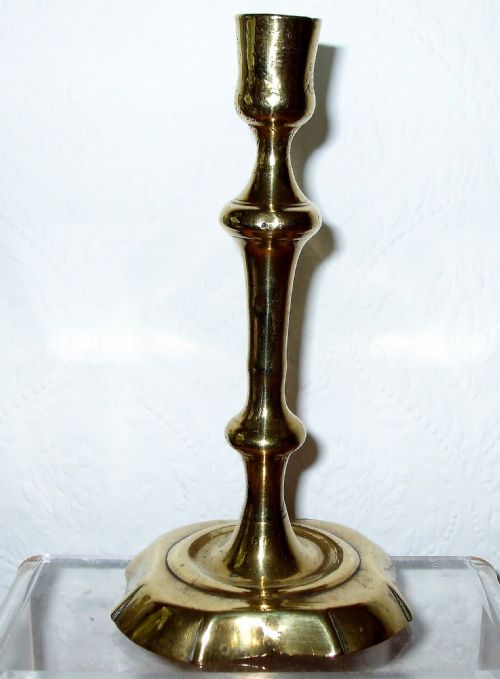
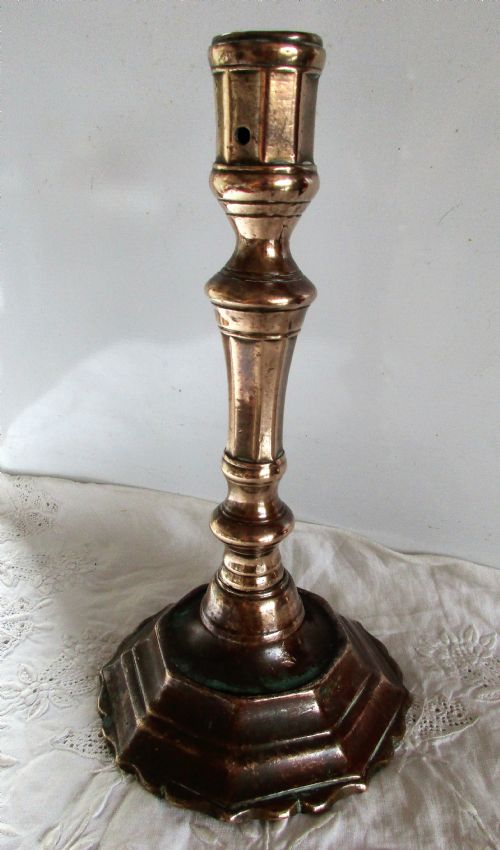
You are most likely to meet Georgian examples featuring seamed construction and petal or hexagonal bases. Regency and Victorian variants also appear regularly, often incorporating bronze, ormolu, or mechanical ejectors.
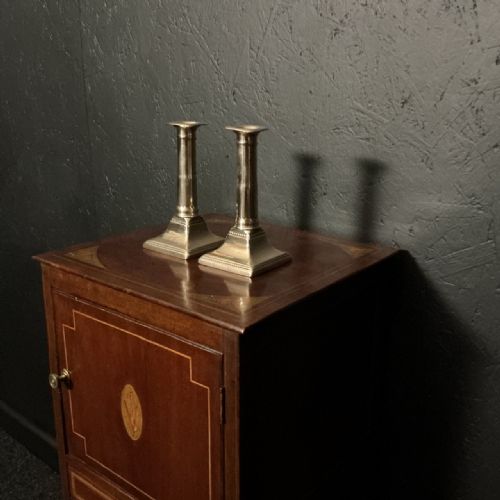
The form stretches from compact chamber sticks to tall column candlesticks and multi-light candelabra. These items reflect the domestic and ecclesiastical lighting needs of their respective centuries.
How they were made
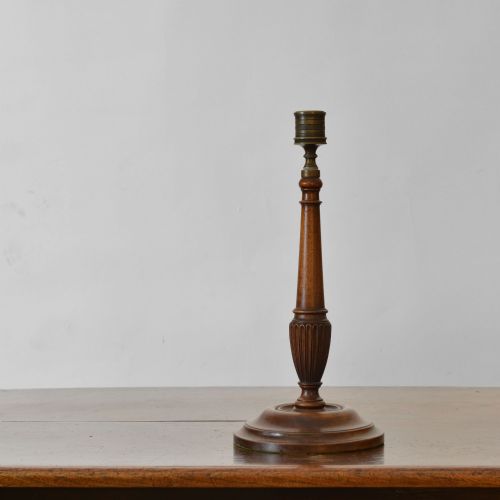
The primary material is brass, frequently worked through casting and seaming methods in the eighteenth century. Makers also utilised bronze, gunmetal, and ormolu, occasionally combining metals within a single piece.
Components like stems, nozzles, and bases were cast separately and joined or turned on a lathe for symmetry. Surface finishing involved polishing, lacquering, or applying gilt layers to bronze and brass substrates.
Period Brass Candlesticks Retail Price Guide 2026
Typical asking prices for period brass candlesticks among the pieces listed under this phrase on Sellingantiques today, from the lower quarter to the upper quarter. They describe what is for sale here now, not the wider market.
The listings combine British and French items spanning the eighteenth, nineteenth, and early twentieth centuries, constructed from brass, bronze, ormolu, and mahogany.
What varies in quality
Quality rests upon the crispness of the casting detail and the integrity of the original construction. Superior pieces retain sharp moulding on bases and stems without excessive wear from cleaning.
The weight of the metal and the complexity of the design distinguish standard domestic lighting from high-status works. Original components, such as functioning ejector mechanisms or matching pairs, elevate the status of an object.
The Period Brass Candlesticks Glossary
- Ejector
- A concealed internal mechanism with a small thumbpiece designed to push spent candle stubs out of the socket. This practical addition is frequently found on eighteenth-century examples.
- Pricket
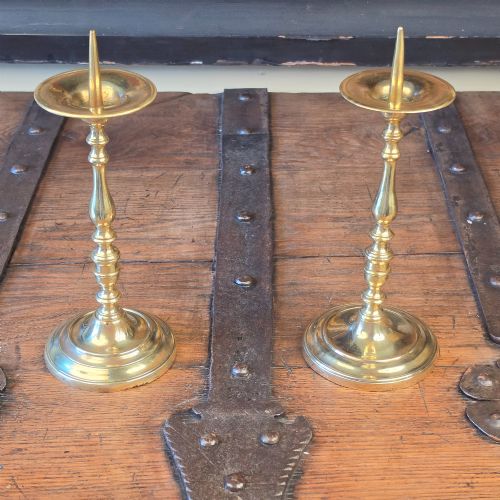
- A sharp metal spike set in the drip pan to impale a candle rather than sliding it into a socket. This form is common in ecclesiastical or revival pieces.
- Ormolu
- Finely ground high-carat gold applied to a bronze base through a mercury amalgamation process. The technique produces a rich, matte yellow finish seen on Regency and French pieces.
- Seamed
- Formed from rolled sheet metal joined down the side with a visible seam before being attached to a cast base. This method is a hallmark of eighteenth-century manufacturing.
- Chamber stick
- A low, saucer-like candleholder equipped with a loop handle for carrying through a house. They often include a small conical snuffer resting in the tray.
Period Brass Candlesticks: Frequently Asked Questions
How do I date a brass candlestick?
Dating relies on observing base shapes, manufacturing methods, and stylistic cues. Early eighteenth-century examples often feature octagonal or petal bases and seamed construction.
Later nineteenth-century pieces shift toward heavier baluster forms, column designs, or ornate revival styles. Comparing the construction techniques against known periods provides the clearest guide.
What is an ejector candlestick?
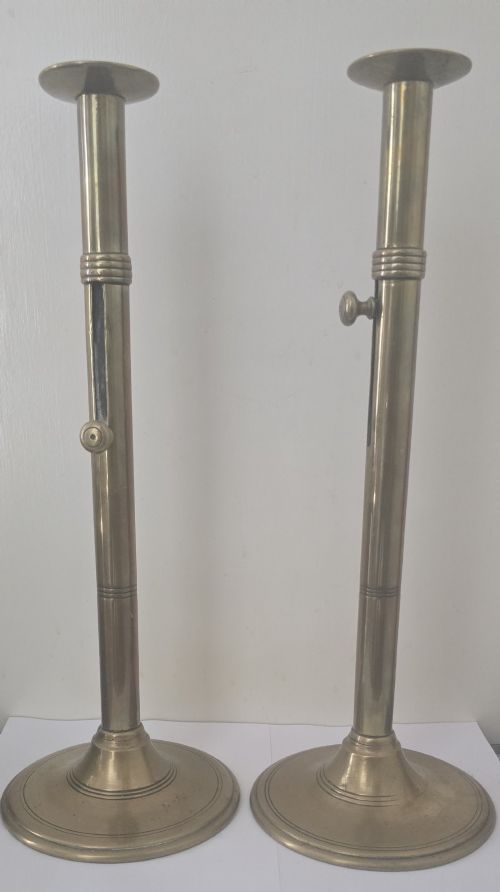
An ejector candlestick incorporates a sliding internal plate connected to a small side lever. Pushing the lever upward raises the remaining candle stub for easy removal.
This clever mechanical feature became popular during the Georgian era to prevent wax spillage and damage when cleaning out sockets.
Are these candlesticks safe to use?
These items were built to hold traditional wax candles securely during centuries past. Modern users often place standard tapers in them for ambient lighting.
Care must be taken to ensure the candle fits the socket securely and is extinguished before burning down to the metal.
How should I clean old brass?
Historic brass benefits from gentle dusting and minimal intervention to preserve its aged surface. Aggressive chemical polishing strips away the desirable dark oxidation built up over centuries.
Applying a light coat of microcrystalline wax can protect the metal without altering its authentic tone.