
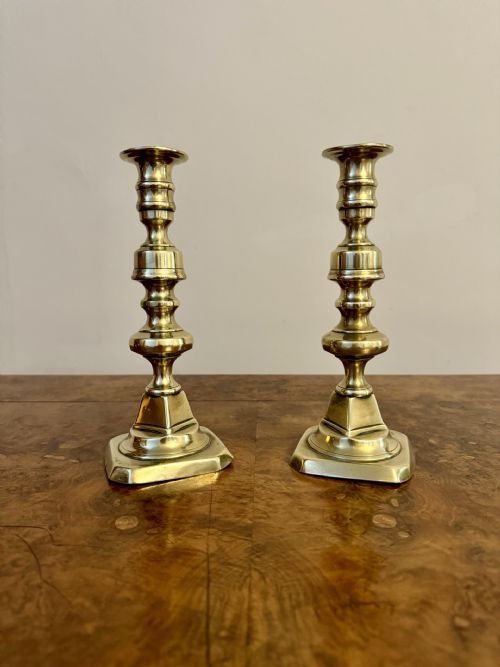
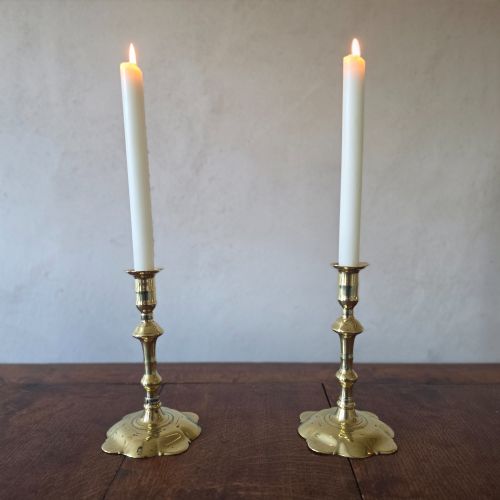
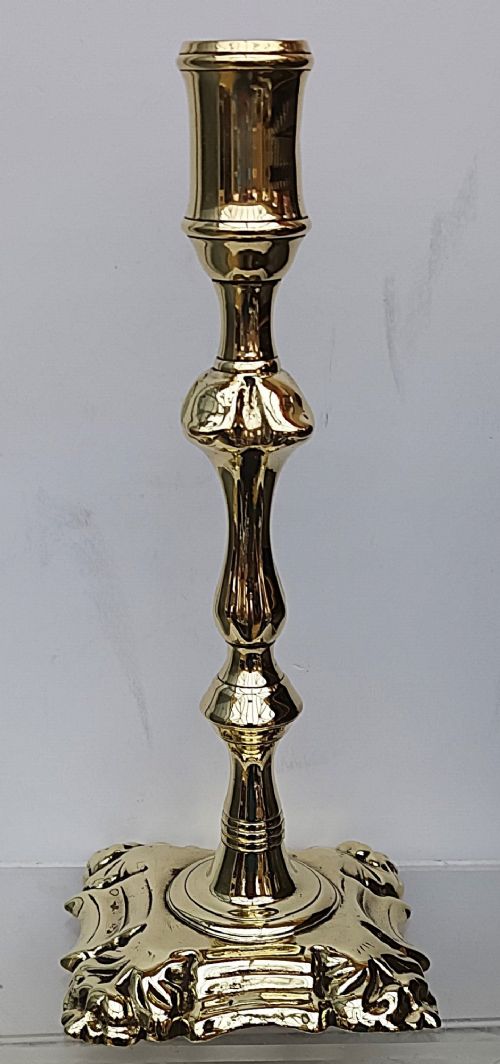


Knopped Stem Candlesticks
Knopped stem candlesticks combine tactile turned brass and silver plate with sculptural form, offering an authentic period lighting solution for the table.

Identifying knopped stem candlesticks
Knopped stem candlesticks are domestic lighting pieces defined by distinct swelling rings or nodes along their vertical shafts, originating across the eighteenth and nineteenth centuries. These items appear in Georgian, Gothic Revival, and Neo-Georgian styles, providing a structured silhouette that separates them from straight-columned alternatives.
The specimens encountered here consist entirely of pairs and present themselves in brass, silver plate, and EPNS. Domestic interiors from the seventeen-fifties through the nineteen-thirties utilised these examples for illumination before electric lighting became universal.
Buyers examining this category meet forms that range from simple mid-eighteenth-century brass castings to nineteen-twenties silver-plated productions. The overarching design relies upon the rhythmic interruption of the column by decorative knops, anchoring the visual weight of the candlestick towards the centre of the stem.
Materials and construction methods
Constructed primarily from brass and silver plate, these objects utilise cast and seamed techniques recorded across the eighteenth and nineteenth centuries. Early examples demonstrate the seamed method where sheet metal is rolled and joined, alongside solid casting methods that produce substantial multi-knopped stems.
The manufacturing process involves shaping metal into petal bases and sconces, then assembling the components to form stable bases for wax candles. Later twentieth-century items incorporate electroplated nickel silver, maintaining traditional decorative outlines through industrial plating techniques.
Retail Price Guide 2026
Typical UK retail prices for knopped stem candlesticks, calculated from the Sellingantiques database of over a million retail prices indexed since 2003. This retail price guide relies exclusively on Sellingantiques data; no external sources or auction records are used, so the figures do not describe the wider market.
Listings span brass, silver plate, and EPNS materials across the eighteenth, nineteenth, and twentieth centuries.
Assessing quality and craftsmanship
Quality within knopped stem candlesticks rests on the crispness of the casting and the complexity of the stem's profile. Multi-knopped stems executed with sharp, well-defined turning demonstrate superior workshop practice compared to softer, more uniform later reproductions.
The integration of the base and sconce dictates the visual success of the piece, with petal bases offering a more articulated sculptural presence than plain circular footprints. Material thickness and the preservation of original surface texture further separate standard commercial output from superior items.
The Knopped Stem Candlesticks Glossary
- Knop
- A protruding swelling or knob on the stem of a candlestick that interrupts the vertical line. This decorative feature provides both a tactile grip and visual punctuation.
- Sconce
- The socket at the top of a candlestick that holds the candle in place. It often includes a removable drip pan in period examples.
- Petal base
- A foot shaped to resemble overlapping flower petals, frequently seen on eighteenth-century designs. This form widens the footprint for greater stability.
- Seamed brass
- Metal construction formed by rolling a sheet into a cylinder and joining the edges down the length. This technique was common before advanced casting methods predominated.
- EPNS
- Electroplated nickel silver, a base metal coated with a thin layer of pure silver through electrolysis. This process became widespread in the late nineteenth and early twentieth centuries.
Frequently Asked Questions
What are knopped stem candlesticks?
These are lighting devices featuring a column interrupted by one or more protruding rounded nodes, known as knops.
They appear in brass and silver-plated metals across the Georgian and later periods.
How were these candlesticks used?
They sat on tables and mantelpieces to hold wax candles for household illumination before the arrival of gas and electric light.
Pairs were typically arranged symmetrically on surfaces in principal rooms.
How do I date an 18th-century candlestick?
Dating relies on observing construction methods such as seamed shafts versus solid castings, alongside stylistic indicators like petal bases.
Earlier eighteenth-century pieces often display multi-knopped profiles with distinct multi-lobed feet.
What is the difference between brass and silver plate?
Brass candlesticks expose a yellow copper and zinc alloy throughout their structure, showing wear directly on the metal.
Silver-plated items feature a base metal covered in a thin silver skin applied through plating techniques.