
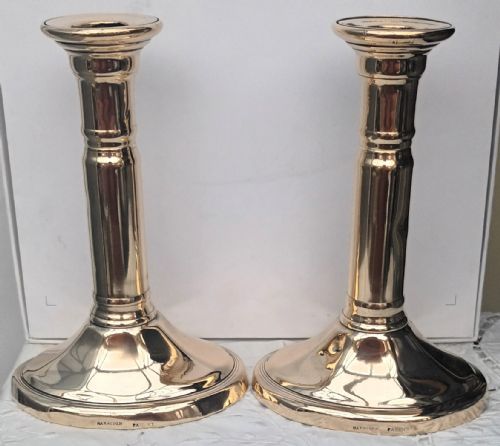
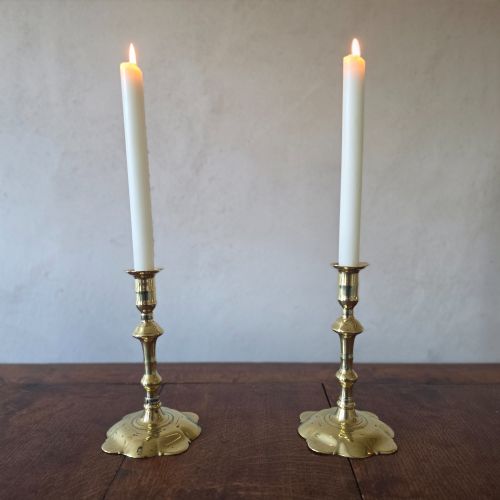
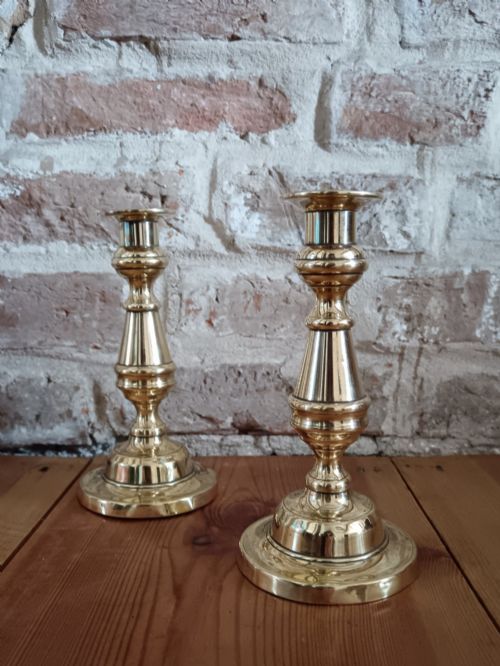


Georgian Brass Candleholders
Georgian brass candleholders bring genuine period warmth to a room, offering sturdy seventeenth and eighteenth century metalwork for everyday illumination.
What georgian brass candleholders are
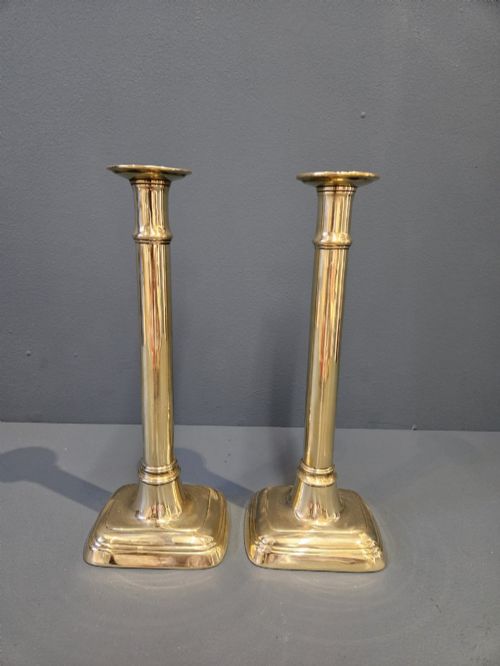
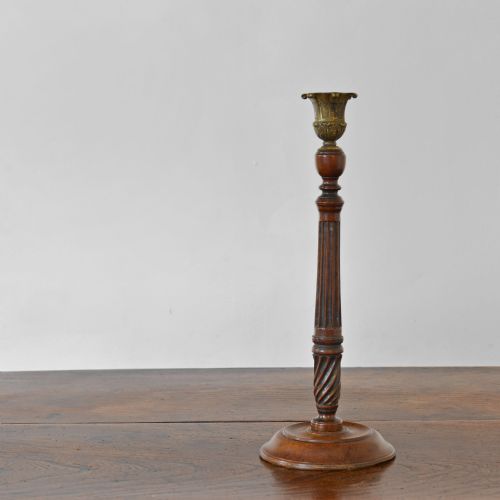
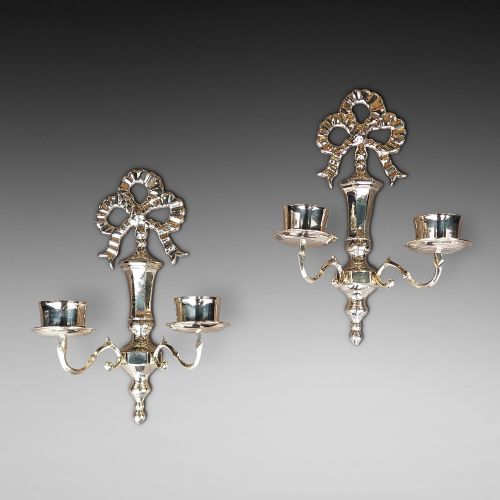
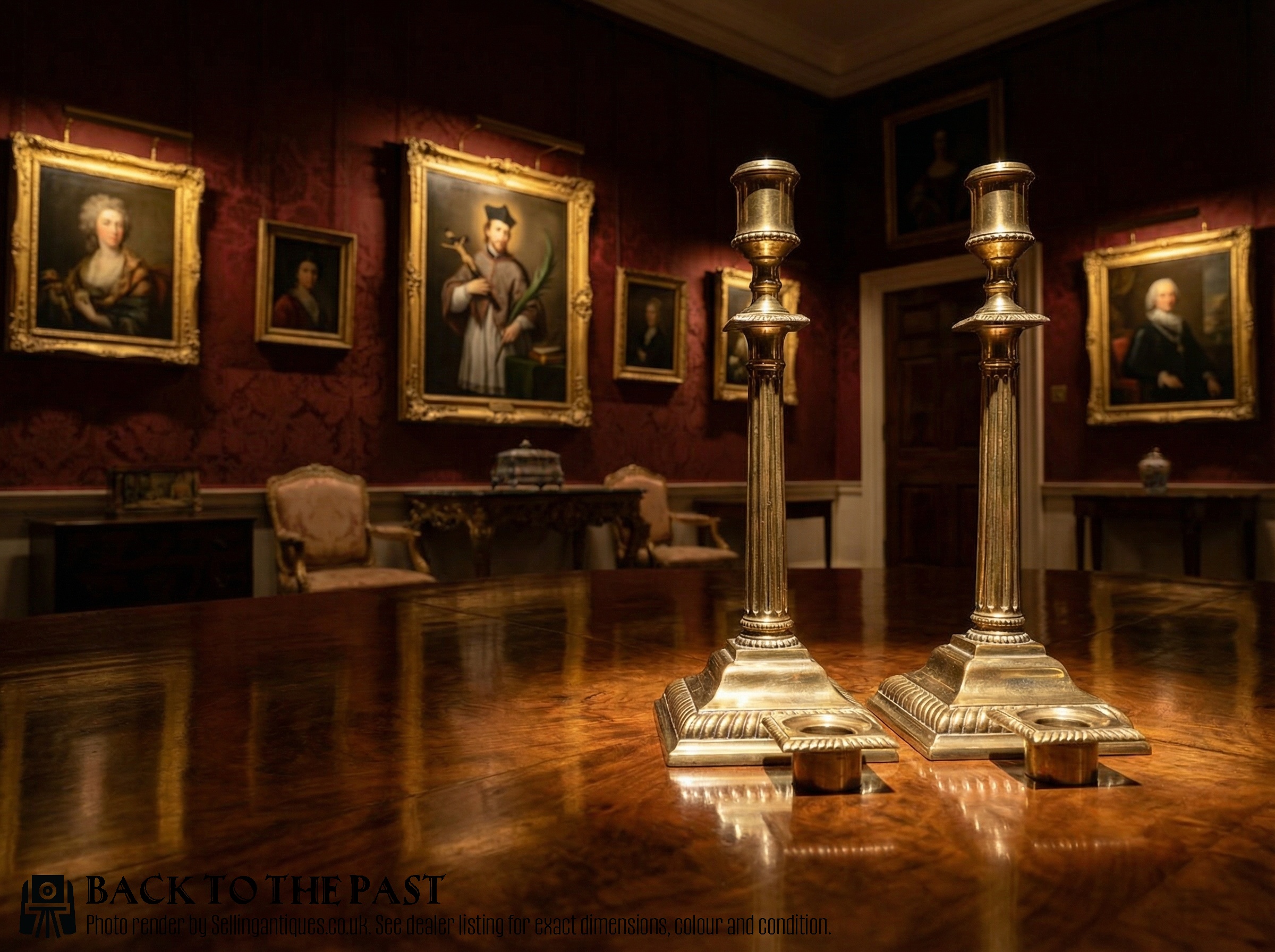
Georgian brass candleholders comprise candlesticks from the eighteenth and nineteenth centuries, spanning George II and Queen Anne styles alongside later nineteenth century interpretations. These pieces serve as functional lighting accessories designed to support wax candles safely on tables, mantelpieces and desks.
How they were made
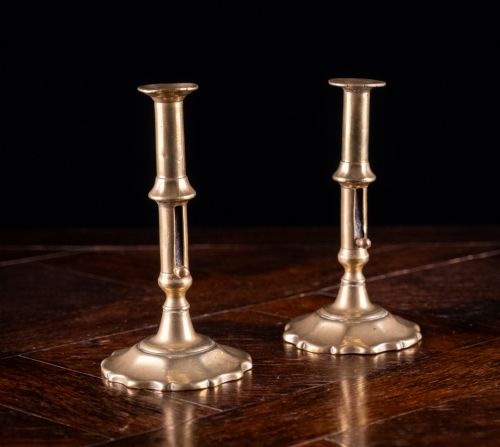
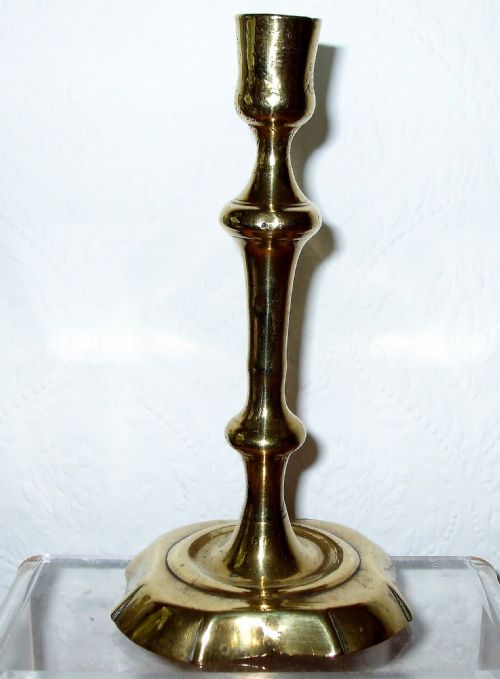
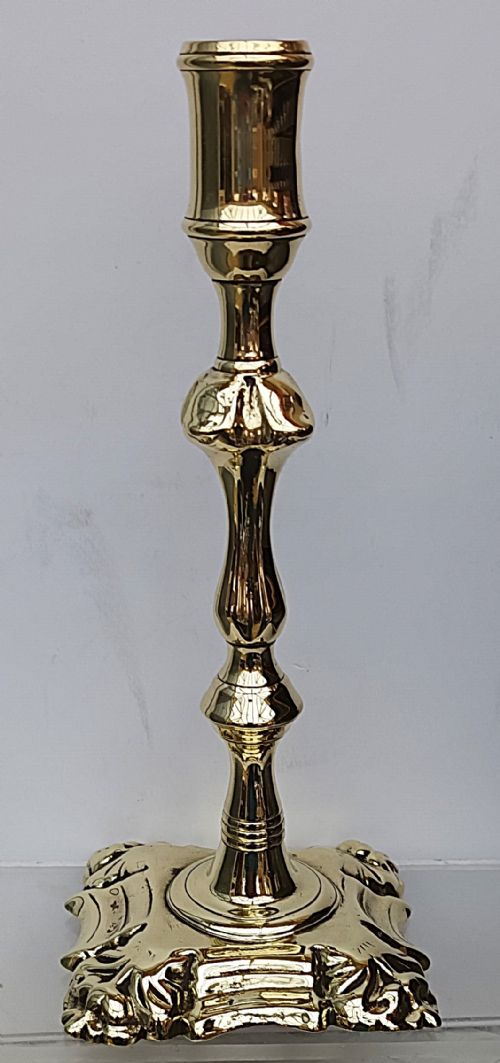
Makers utilised cast brass to construct these candleholders, pouring molten metal into moulds to achieve solid structural forms. This casting technique allows for the creation of faceted stems, stepped bases and decorative socket details.
English workshops produced these domestic items using traditional metalworking methods suited to heavy utilitarian brass. The resulting objects possess tangible weight and durability inherent to period foundry work.
Retail Price Guide 2026
Typical UK retail prices for georgian brass candleholders, calculated from the Sellingantiques database of over a million retail prices indexed since 2003. This retail price guide relies exclusively on Sellingantiques data; no external sources or auction records are used, so the figures do not describe the wider market.
Early eighteenth-century makers occasionally added hidden sand cores inside cast stems to save expensive metal, leaving a gritty secret inside.
What varies in quality
Quality in georgian brass candleholders lies in the crispness of the casting and the architectural definition of the base. Sharper edges on octagonal or scalloped profiles demonstrate superior metalworking skill during the initial production.
The integrity of matching pairs and the preservation of original surface texture distinguish finer examples. Subtleties in proportion and balanced weight distribution elevate certain specimens above standard utilitarian pieces.
The Georgian Brass Candleholders Glossary
- Cast brass
- An alloy of copper and zinc melted and poured into a mould to form solid shapes. This method creates the substantial weight found in period candlesticks.
- Octagonal base
- A geometric eight-sided footing common on early eighteenth century candlesticks. This form provides stable support while offering visual planes that catch the candlelight.
- Scalloped edge
- A decorative rim featuring curved, shell-like indentations. It appears on base plates of George II period pieces to soften rigid architectural lines.
- George II
- A stylistic period spanning the mid eighteenth century, defined by robust proportions and restrained classical ornamentation. Pieces from this era display distinct weight and presence.
Frequently Asked Questions
How do I date a brass candlestick?
Dating relies on examining the construction methods, base shapes and overall proportions of the piece. Early examples often feature multi-part cast assemblies with octagonal or shaped bases.
Later nineteenth century reproductions or interpretations may show softer casting details and lighter metal thickness. Comparing the form against documented historical periods helps confirm the likely era of manufacture.
How should I clean antique brass?
Maintaining antique brass requires gentle dusting and minimal intervention to preserve the natural aged patina. Aggressive commercial metal polishes strip away historical surface character and dull the warm tone.
A soft cloth and mild soapy water suffice for removing surface grime. Leaving the darker oxides in recessed areas highlights the casting contours.
What candles fit these holders?
Period candleholders typically accommodate standard taper candles with narrow bases. Measuring the internal diameter of the socket ensures a secure fit for modern or period reproduction wax tapers.
Using a small paper shim or melting the base of the candle provides stability if the fit is loose. Ensuring the candle sits upright prevents drips and tipping during use.