
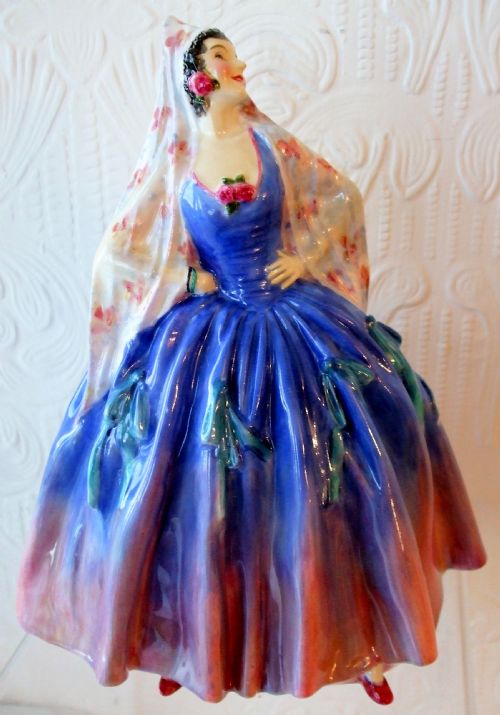


Painted Ceramic Statuettes
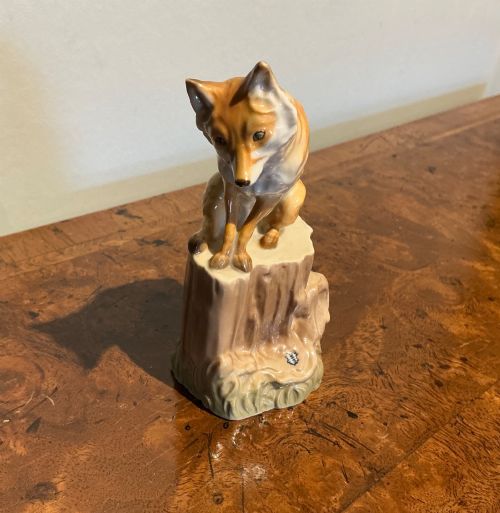
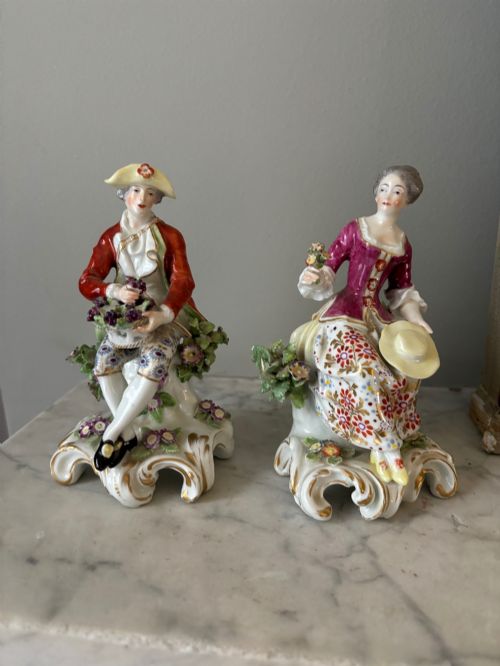
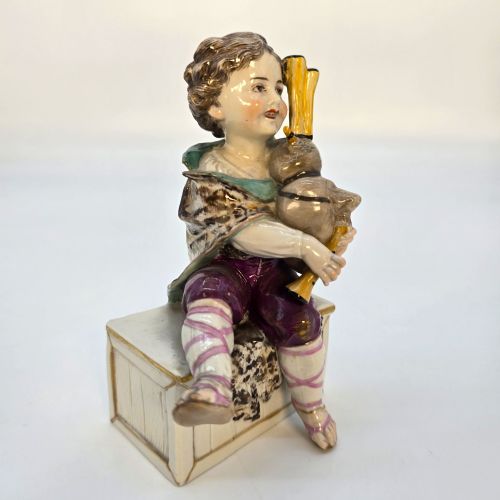
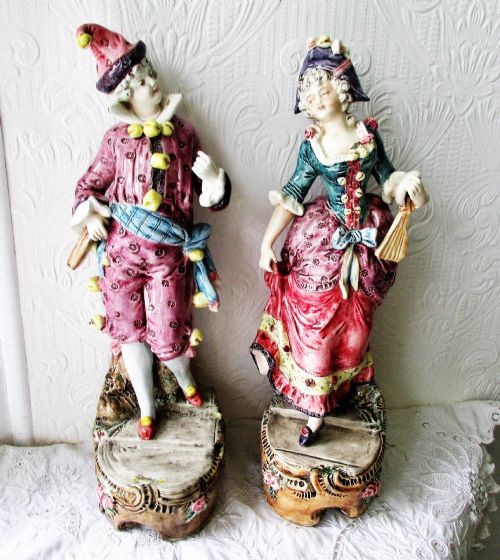
These painted ceramic statuettes combine meticulous detail and historic charm, offering collectors delicate portrayals of human figures, animals, and pastoral scenes.
Painted Ceramic Statuettes
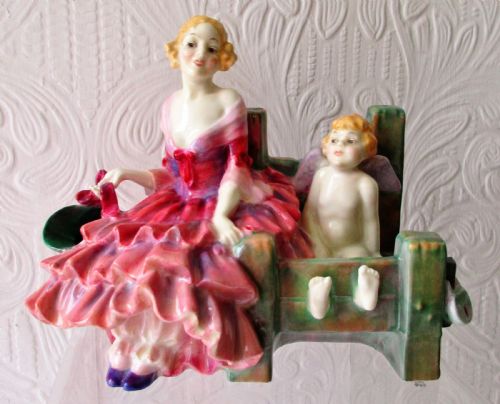
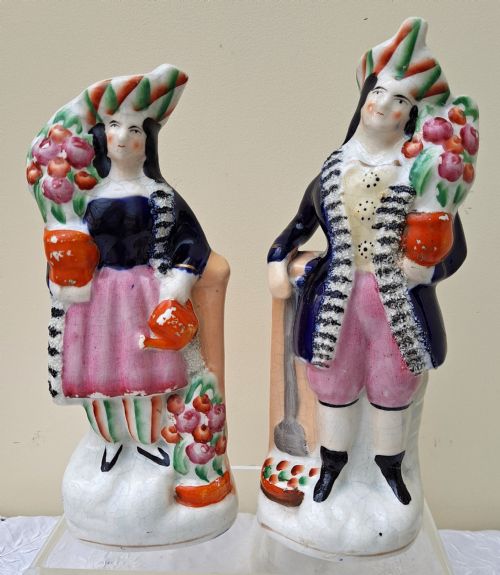
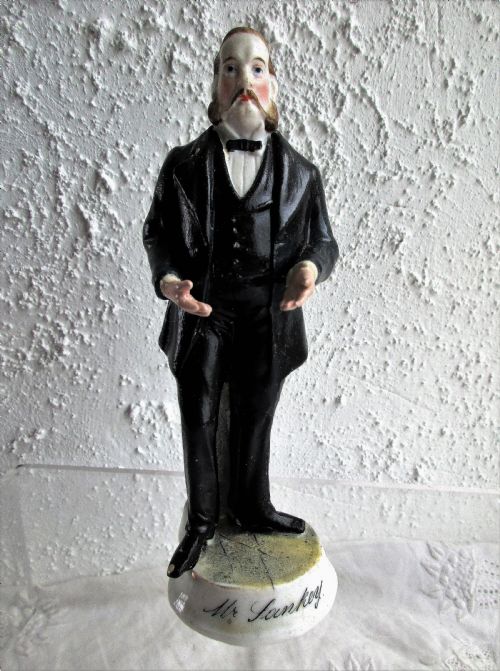
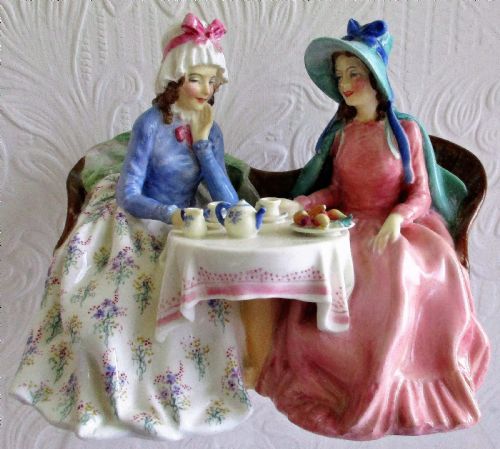
Painted ceramic statuettes comprise porcelain, bone china, and earthenware figures representing people, animals, and allegorical subjects from various European and international factories. Buyers exploring painted ceramic statuettes encounter everything from eighteenth-century Meissen street traders to Victorian Staffordshire gardeners and twentieth-century Royal Doulton characters.
The selections span distinct historical eras, encompassing eighteenth-century soft-paste pieces, nineteenth-century Victorian Staffordshire pottery, and twentieth-century Art Deco porcelain. Most pieces on this page lean towards nineteenth-century German and French porcelain or Staffordshire earthenware depictions of pastoral and social figures.
Makers range from renowned European porcelain manufactories like Meissen, Bow, Derby, and Volkstedt to French Paris factories and English potteries. Collectors find single display pieces as well as matched pairs designed to sit symmetrically on mantelpieces or side tables.
How they were made
Potters shaped these statuettes using moulds or by hand, employing porcelain, hard-paste porcelain, bone china, or earthenware bodies before initial firing. Artisans then applied enamel colours and detailed hand painting, frequently incorporating gilt or gold leaf highlights to accentuate garments and bases.
A transparent glaze was applied over the painted decoration and fired again to vitrify the surface, sealing the pigments and producing a glossy finish. Certain French factories utilised biscuit porcelain, leaving the ceramic unglazed to emphasise sculptural form and matte texture.
Periods represented span from the mid-eighteenth century through the Victorian era into the Art Deco twentieth century.
What varies in quality
The preservation of original gilding and enamel colours without excessive rubbing or later restoration governs desirability among experienced collectors. Early factory marks, such as anchor symbols or factory monograms, also influence the standing of an individual piece.
Edme Samson·Volkstedt Rudolstadt Factory·Royal Doulton·Meissen·Longton Hall·Chelsea·Triebner Ens And Eckert·Derby·Royal Worcester·Bow·La Coutille Factory·Letu And Mauger·Royal Copenhagen·Kutani·Chantilly·Wedgwood And Co Ltd
The Painted Ceramic Statuettes Glossary
- Biscuit porcelain
- Un-glazed porcelain fired once to create a matte, marble-like finish that highlights fine sculptural detail. This technique was favoured by various European factories for classical and decorative figures.
- Hard-paste porcelain
- A dense, durable ceramic composed of kaolin and petuntse, fired at very high temperatures. It forms the robust body of many eighteenth and nineteenth-century continental figures.
- Gilt
- A thin layer of gold or gold leaf applied to ceramic surfaces for decoration. It is often found highlighting clothing trims, bases, and accessories on antique figures.
- Soft-paste porcelain
- An artificial porcelain mixture fired at lower temperatures than hard-paste, common in early English factories. It possesses a slightly warmer tone and a softer glaze surface.
- Staffordshire pottery
- Earthenware figures produced in the Staffordshire region of England, typically modelled with robust shapes and bold colours. They were widely made for domestic display during the Victorian era.
Painted Ceramic Statuettes: Frequently Asked Questions
How do I clean antique ceramic statuettes?
Dust these delicate figures gently with a soft, dry brush to prevent the accumulation of dirt in crevices. Avoid using water, harsh cleaning agents, or immersion, as these can damage old enamel pigments or delicate gilt highlights.
Keep figures away from direct sunlight and areas prone to high humidity to protect the ceramic body and painted surfaces over time. Handle them strictly by the base rather than fragile protruding elements like fingers, limbs, or applied flowers.
Were these figures meant for display?
Most painted ceramic statuettes served as decorative ornaments for mantelpieces, sideboards, and display cabinets in wealthy homes. They reflected the aesthetic tastes, literary interests, or social standing of their original owners.
Some specific models commemorated contemporary events, theatrical performances, or popular seasonal allegories. Over generations, they transitioned from fashionable drawing-room decor to prized collector pieces.
How can I tell eighteenth-century figures apart?
Examine the paste composition, glaze characteristics, and factory marks underneath the base. Eighteenth-century pieces often exhibit softer glazes, hand-modelled inconsistencies, and underglaze blue or painted factory ciphers.
Consider the style of the clothing, facial painting techniques, and modelling conventions typical of specific periods like Rococo or Neoclassical designs. Comparing pieces with documented factory examples helps confirm their period and origin.
Why do some figures have pairs?
Makers frequently produced statuettes in matched pairs, such as allegorical representations of the seasons, male and female counterparts, or symmetrical gardeners. These pairs were designed to balance mantelpiece displays and furniture arrangements in period interiors.
Finding an intact pair adds significant appeal for collectors who value symmetry and completeness. Over time, pairs often became separated, making surviving matched sets particularly desirable.