

Antique French Statuettes
Antique French statuettes bring sculptural presence into a room, spanning classical figures, animal studies and delicate porcelain works.
Antique French Statuettes
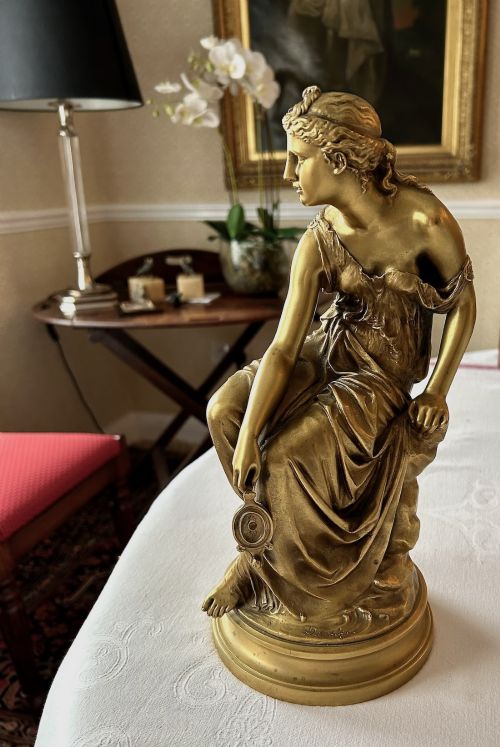
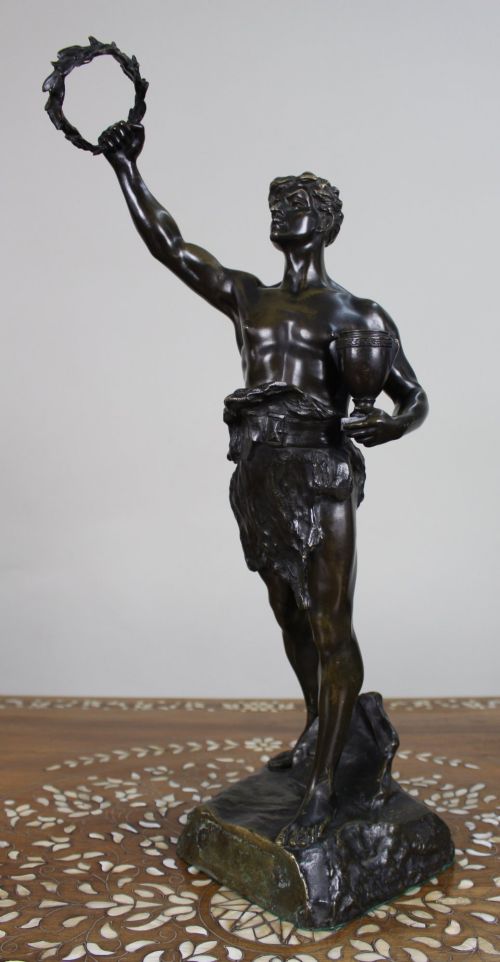
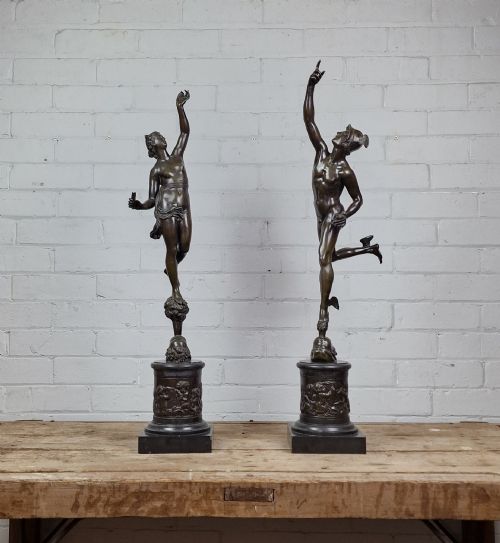
Antique French statuettes encompass small-scale sculptures, figurative bronzes and decorative porcelain figures produced across the nineteenth and early twentieth centuries. These works range from mythological subjects and allegorical putti to naturalistic animalier studies and portrait busts.
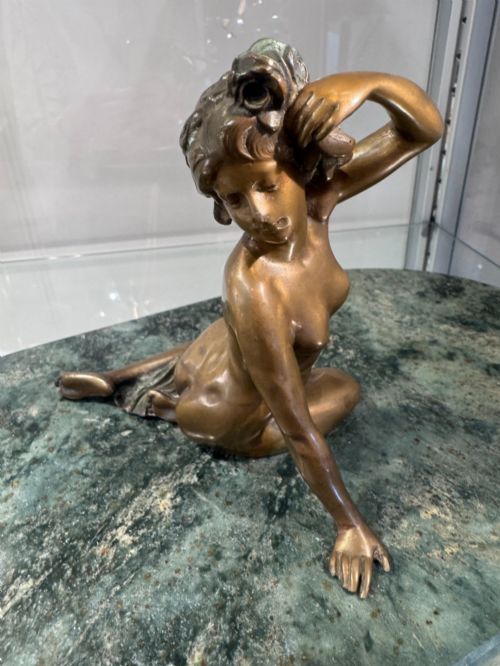
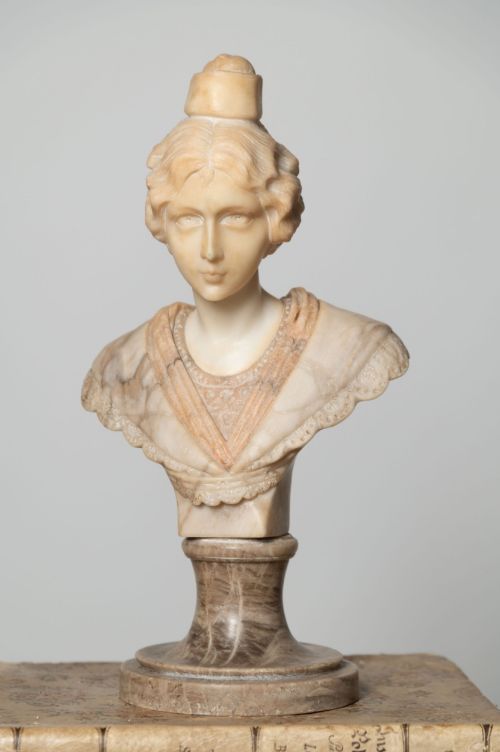
Buyers encountering this selection will frequently find nineteenth-century bronze castings alongside later Art Nouveau and Art Deco interpretations. Forms vary from single figures mounted on marble bases to paired decorative objects and porcelain figures.
The aesthetic vocabulary draws heavily from classical antiquity, Rococo revivalism and realistic observation of human and animal forms. Many pieces reflect the output of prominent French foundry traditions and established family workshops.
How they were made
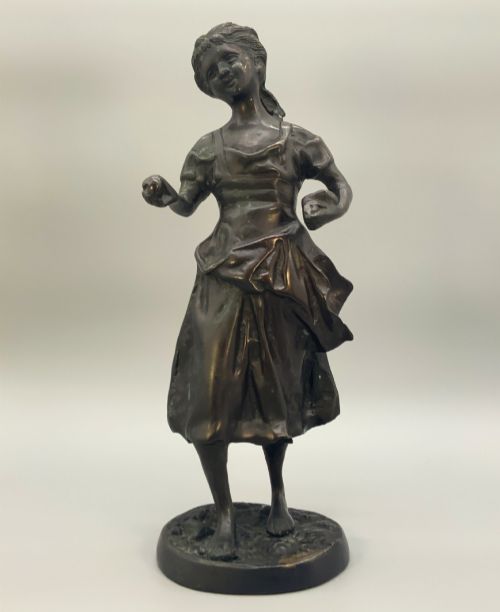
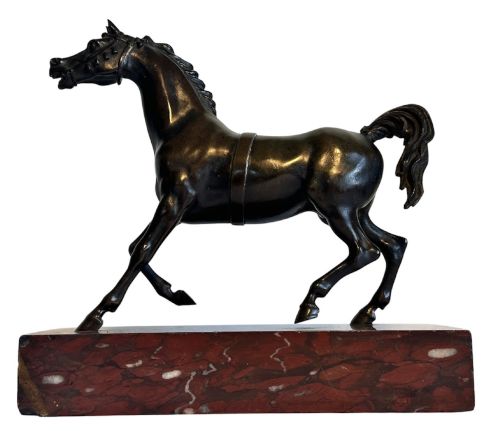
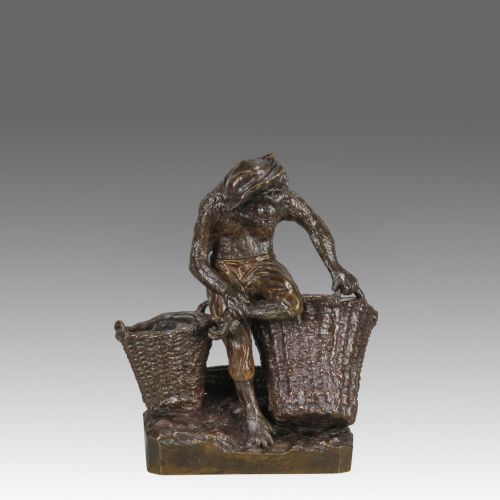
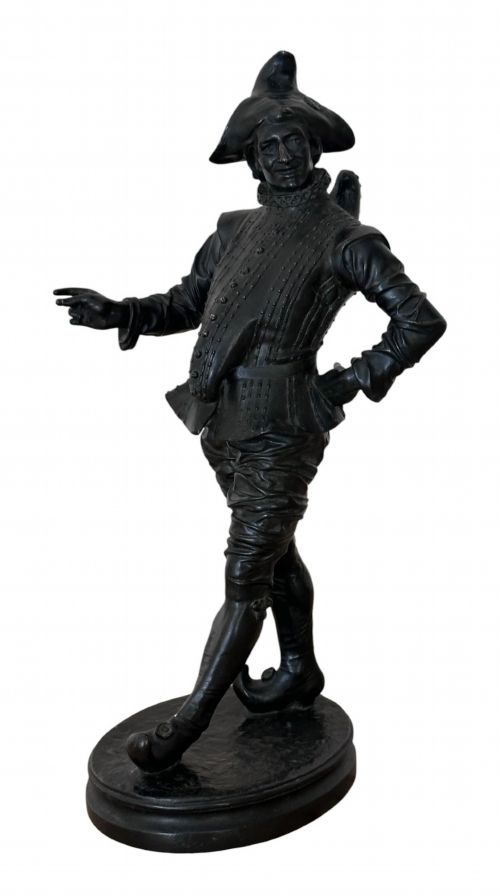
Bronze statuettes were typically produced using the lost-wax method or sand casting, allowing for intricate detail in hair, drapery and facial expressions. The resulting metal was frequently finished with patination, gilding or gold leaf to enhance textural contrast.
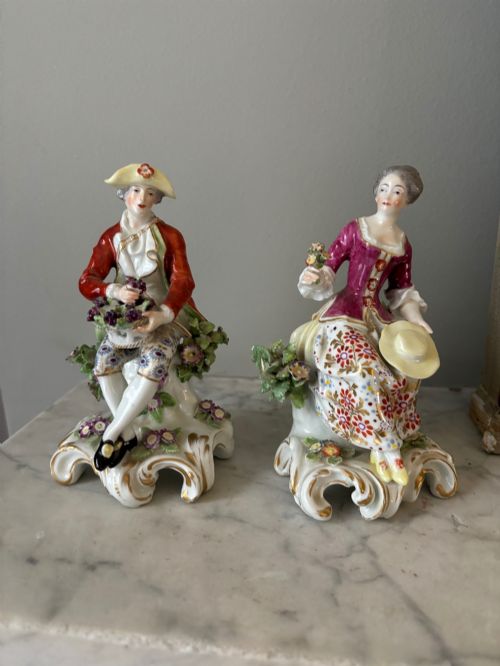
Porcelain figures were moulded in soft-paste or hard-paste ceramic, then hand-painted with enamel colours and occasionally marked with factory insignia such as anchor motifs. Many metal sculptures incorporated distinct material pairings, mounted upon turned marble or slate bases.
An albatross in Art Deco sculpture shares space with watchful bronze bulldogs and startled forest hares.
What varies in quality
Surface finishes also distinguish works, with nuanced patination showing varied tones rather than a flat, uniform spray. In porcelain pieces, precision in hand-painted enamel application and clean firing separate standard production from finer studio output.
Etienne-Henri Dumaige·Edme Samson·August Moreau·Christophe Fratin·Antoine Louis Barye·Alfred Dubucand·Jules Dalou·Georges Van Der Straeten
The Antique French Statuettes Glossary
- Animalier
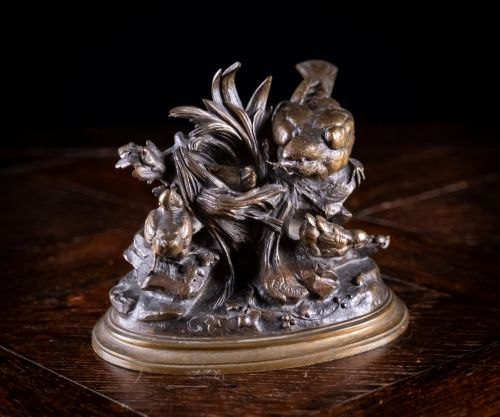
- A nineteenth-century artistic movement focusing on the realistic depiction of animals, particularly in bronze. Practitioners often studied live subjects at menageries.
- Patinated Bronze
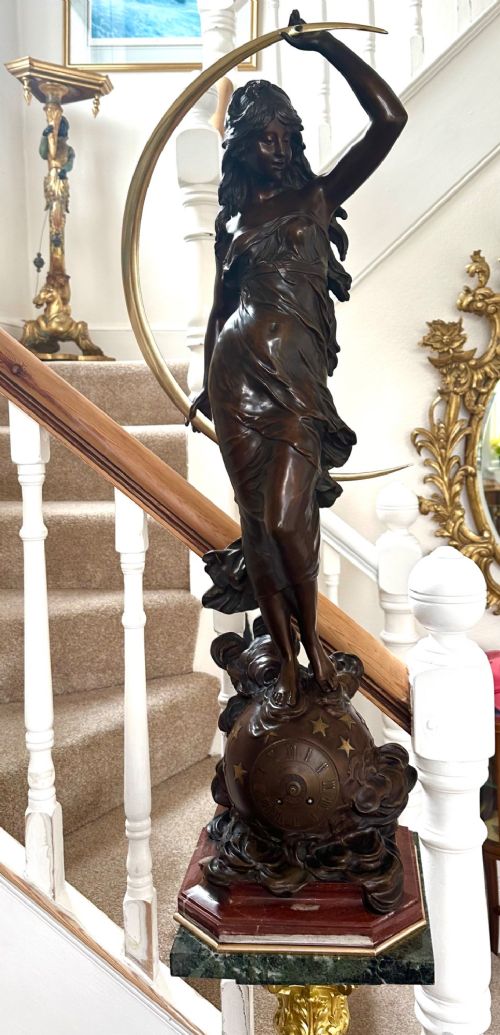
- Bronze treated with chemical solutions to produce a specific surface colour, ranging from deep brown to greenish hues. This treatment protects the metal and defines highlights.
- Gilt Bronze
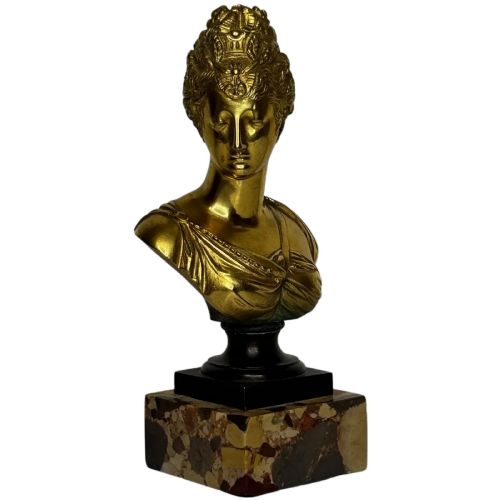
- Bronze coated with a thin layer of gold or gold leaf, sometimes referred to as ormolu when applied to decorative furnishings and statuettes. It creates a bright, reflective surface.
- Putto
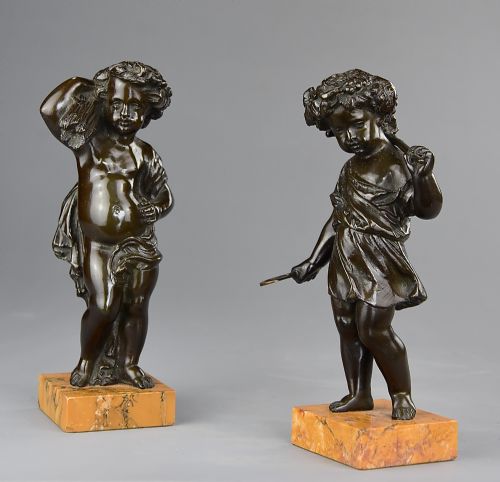
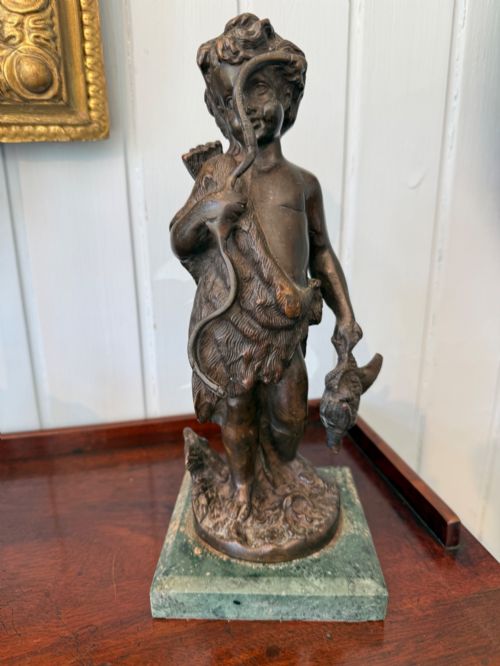
- A plump, often winged child figure derived from classical art, frequently depicted in pairs as allegorical representations of seasons or harvests.
- Hard-Paste Porcelain
- A durable ceramic composition fired at high temperatures, widely used by French and continental factories for detailed figurines.
Antique French Statuettes: Frequently Asked Questions
What subjects do antique French statuettes feature?
These pieces depict a wide range of subjects, including classical deities, historical figures, allegorical putti and literary characters. Animal studies representing horses, hounds, birds and felines are also common.
Many works reflect broader artistic movements such as Neoclassicism, the Rococo revival, Art Nouveau and Art Deco. Figures often capture narrative moments from daily life or mythology.
How do I display bronze statuettes at home?
Bronze statuettes require stable placement on flat surfaces such as sideboards, mantelpieces or dedicated pedestals where their weight is supported. Marble-based pieces benefit from secure positioning away from high-traffic edges.
Keeping them out of direct sunlight helps preserve the applied patination and any accompanying gilt finishes. Gentle dusting with a dry, soft cloth maintains the surface without abrasive cleaning.
How do I distinguish nineteenth-century bronzes from later copies?
Nineteenth-century bronzes typically exhibit hand-chased surface details where the metal was refined after casting, resulting in sharp lines and varied textures. Foundry marks and signatures incised directly into the metal often indicate the period of production.
Heavier bases made of genuine marble or slate rather than synthetic alternatives are characteristic of the era. The depth and warmth of the patination develop natural complexity over decades.
What materials were used alongside bronze in these sculptures?
Marble was frequently utilised for sculptural bases, providing a contrasting stone plinth that anchored the metal figure. Slate and occasionally turned wood also appeared as foundation materials.
Some statuettes incorporated enamel detailing or glass eyes, particularly in later Art Deco animalier works. Gilt bronze and gold leaf added reflective highlights to garments and decorative attributes.